I recently came across an opinion saying that a veterinary clinic should not look like a pet shop.
I understand the point. Veterinary medicine is a profession. Clinics should prioritize diagnostics, treatment, prevention, proper facilities, and patient care.
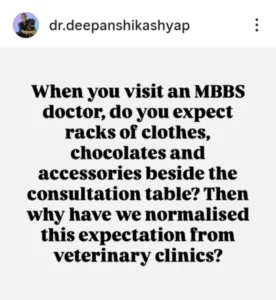
But I strongly disagree with the idea that selling dog food, collars, leashes, treats, or other pet products somehow diminishes the professionalism of a veterinary clinic.
Because some of us did not start with a beautiful hospital.
Some of us started with survival.


When I opened my clinic in 2007, I had roughly ₱200,000, a lot of courage, and not much else.
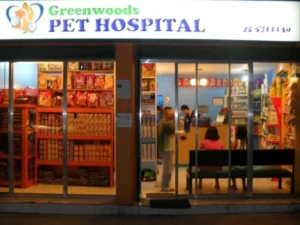
Figure 1. Greenwoods Pet Hospital in 2007, during its early years of operation. The modest storefront, once described by a client as a “hole in the wall,” reflects the clinic’s humble beginnings.
I did not even own a microscope. I had to borrow a light microscope from Dr. Perlie Ordona just so I could start practicing.
So what did I do with the empty spaces in my clinic?
I filled them.
- Leashes.
- Collars.
- Dog food sold by the kilo.
- Dog and cat treats.
- Whatever legitimate pet products I could sell that could help generate a little income.
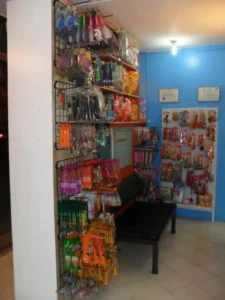
One colleague even told me that my clinic looked like a talipapa, more like a pet store than a veterinary clinic.
And you know what?
I did not care.
At that point in my career, my biggest dream was not to impress other veterinarians with how sophisticated my clinic looked.
My dream was to pay the rent.
My dream was to make sure that when the suppliers who trusted me deposited my checks, they would never bounce.
That was it.
No grand vision of a multimillion-peso hospital.
No obsession with appearances.
Just survival, credibility, and the determination to keep the doors open.


Selling Dog Food Was Also a Strategy
And selling dog food by the kilo was not merely desperation.
It was also strategy.
Every person who walked into my clinic to buy dog food became familiar with the place.
They saw the consultation room.
They saw the veterinarian.
They saw that veterinary services were available.
Then they came back.
And came back again.
Maybe I earned only ₱10 or ₱20 from that small sale.
But I also gained something more valuable.
Repeated exposure.
Familiarity.
Trust.
Eventually, some of those customers who initially came only to buy dog food brought their pets for consultation, vaccination, treatment, or surgery.
That ₱10 sale was also marketing.
That leash hanging on the wall was also an opportunity to introduce someone to the clinic.
That bag of dog food was helping build a customer relationship before marketing funnels became fashionable business terminology.
Veterinary Clinics Are Also Businesses
So yes, veterinary clinics are medical facilities.
But veterinary clinics are also businesses.
And there is nothing shameful about saying that.
A clinic that cannot pay its rent, salaries, electricity, suppliers, taxes, equipment loans, medicines, and operating expenses will eventually become a closed medical facility.
Professionalism does not mean pretending economics does not exist.

Today, my situation is different.
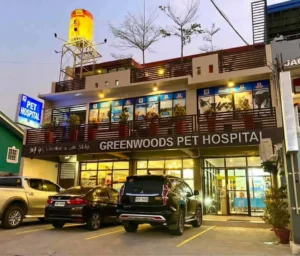
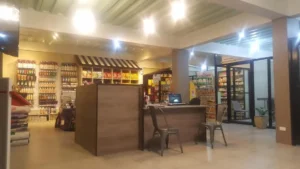

Figures 3–5. By 2017, GPH had undergone significant improvements, with a larger facility, a more organized reception area, and an expanded retail section.
I now have the option to decide whether I want to sell dog food or not. I can choose how much retail space I want. I can invest more heavily in diagnostics, equipment, facilities, and medical services.
But I have that choice because I survived the years when I had very few choices.
Do Not Look Down on the Veterinarian Who Is Still Building
That is why I will never look down on the young veterinarian whose clinic has shelves full of dog food.
I will not belittle the veterinarian selling collars, shampoos, treats, supplements, or pet accessories while trying to establish a practice.
Maybe that veterinarian is not trying to turn medicine into a pet shop.
Maybe that veterinarian is trying to make payroll.
Maybe the ₱50 profit from a leash helps pay the electric bill.
Maybe every person coming in for dog food is a potential future client.
Maybe those shelves are helping finance the microscope that veterinarian still cannot afford.
And maybe, years from now, that small clinic that people mocked for looking like a pet shop will become a fully equipped veterinary hospital.
Judge the Medicine, Not the Shelves
We should judge veterinary clinics by the quality and ethics of the medicine they practice, not by whether there is a rack of collars beside the reception desk.
There is nothing wrong with wanting veterinary clinics to look professional.
But there is something wrong with confusing professionalism with appearance and then looking down on colleagues who built their practices from almost nothing.
Some veterinarians inherit money.
Some begin with investors.
Some start with complete laboratories and beautiful interiors.
Others start with ₱200,000, a borrowed microscope, dog food by the kilo, and the courage to keep going.
I was one of them.
And if looking like a talipapa helped me survive long enough to build the clinic I have today?
Then I will never be ashamed of that talipapa.
Sharing this helps others understand what it really means to be a vet. Like and follow if you’re with us.
Dr. Geoff Carullo is a Fellow and the current President of the Philippine College of Canine Practitioners.