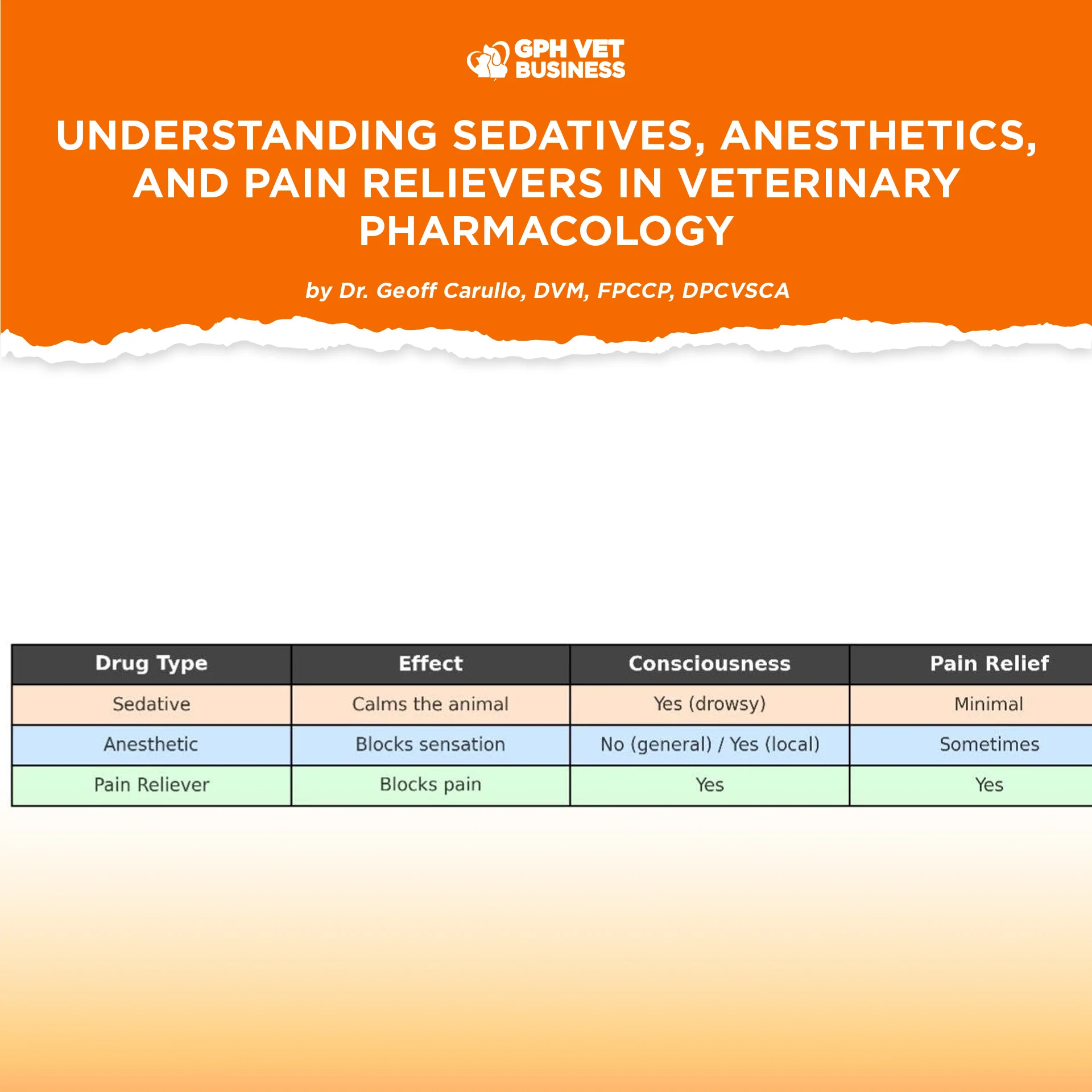
In veterinary practice, precision in pharmacology is essential—not just for effectiveness, but for the safety and welfare of our animal patients.
Among the most commonly used drug categories are sedatives, anesthetics, and pain relievers. Though these terms are often used interchangeably by laypeople, each serves a distinct purpose and acts differently on the animal body.
Understanding their differences helps veterinarians make informed choices during procedures, surgery, and patient management.
1. Sedatives: Calming Without Full Sleep
What they do:
Sedatives are drugs that reduce anxiety, agitation, and excitement in animals.
They calm the patient without causing full unconsciousness.
Common use:
Sedatives are used prior to procedures such as radiographs, grooming, transport, or minor interventions to make the animal more manageable.
Examples in veterinary medicine:
- Acepromazine – a phenothiazine tranquilizer used commonly in dogs and cats.
- Dexmedetomidine / Medetomidine – alpha-2 agonists with sedative and mild analgesic effects.
Key point:
Sedatives alone do not relieve significant pain and do not produce surgical anesthesia. Their role is to reduce stress and improve handling.


2. Anesthetics: Inducing Loss of Sensation or Consciousness
What they do:
Anesthetics block sensation, with some causing complete unconsciousness. They can be local (numbing a specific area) or general (inducing full sleep and immobility).
Common use:
Anesthetics are used during surgical procedures, dental cleanings, and invasive diagnostics where full immobilization and loss of sensation are needed.
Types:
- Local anesthetics: Lidocaine, Bupivacaine
(used for nerve blocks, skin sutures, etc.) - General anesthetics: Isoflurane, Propofol, Ketamine
(used for spays, neuters, tumor removals, etc.)
Key point:
General anesthetics put the animal into a controlled state of unconsciousness. While some anesthetics have mild pain-relieving properties, analgesia should always be supplemented post-op.
3. Pain Relievers (Analgesics): Blocking Pain Perception
What they do:
Pain relievers, or analgesics, reduce or eliminate pain perception.
They do not cause sedation or unconsciousness but target the animal’s ability to feel pain.
Common use:
Used to manage pain before, during, or after procedures, and in chronic pain conditions like arthritis, injuries, or cancer.
Types:
- Opioids: Butorphanol, Morphine, Tramadol
(good for acute surgical pain) - NSAIDs: Carprofen, Meloxicam, Firocoxib
(ideal for inflammation-related pain) - Adjunctive analgesics: Gabapentin, Amantadine
(used in neuropathic pain or chronic cases)
Key point:
Pain relievers do not sedate and do not induce unconsciousness. They are often combined with sedatives or anesthetics to ensure comfort during and after medical procedures.


Why It Matters in Practice
Each of these drug categories plays a unique role. A sedated animal may still feel pain. An anesthetized patient may be pain-free during surgery but may suffer after if analgesics are not given.
Therefore, a balanced protocol combining all three—sedative, anesthetic, and pain reliever—is often required for optimal veterinary care.
Understanding these differences ensures we treat our animal patients with the care, safety, and comfort they deserve. Whether in a general consult or a high-risk surgery, knowing when and how to use each drug type is one of the pillars of veterinary excellence.

Dr. Geoff Carullo is a Fellow and the current President of the Philippine College of Canine Practitioners.
Sharing this helps others understand what it really means to be a vet. Like and follow if you’re with us.