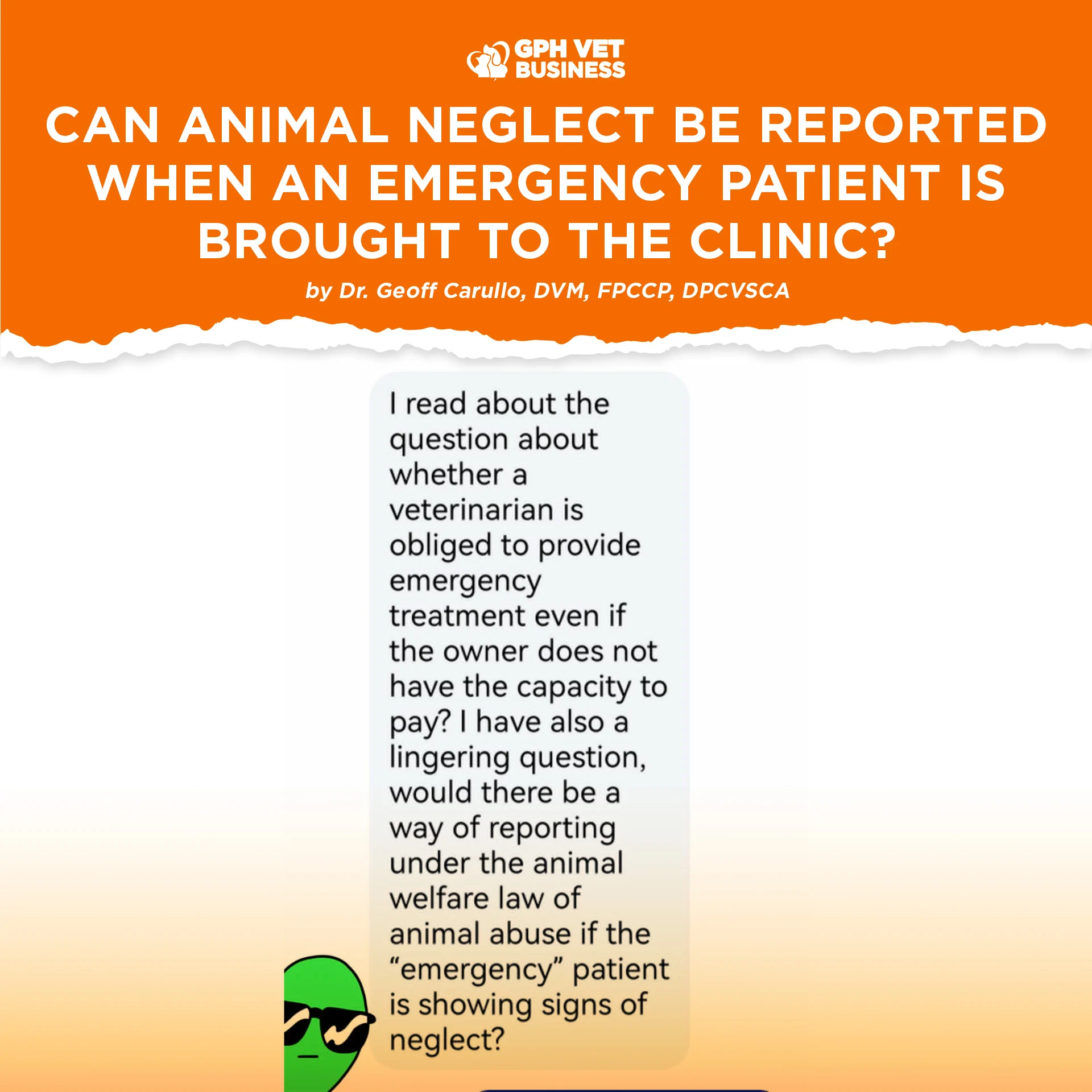
A veterinarian recently asked an important follow-up question after discussions on emergency treatment:
If an emergency patient is brought to the clinic showing obvious signs of neglect or possible abuse, can the veterinarian report the owner under the Animal Welfare Act?
The short answer is yes, potentially, but the decision should be based on facts, proper documentation, and applicable law rather than assumptions or emotions.


Veterinary Duty and Animal Welfare
When an animal arrives in an emergency, the veterinarian’s immediate concern is to assess the patient’s condition and determine what medical intervention is appropriate.
At the same time, veterinarians are also advocates for animal welfare. If, during the examination, there are objective findings suggesting that the animal has been subjected to cruelty, abandonment, prolonged neglect, starvation, or unnecessary suffering, these observations should not simply be ignored.
However, there is an important distinction between:
- An owner who is genuinely unable to afford treatment but has attempted to seek help; and
- An owner who has intentionally or recklessly failed to provide basic care, resulting in unnecessary suffering.
Financial hardship alone is not automatically animal abuse.
What Constitutes Neglect?
Neglect generally refers to the failure to provide the basic necessities required for an animal’s health and welfare.
Examples may include:
- Severe untreated wounds left for prolonged periods
- Extreme emaciation due to lack of food
- Untreated fractures despite obvious suffering
- Chronic skin disease with extensive maggot infestation left unattended
- Dehydration and starvation
- Lack of shelter resulting in preventable illness
- Repeated failure to provide reasonable veterinary care despite the owner’s ability to do so
Each case must be evaluated individually.


Documentation Is Essential
If neglect is suspected, veterinarians should thoroughly document their findings.
This may include:
- Complete physical examination findings
- Body condition score
- Clinical photographs (with proper documentation)
- Laboratory results
- Radiographs or ultrasound findings when indicated
- Medical records describing the severity and chronicity of the condition
Objective documentation is far more valuable than personal opinions.
Can It Be Reported?
Yes.
In the Philippines, suspected violations of the Animal Welfare Act (Republic Act No. 8485, as amended by Republic Act No. 10631) may be reported to the proper authorities, such as:
- The Bureau of Animal Industry (BAI)
- Local government authorities
- Law enforcement agencies when appropriate
The role of the veterinarian is generally to document the medical evidence and, when warranted, cooperate with the proper investigating authorities.
Whether criminal liability ultimately exists is a legal determination, not solely a veterinary one.
Every Delayed Consultation Is Not Neglect
Many owners arrive late because of circumstances beyond their control.
Some genuinely did not recognize the seriousness of the illness.
Others live in remote areas with limited access to veterinary services.
Some struggle financially but still make every effort to seek treatment once they realize the severity of the condition.
Compassion should accompany professional judgment.
A poor outcome or delayed consultation does not automatically mean abuse occurred.

Balancing Compassion and Accountability
Veterinarians often stand at the intersection of medicine, ethics, and law.
Our responsibility is twofold:
- Provide the best possible medical care for the patient within the circumstances.
- Protect animals from genuine cruelty and neglect when evidence supports it.
Neither responsibility should come at the expense of the other.
Careful documentation, objective assessment, and adherence to legal procedures ensure that both the welfare of the animal and the rights of the owner are respected.
Sources
- Republic Act No. 8485 (Animal Welfare Act of 1998)
- Republic Act No. 10631 (Amending the Animal Welfare Act)
- World Organisation for Animal Health (WOAH). Terrestrial Animal Health Code: Animal Welfare Principles.
- Philippine Veterinary Medical Association (PVMA) Code of Ethics.
Dr. Geoff Carullo is a Fellow and the current President of the Philippine College of Canine Practitioners.
Sharing this helps others understand what it really means to be a vet. Like and follow if you’re with us.