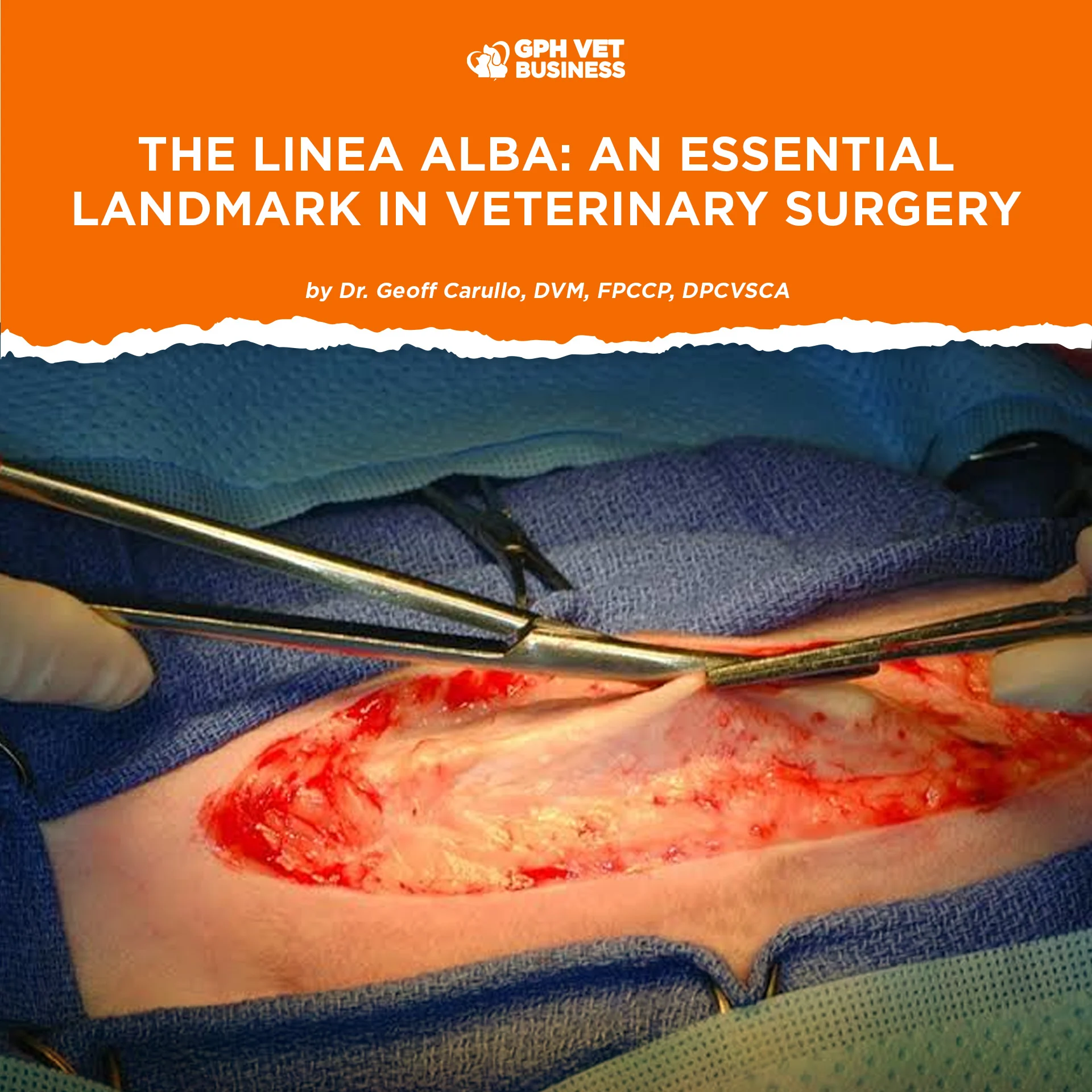
The linea alba is a fibrous structure located along the ventral midline of the abdomen. It extends from the xiphoid process of the sternum to the pubic symphysis and is formed by the interweaving aponeuroses of the external abdominal oblique, internal abdominal oblique, and transverse abdominal muscles.
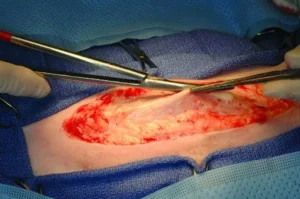
Unlike skeletal muscle, the linea alba is composed primarily of dense collagen fibers. This composition gives it excellent tensile strength, allowing it to function as the central tendon of the abdominal wall while helping maintain abdominal stability and support the abdominal viscera.
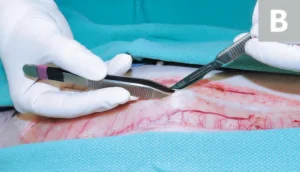
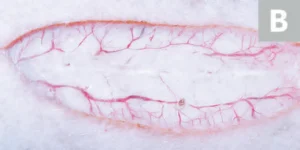


Anatomical Characteristics
The linea alba has several important features:
- It lies on the ventral midline of the abdomen.
- It is relatively avascular compared with adjacent muscles, resulting in less bleeding during surgery.
- It is relatively less innervated than surrounding muscle, although it is not completely devoid of nerve endings.
- It provides excellent tissue strength for suture placement and abdominal wall closure.
Surgical Importance
The linea alba is the preferred site for a ventral midline celiotomy, the standard approach for exploratory laparotomy and many abdominal procedures in dogs and cats.
This approach is favored because it:
- Provides rapid and wide access to the abdominal cavity.
- Minimizes muscle transection.
- Reduces intraoperative hemorrhage.
- Allows secure closure due to the strength of the collagen fibers.
For these reasons, the ventral midline approach is widely regarded as the most practical and versatile abdominal incision in small animal surgery.


Clinical Relevance
Successful identification and closure of the linea alba are critical during abdominal surgery. Failure to accurately incorporate the linea alba into the closure may increase the risk of:
- Incisional hernia
- Wound dehiscence
- Eventration or evisceration
- Delayed wound healing
Because the linea alba bears much of the tension during healing, precise suture placement and proper tissue handling are essential.
Pain Considerations
A common misconception is that the linea alba has no pain receptors. In reality, it is relatively less innervated than skeletal muscle, making it a less painful tissue to incise. However, postoperative pain still occurs because the surgical incision also involves the skin, subcutaneous tissues, fascia, and parietal peritoneum, all of which are richly supplied with sensory nerves.

Take-Home Message
For veterinary students and surgeons alike, the linea alba is more than just a white line on the abdomen. It is a vital anatomical structure that provides a safe surgical entry point, minimizes tissue trauma, and offers a strong foundation for abdominal closure. Understanding its anatomy and biomechanics is fundamental to performing successful abdominal surgery and achieving optimal patient outcomes.
References
- Fossum TW. Small Animal Surgery. 6th ed. Elsevier.
- Johnston SA, Tobias KM. Veterinary Surgery: Small Animal. 2nd ed. Elsevier.
- Slatter D. Textbook of Small Animal Surgery. 3rd ed. Saunders.
- Evans HE, de Lahunta A. Miller’s Anatomy of the Dog. 5th ed. Elsevier.
Dr. Geoff Carullo is a Fellow and the current President of the Philippine College of Canine Practitioners.
Sharing this helps others understand what it really means to be a vet. Like and follow if you’re with us.