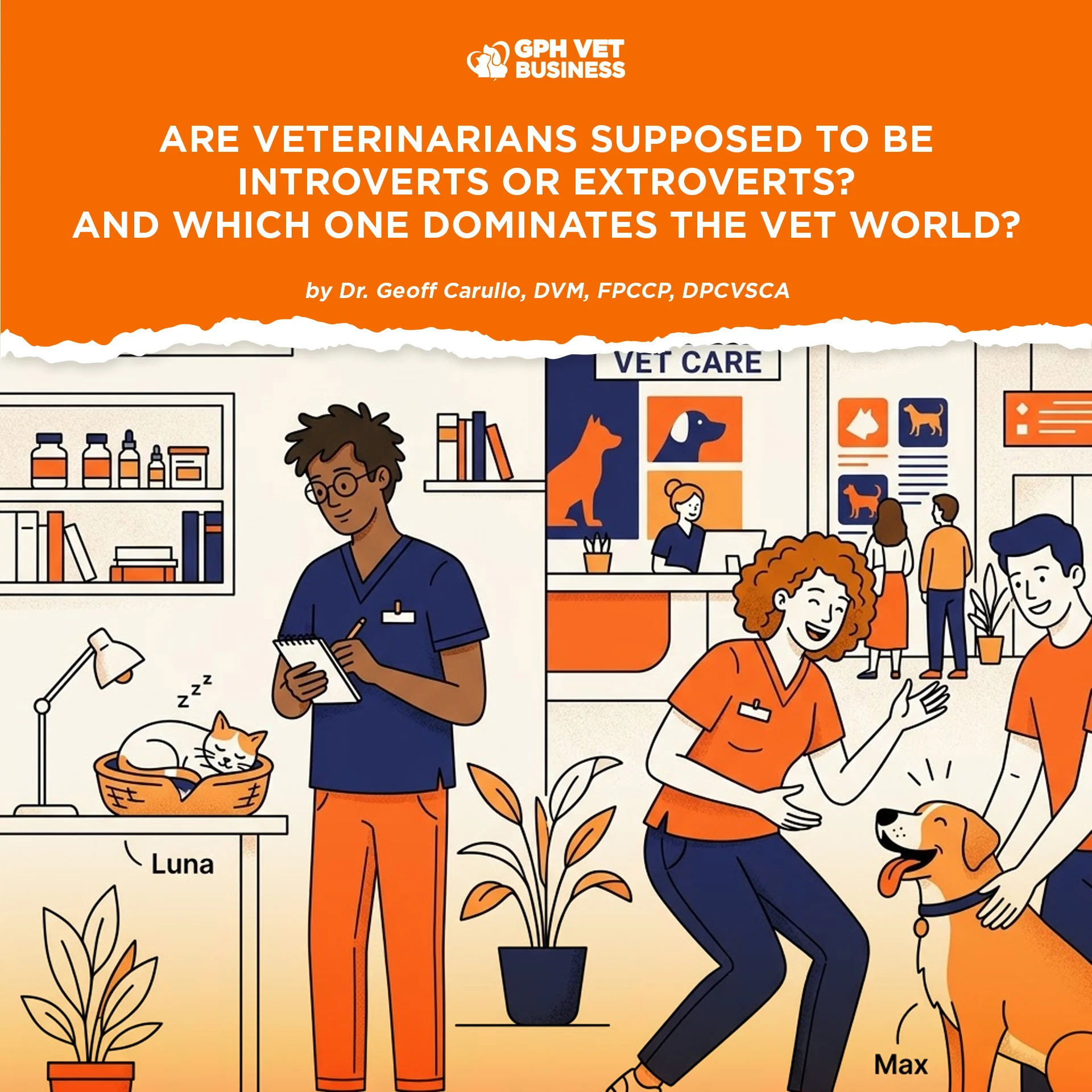
When people imagine veterinarians, they often think of quiet, gentle souls who love animals more than people—classic introverts. But walk into a busy clinic, and you’ll see vets leading teams, consoling pet parents, and confidently making split-second decisions—traits often linked to extroverts.
So… what gives?
Which personality type suits the veterinary profession best?


The Surprising Truth: It’s Not Either-Or. It’s Both.
The best veterinarians aren’t strictly introverts or extroverts.
They’re ambiverts—those rare breeds who can shift gears depending on what the situation demands.
How Introverts Shine in Practice
- Calm Under Pressure
They internalize stress and project steadiness—ideal during surgeries or emergencies. - Detail-Oriented
Introverts are often perfectionists. And in medicine, details can mean life or death. - Empathy in Silence
Sometimes, grieving clients don’t need words. Just presence. Introverts excel at that.

How Extroverts Thrive in the Clinic
- Client Communication Champs
They’re natural talkers—great for explaining complex diagnoses or calming nervous pet parents. - Team Leadership
Extroverts easily rally a team, boost morale, and create a high-energy work culture. - Networkers
From building referral connections to industry speaking gigs, extroverts open doors with charisma.
So Who’s Better?
Neither.
Success in veterinary medicine isn’t about personality type.
It’s about emotional intelligence, adaptability, and a heart that can handle both animals and humans.
The quiet vet who listens more than they speak?
A clinic treasure.
The bold vet who commands a room and inspires confidence?
Equally powerful.


Final Take: Be Who You Are, Then Upgrade It
Whether you’re an introvert, extrovert, or somewhere in between, the vet world needs you.
Just remember:
- Sharpen your communication if you’re quiet.
- Cultivate focus and calm if you’re loud.
- Learn when to speak, and when to just… listen.
Because at the end of the day, it’s not about being more social or more silent—
It’s about being more human.
Sharing this helps others understand veterinary medicine better. Like and follow if you’re with us.
Dr. Geoff Carullo is a Fellow and the current President of the Philippine College of Canine Practitioners.