When a picture of a dog with buttons sewn onto its ear went viral, outrage immediately followed. Many netizens accused the handler or veterinarian of cruelty. Comment sections overflowed with anger, threats, and judgment—proof that without context, people often jump to the worst conclusions.
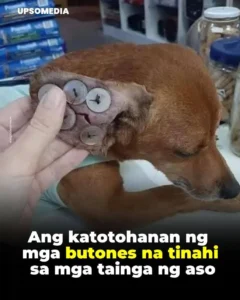
But here’s the truth: those buttons are not instruments of torture. They are part of a recognized veterinary technique to treat a condition called aural hematoma.
The Medical Purpose of the Buttons
An aural hematoma happens when blood collects inside the ear flap (pinna), usually due to trauma or vigorous scratching. Left untreated, it causes painful swelling, scarring, and a permanent deformity often called “cauliflower ear.”
The treatment involves draining the hematoma and suturing the ear so that both skin layers adhere back together while preventing the space from refilling with blood. Buttons (or sometimes rubber discs, plastic sheets, or special pads) act as pressure distributors. Instead of sutures cutting through the fragile ear tissue, the buttons spread out the force evenly.
This technique:
- Reduces post-operative pain and swelling
- Prevents tissue necrosis and deformity
- Ensures a smoother cosmetic and functional healing
Far from cruelty, this is actually a humane and science-based surgical method performed under anesthesia.


Why Many Filipinos Reacted with Outrage
The Facebook post explained the medical purpose, yet many comments still condemned it as abuse. This reveals a painful reality: a large gap in reading comprehension and health literacy.


Some commenters only looked at the image and ignored the explanation. Others read but failed to grasp the context. This disconnect between what was written and what was understood highlights a wider issue: in a fast-scrolling digital world, emotions often override comprehension.
Why Vets Must Adjust
As veterinarians, we are not only healers of animals—we are also educators of the public. If our medical explanations are too technical, or if we assume people will “just understand,” we risk misinterpretation, outrage, and misinformation spreading like wildfire.
To bridge this gap, vets must:
- Simplify language without compromising accuracy
- Use visual aids and infographics that clearly show the “before and after” benefits
- Anticipate common misconceptions and address them upfront
- Communicate with empathy, remembering that most pet owners react first with emotion, not logic


A Final Reminder
The viral dog-with-buttons photo reminds us of two things:
- Veterinary medicine often looks strange to the untrained eye, but every stitch has a purpose.
- In a country where digital literacy and reading comprehension are challenges, vets must communicate with clarity, patience, and compassion.
Otherwise, science will be drowned out by anger, and a world without understanding quickly becomes a chaotic one.

Dr. Geoff Carullo is a Fellow and the current President of the Philippine College of Canine Practitioners.
Sharing this helps others understand what it really means to be a vet. Like and follow if you’re with us.