It happens more often than we like to admit.
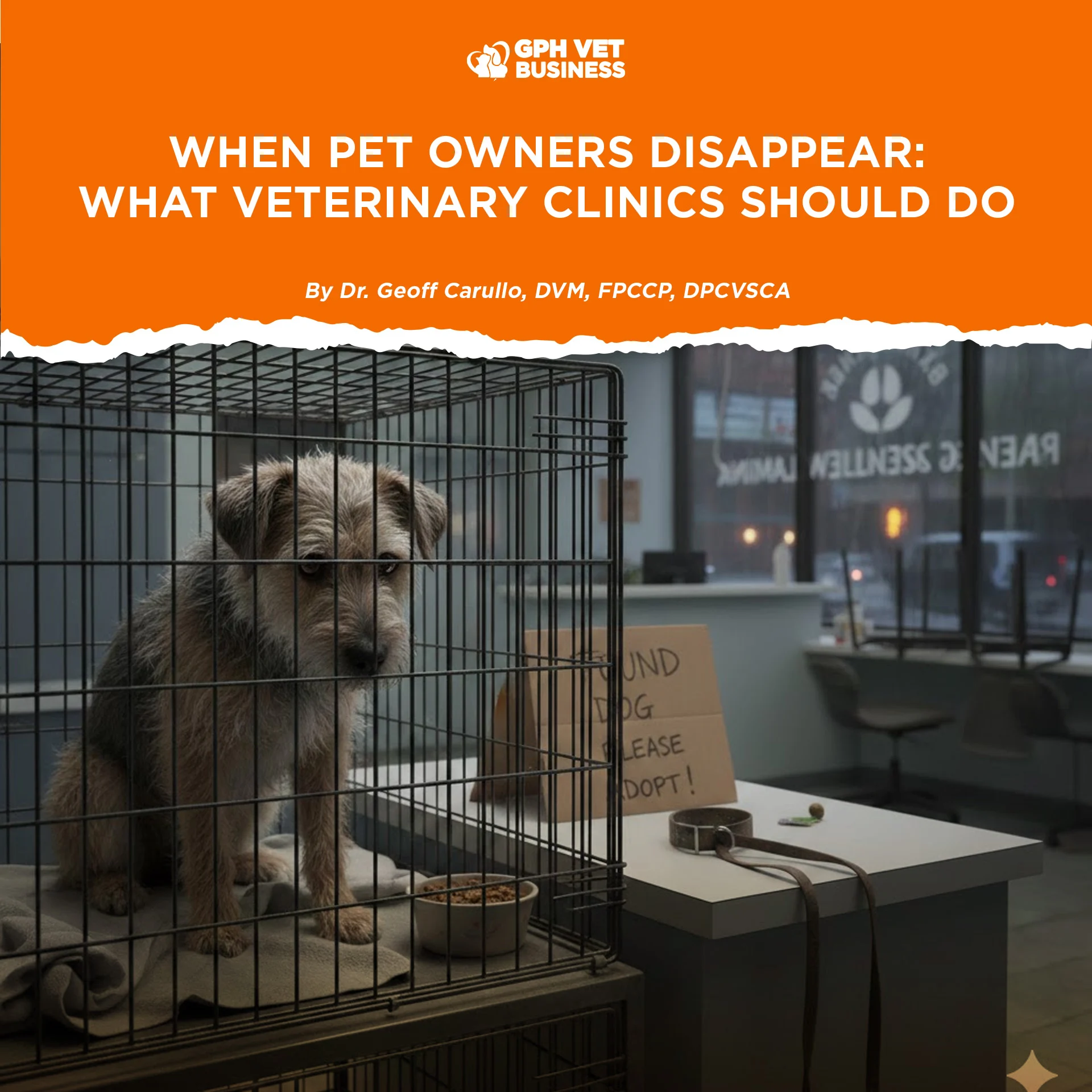
A pet is confined.
We treat.
We monitor.
We care.
Then one day —
the messages stop.
the calls are ignored.
the owner disappears.
And the clinic is left with the question:
“What are we legally allowed to do?”
In the Philippines, the answer is balanced:
We must protect the animal.
We must protect the clinic.
And we must follow the law.
1. Once the animal is confined, we carry the responsibility
Under the Animal Welfare Act, the moment a pet is left in our care, we are expected to provide:
Enough food and water
Humane and clean housing
Necessary medical treatment to prevent suffering
Meaning:
We cannot starve the patient
We cannot “let it deteriorate” just because there’s no money
We cannot treat the pet like trash simply because the owner vanished
We may simplify treatment to basic but humane care, but we cannot neglect.
This is the ethical side — and the legal side.
2. Abandoned Is Not Just a Feeling — It Must Be Documented
A pet is not “abandoned” just because we feel ghosted.
We must show that the clinic:
Tried to contact the owner
Explained the bill and discharge plan
Sent a formal message or notice with a clear deadline
Recorded everything in the chart
Because one day, the owner may suddenly appear and say:
“Bakit niyo pinamigay ang aso ko?”
“Bakit niyo ginawa ‘yan na wala akong permiso?”
Documentation protects the veterinarian and the clinic.
It shows we acted responsibly.
3. When It’s Truly Abandoned — We Don’t Decide Alone
Once the owner clearly refuses to return, won’t pay, and cannot be reached:
The clinic must report or coordinate with:
The City or Municipal Veterinary Office
The barangay
A registered animal shelter or pound
These authorities now guide or take over the decision:
Adoption
Continued custody
Humane euthanasia (only when necessary)
This keeps the process transparent, legal, and traceable.
What the clinic should never do:
Secretly rehome
Post on Facebook and “adopt out” on impulse
Euthanize simply because there’s unpaid balance
Dump the animal outside the clinic
Right process means less risk and more protection.
4. When the Patient Dies and Nobody Claims the Body
Even if the pet dies, professionalism continues.
The clinic should:
Record the death properly
Still try to reach the owner
Give a short reasonable time to claim
If unclaimed, arrange respectful cremation or lawful disposal
Keep receipts and notes
We do not store bodies forever.
We handle remains with dignity and in compliance with health rules.
And yes — unpaid balances can still be legally collected later.
5. The Best Protection Is Prepared from Day One
Most legal problems start because the clinic has no proper confinement form.
Your admission form should clearly explain:
What “abandoned patient” means
That the clinic may coordinate with the LGU or shelter
What happens to unclaimed remains
That unpaid bills may still be pursued in court
Consent to receive notices through text, email, or Messenger
When clients sign this at admission, expectations are clear.
No shocks.
No drama.
Less conflict.
Final Thought
Abandonment cases are emotionally exhausting.
We love animals.
We want to help.
But we must also stay fair, sustainable, and lawful.
The right approach is always:
Humane
Documented
Coordinated with authorities
Legally defensible
In the end, we protect:
The animal
The clinic
The veterinarian
And the integrity of the profession
Sharing this helps others understand what it really means to be a vet. Like and follow if you’re with us.