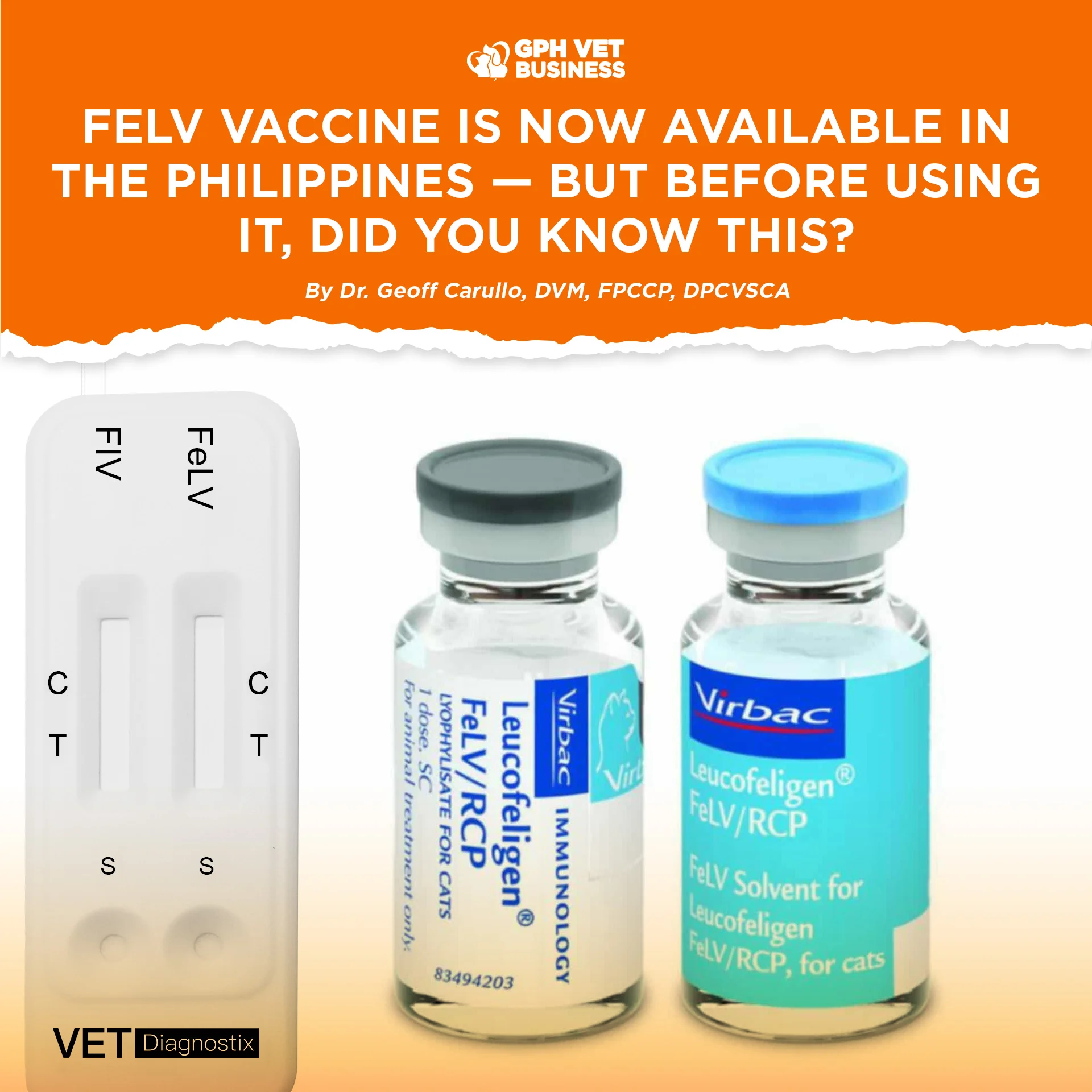
The FeLV vaccine from Virbac is now commercially available in the Philippines. This is a welcome development in feline preventive care, especially for cats at risk of exposure to Feline Leukemia Virus (FeLV).
In the local setting, the FeLV-containing vaccine currently available is Leucofeligen FeLV/RCP. Aside from FeLV protection, this vaccine also includes RCP, which refers to protection against core feline viral diseases.
But before using it, there is a critical step that should never be skipped:
Cats must be tested first — and the test result must be NEGATIVE — before receiving any FeLV vaccine.
What Does RCP Mean in Leucofeligen FeLV/RCP?
The RCP component stands for protection against the following core feline viral diseases:
- Feline Viral Rhinotracheitis (caused by feline herpesvirus-1)
- Feline Calicivirus
- Feline Panleukopenia
These diseases are considered core infections in cats because of their high contagiousness, potential severity, and widespread presence. The RCP component helps protect against respiratory disease complexes and severe gastrointestinal illness commonly seen in kittens and unvaccinated cats.
By combining FeLV and RCP protection into a single vaccine, Leucofeligen FeLV/RCP supports a streamlined vaccination program for cats that require both core and FeLV protection.
Why Testing Comes Before Vaccination
FeLV is a retrovirus that permanently affects the immune system once infection is established. FeLV vaccines are designed only to prevent infection, not to treat it.
A simple in-clinic blood test can determine a cat’s FeLV status. This information is essential because vaccination decisions change completely depending on whether the cat is negative or already infected.
Testing is not just a formality — it is a decision point.
Only FeLV-negative cats should proceed to FeLV vaccination.
Why You Do NOT Vaccinate a FeLV-Positive Cat
If a cat is already FeLV-positive:
- The vaccine cannot eliminate the virus
- It does not slow disease progression
- It does not improve immunity or prognosis
- It provides no therapeutic benefit
In addition, FeLV-positive cats are often immunocompromised. Giving an unnecessary vaccine may place additional stress on the immune system without offering protection.
Vaccinating a FeLV-positive cat may also create a false sense of security, when in reality the cat remains infected and may still transmit the virus to other cats.
Who Should Be Tested Before Vaccination
FeLV testing is recommended for:
- All kittens before starting FeLV vaccination
- Newly adopted or rescued cats
- Cats with outdoor or unknown exposure
- Cats living in multi-cat households
- Any sick cat, regardless of age
Testing ensures that FeLV vaccines are given only to cats that can truly benefit from them.
Which Cats Benefit From the FeLV/RCP Vaccine
Leucofeligen FeLV/RCP is appropriate only for FeLV-negative cats that are:
- Outdoor or indoor–outdoor
- Exposed to other cats of unknown status
- Living in shelters, catteries, or multi-cat environments
For strictly indoor cats with no exposure risk, FeLV vaccination may not always be necessary, but baseline FeLV testing remains an important part of responsible feline care.
The Bottom Line
The availability of an FeLV vaccine in the Philippines is a positive step forward. However, responsible use matters.
Test first. Confirm the result is negative. Vaccinate only FeLV-negative cats.
This protects cats, avoids unnecessary medical intervention, and follows sound, evidence-based veterinary practice.
Dr. Geoff Carullo is a Fellow and the current President of the Philippine College of Canine Practitioners.
Sharing this helps others understand what it really means to be a vet. Like and follow if you’re with us.