In the age of social media, veterinary news spreads fast. Unfortunately, accuracy often spreads last.
See: FB Post Here
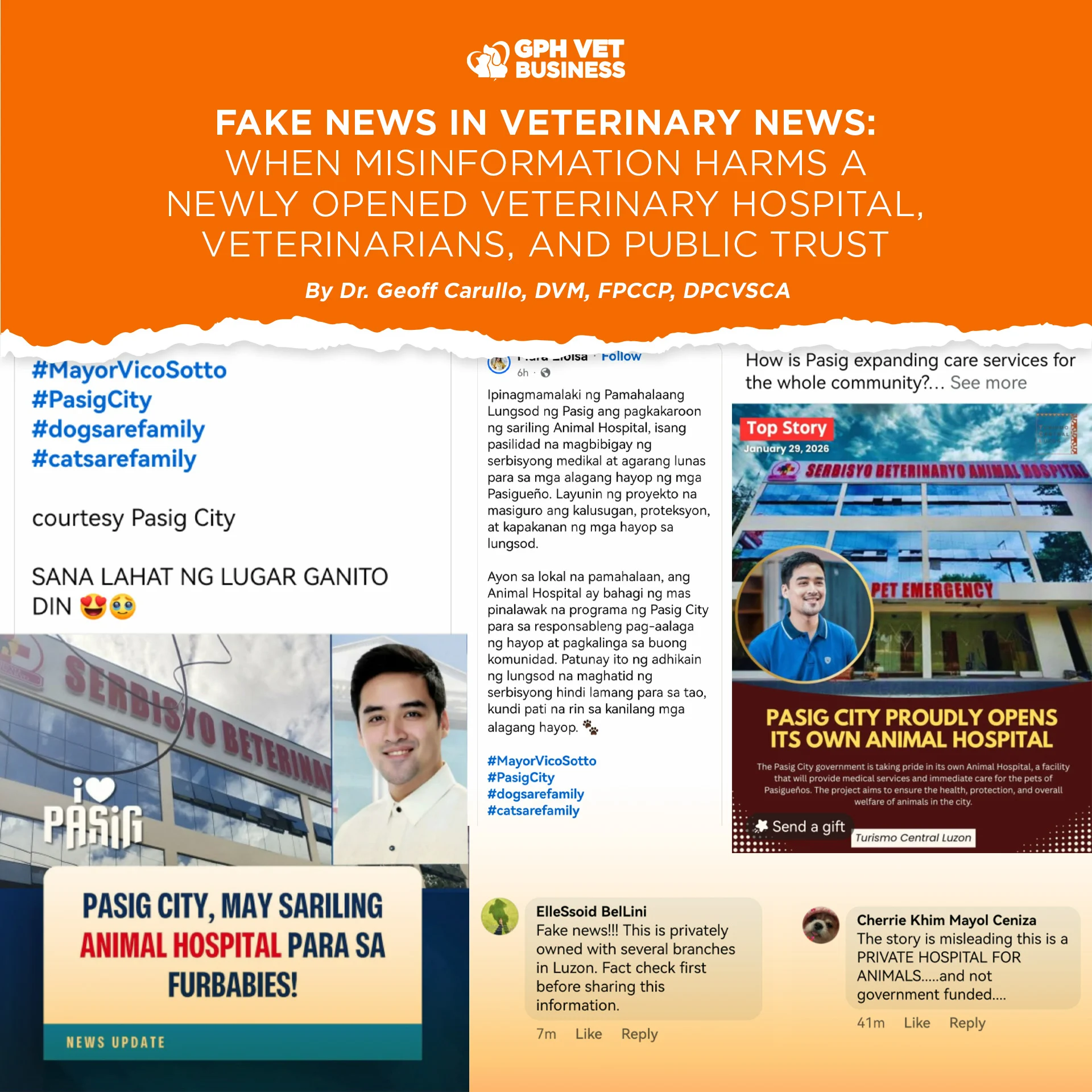
Recently, online posts circulated claiming that Pasig City now has a government-owned Veterinary Hospital, strongly associating the project with a sitting mayor. The problem is simple but serious:
The facility is a newly opened private Veterinary Hospital, not a government-owned or government-controlled institution.
This is where fake news in veterinary reporting becomes harmful.
What Is Fake News in Veterinary Media?
Veterinary fake news does not always come in the form of lies. Often, it comes from assumptions presented as facts.
This happens when:
- A private Veterinary Hospital is portrayed as government-owned
- Projects are credited to the wrong public official
- Content creators skip verification in favor of engagement
- “Good news” is shared without confirming details
The result is public confusion, even when intentions are good.
Why Mislabeling a Veterinary Hospital Is Dangerous
Calling a private Veterinary Hospital “government-owned” creates immediate and long-term problems.
Client Expectation Mismatch
Pet owners may expect free or heavily subsidized services. When professional fees apply, disappointment and complaints follow, unfairly directed at the hospital.
Operational Strain
A Veterinary Hospital operates under private business realities: staffing costs, equipment expenses, medicines, and compliance requirements. Government-level expectations placed on a private facility are unrealistic and damaging.
Reputational Risk From Day One
For a hospital that has just opened, misinformation can damage trust before relationships are even formed.
Regulatory and Legal Confusion
Ownership matters. Misrepresentation can raise unnecessary questions about licensing, permits, and authority, especially in a highly regulated profession like veterinary medicine.
The Political Attribution Problem
Incorrectly linking a Veterinary Hospital to a specific mayor or administration adds another layer of confusion.
It:
- Misplaces credit
- Creates political assumptions
- Drags veterinary institutions into narratives they never intended to be part of
Veterinary Hospitals should never become tools for political branding or social media clout.
Responsibility of Content Creators
You don’t need to be a journalist to post responsibly.
Before publishing veterinary “news”:
- Verify if the facility is private or government-owned
- Confirm official announcements
- Identify the correct project proponents
- Avoid assumptions
Likes fade.
Misinformation lingers.
Why This Matters to Veterinarians
Veterinary Hospitals already face:
- High operational costs
- Emotional and ethical pressure
- Strict regulation
- Public misunderstanding of veterinary fees
Fake news adds a burden that the profession does not deserve.
If we want to uplift veterinary practice in the Philippines, accuracy must matter more than virality.
Final Thought
Celebrating animal welfare is good.
Supporting Veterinary Hospitals is good.
But spreading unverified information harms clinics, veterinarians, and the public alike.
Veterinary news should educate, not confuse.
Sharing this helps others understand what it really means to be a vet. Like and follow if you’re with us.