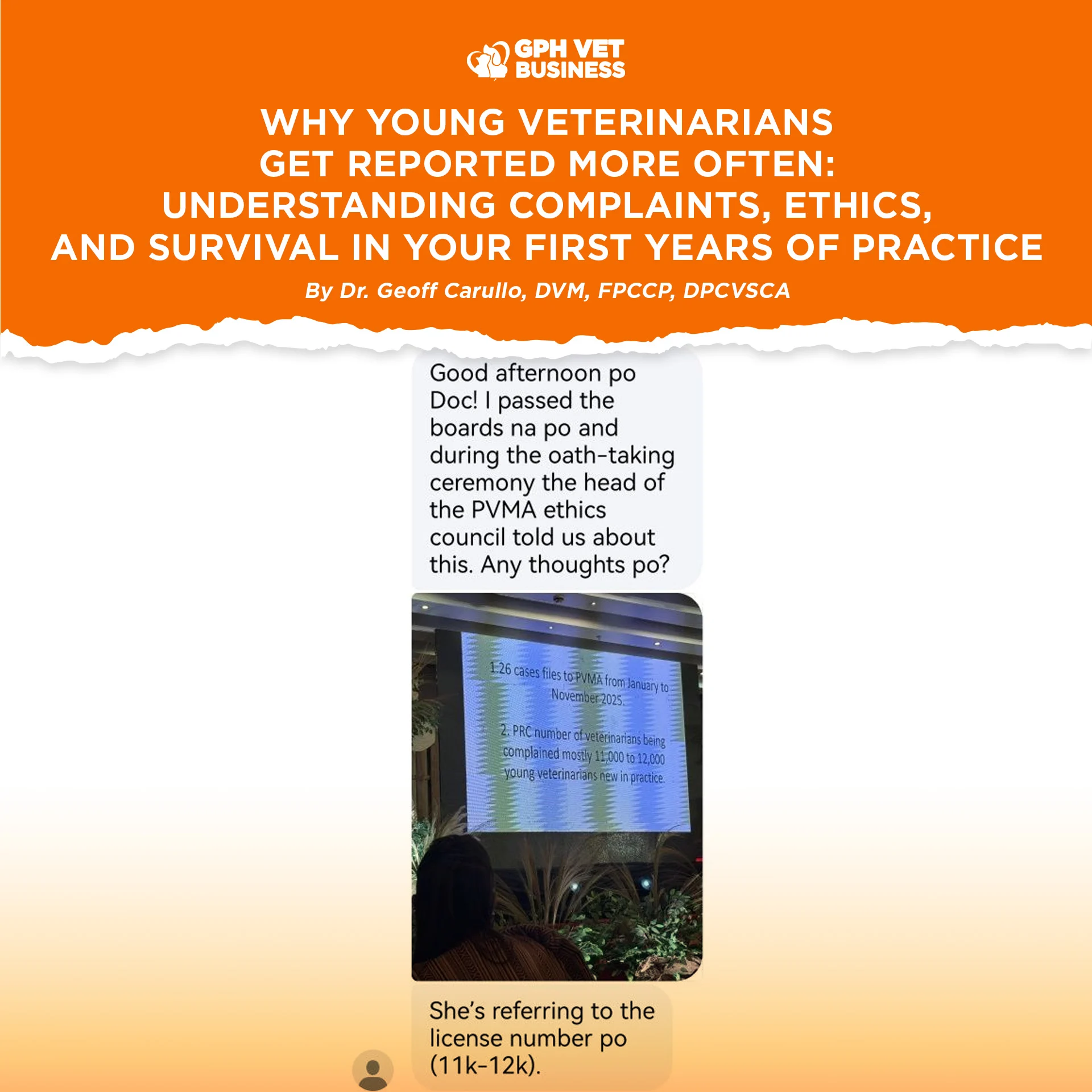
Passing the Veterinary Licensure Examination is a milestone. The oath-taking feels like the finish line. In truth, it is the starting gate.
During recent oath-taking ceremonies, the Ethics Council of PVMA shared an uncomfortable but important reality. A significant number of complaints filed involve veterinarians with newer PRC license numbers. Many are young practitioners, newly licensed, newly employed, and newly exposed to real-world practice pressures.
This article is not meant to scare new veterinarians. It is meant to protect them.
Why younger vets appear more in complaints
This pattern does not mean young veterinarians are incompetent. In most cases, it means they are more exposed and less protected.
1. You handle the front lines
New veterinarians are often assigned to OPD, emergencies, night shifts, and walk-in cases. More cases mean more opportunities for misunderstandings, especially in emotionally charged situations.
2. Communication skills are still developing
Clients do not complain because a disease was difficult. They complain because expectations were not aligned.
Common triggers include:
“Akala ko gagaling.”
“Hindi sinabi na pwede palang mamatay.”
“Bigla na lang nadagdagan ang bayad.”
These are communication failures, not necessarily medical errors.
3. Documentation is often incomplete
Many young vets focus on treating the patient but forget to protect themselves.
No written consent.
No estimate.
No documented discussion of risks.
When a complaint arises, the absence of records becomes your weakest point.
4. Overconfidence mixed with pressure
New veterinarians want to prove themselves. They take on cases they are not yet comfortable with, sometimes without senior backup. When outcomes are poor, intention does not matter. Evidence does.
5. Social media magnifies everything
A single angry post can escalate into a formal complaint. Screenshots last forever. Replies made in emotion can be used against you.
The truth about complaints
Most complaints against veterinarians are not about malpractice.
They are about:
Miscommunication
Financial misunderstandings
Unmet expectations
Poor client handling after complications
Good medicine without good communication is still risky medicine.
How to protect yourself from Day One
These habits save careers.
1. Informed consent is non-negotiable
Explain:
The diagnosis or lack of certainty
All reasonable options
Risks and possible outcomes
Costs and possible additional expenses
Put it in writing. Have it signed.
2. Never promise outcomes
You may promise effort, monitoring, and honesty.
Never promise survival, cure, or recovery.
3. Document everything
If it is not written, it did not happen.
Include:
History
Physical findings
Your assessment
Options offered
Client decisions
Follow-up instructions
4. Know when to refer or ask for help
Referral is not weakness.
It is professionalism.
5. Separate professionalism from emotion
Do not argue online.
Do not manage cases through comments or DMs.
Keep communication formal, calm, and documented.
6. Address concerns early
Many complaints can be prevented by one honest conversation, done early, with empathy and clarity.
A message to new veterinarians
You are not being watched more because you are weak.
You are being tested because you are new.
Your first years in practice will shape your habits for life. Build habits that protect both your patients and your license.
Veterinary medicine is not only about clinical skill.
It is about communication, documentation, and professional judgment.
Master those early, and you will not just survive. You will last.
Sharing this helps others understand what it really means to be a vet. Like and follow if you’re with us.