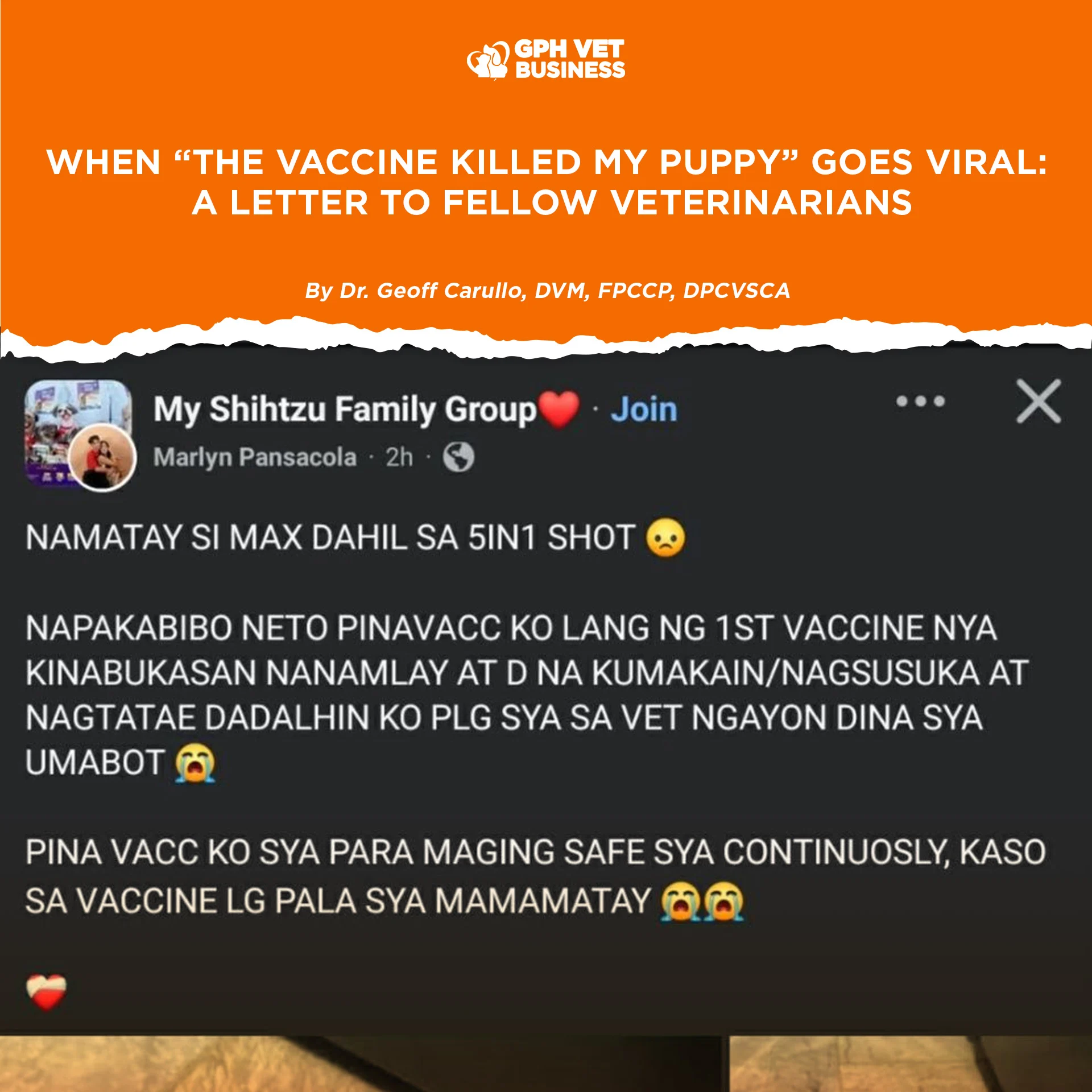
We see the post again.
A puppy receives a 5-in-1 vaccine.
The next day, it is weak, vomiting, passing diarrhea — and eventually dies.
Screenshots spread, emotions rise, and the verdict is immediate:
“The vaccine killed the dog.”
“The vet is at fault.”
“Don’t vaccinate your pets anymore.”
For the public, the story is simple.
For us, it is anything but.
The silent truth we carry
Most of us already know what likely happened.
The puppy was:
• Poorly sourced
• Stressed, malnourished, or parasitized
• Incubating parvovirus or distemper long before vaccination
• Brought in late and vaccinated out of schedule
The disease timeline simply collided with the vaccine appointment.
To the grieving owner, the vaccine is the last event they remember.
To us, it is just the moment the disease finally showed itself.
Yet explaining that — calmly, scientifically, compassionately — is rarely welcomed online.
Why most veterinarians choose not to “fight” on Facebook
Many non-vets ask:
“Why are vets so quiet in these threads?”
Silence is not ignorance.
Silence is self-preservation — and professional responsibility.
1. Social media is designed for blame, not nuance
In the comments section, there is no space for:
• Incubation periods
• Immunology
• Case differentials
• Risk-benefit conversations
There is only:
• Victim
• Villain
• Outrage
• Share button
Science is slow.
Facebook is emotional, fast, and unforgiving.
2. We cannot ethically diagnose an unseen patient
Anything we say can quickly become:
“The vet admitted fault.”
or
“They are defending each other.”
Without:
• Physical exam
• Diagnostics
• Complete history
Public speculation edges toward malpractice.
3. We become lightning rods for anger
Many colleagues have been:
• Attacked personally
• Screenshotted and shamed
• Accused
• Threatened
• Reported unfairly
All for trying to educate.
With burnout already high in our profession, fighting online battles is a cost many cannot afford.
The painful part: grief needs someone to blame
Instead of the virus…
Instead of the source of the puppy…
Instead of the lack of early veterinary care…
The easiest target becomes:
“The vaccine.”
“The veterinarian.”
Fear spreads. Vaccination declines. More puppies die from preventable disease.
The cycle repeats.
Our role: steady, compassionate, science-anchored
We cannot control the internet.
But we can control how we practice.
In the clinic:
• Never vaccinate sick or suspicious patients “just to proceed”
• Stabilize first, test when needed, document everything
• Explain incubation timelines clearly
• Emphasize strict quarantine
In communication:
• Acknowledge the owner’s grief first
• Speak calmly
• Correct misinformation without attacking
• Avoid public debates that escalate
Among colleagues:
• Support each other
• Talk openly about compassion fatigue
• Remind one another that prevention is still our greatest tool
A reminder
Vaccines remain one of the safest, most life-saving tools in veterinary medicine.
The enemy is not the syringe.
The enemy is parvo, distemper, leptospirosis, and the preventable suffering we see every day.
To every veterinarian reading this
You are not the villain in these stories.
You are the reason so many puppies survive.
You are the barrier between disease and communities.
You continue — quietly, professionally — because you know prevention saves lives.
Sharing this helps others understand what it really means to be a vet.
Like and follow if you’re with us.