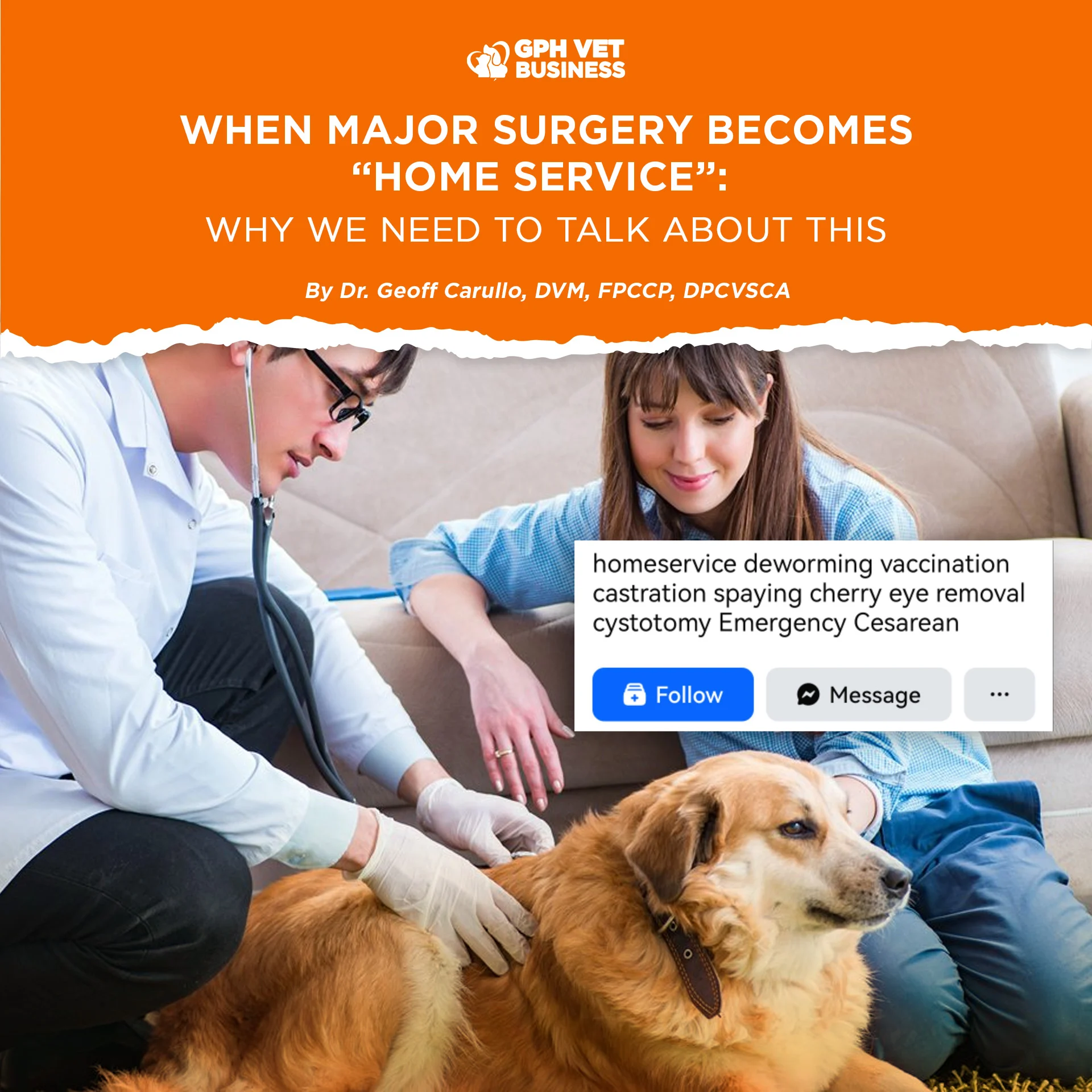
Recently, an online post circulated showing a veterinarian performing home-service surgeries — including:
- spay and neuter
- cherry eye removal
- cystotomy
- pyometra surgery
- and even emergency cesarean sections
The photos showed surgeries done on tables inside homes, with newborn puppies, organs, and surgical fields all openly displayed.
No names are important here.
This is not about embarrassing one person.
This is about asking an important question for our profession:
Just because something can be done… should it be done this way?
Home service is not the problem.
House calls help a lot when used appropriately:
- vaccination
- basic consultation
- palliative care
- follow-ups
These are valuable, compassionate services.
But when we start offering:
- C-sections
- pyometra surgeries
- cystotomies
- cherry eye operations
- “emergency surgical packages”
inside a living room, dining area, or bedroom, the risk to mothers, pets, and newborns becomes significantly higher.
Major surgery requires a major environment.
A proper surgical setup exists for a reason:
- sterile operating field
- oxygen and anesthesia monitoring
- crash cart and emergency drugs
- surgical lighting
- trained team support
- ICU and post-operative care
None of these can be consistently guaranteed in a normal home.
And when complications happen — hemorrhage, anesthetic arrest, uterine rupture, septic infection — seconds matter.
A house is not built for that fight.
“But the owner requested it.”
“Mas mura.”
“Convenient.”
Convenience and cost will always be realities.
But ethics reminds us:
The patient’s safety comes first.
When our standard of care is lowered because of:
- pressure from clients
- affordability
- competition
- social media demand
we slowly normalize something dangerous.
Worse, the public starts to believe:
“Okay lang pala mag-opera kahit saan.”
And when tragedies happen, the profession carries the blame.
There are rare exceptions — but they must remain rare.
Remote areas with no access to clinics, disaster settings, or true emergencies where transfer is impossible.
Even then:
- full disclosure
- written consent
- proper equipment
- maximum effort to transfer afterward
And it must never become:
- a marketed package
- a routine service
- a “content opportunity”
Lives are at stake.
For pet owners
If someone offers major surgery at home, ask:
“Where is the oxygen and heart monitor?”
“What happens if my dog stops breathing?”
“Is there a sterile operating setup?”
“Why can’t we do this in a clinic?”
Most of the time, the safest answer is simple:
Surgery belongs in a clinic.
Final thought
Our goal is not to attack, shame, or destroy.
Our goal is to protect:
- the mother
- the puppies or kittens
- the trust in veterinary medicine
We can be compassionate without compromising safety.
And sometimes, the most ethical decision we make is saying:
“No — this must be done in the clinic.”
Sharing this helps others understand what it really means to be a vet.