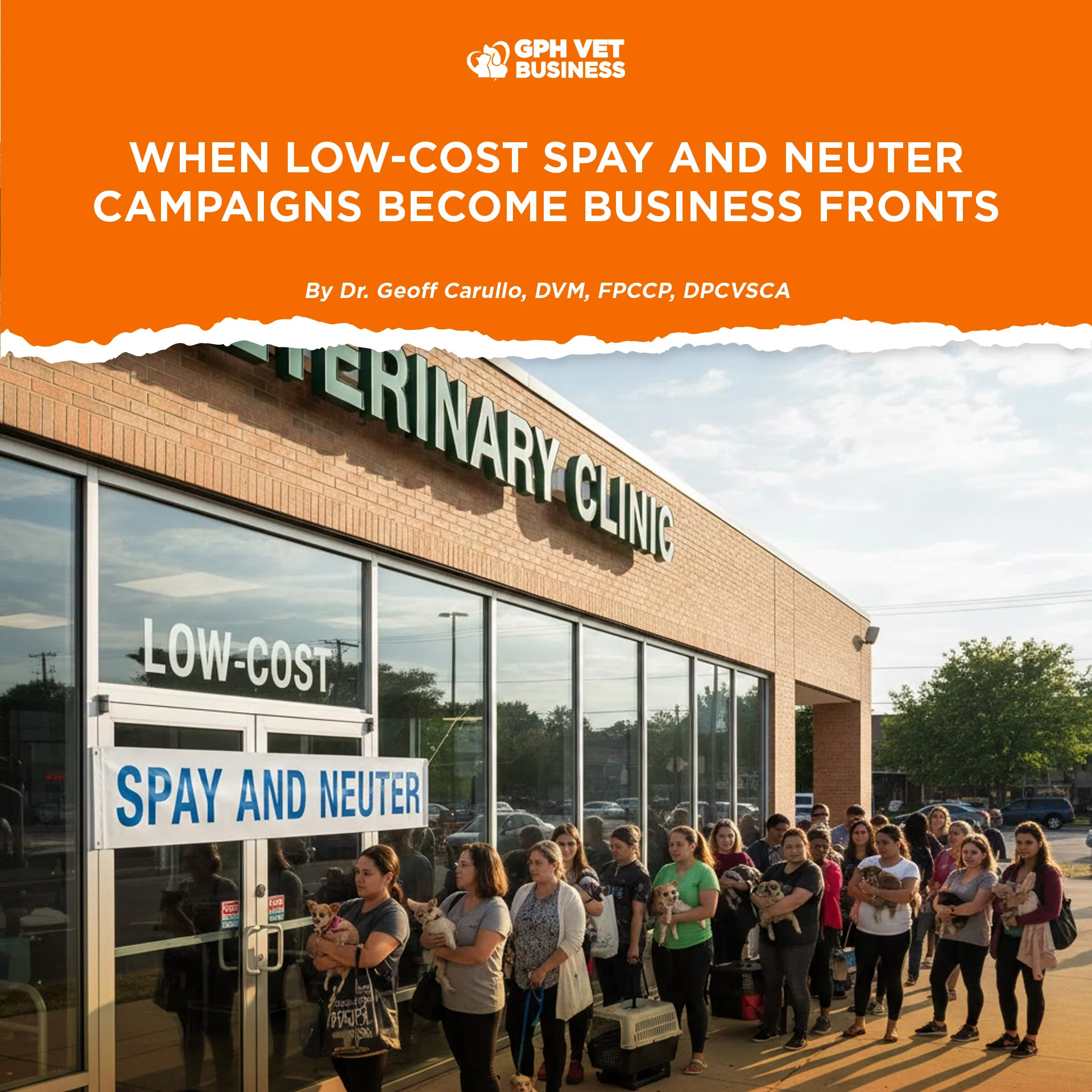
Spay and neuter campaigns are often promoted as humane, community-centered efforts to reduce pet overpopulation. They are supposed to provide accessible, affordable surgery for animals whose owners cannot otherwise afford veterinary care, often backed by charitable groups or humane societies.
But what happens when a “low-cost” campaign is not really what it claims to be?
There are instances where campaigns that appear to be public service turn out to be income-generating ventures, functioning more like mobile private clinics than true advocacy-driven programs. On the surface, they wear the label of animal welfare. In practice, they can undermine both the veterinary profession and the genuine goals of animal advocacy.
The Fine Line Between Advocacy and Enterprise
There is nothing inherently wrong with veterinarians earning a living through their skills. Our profession is built on expertise, time, and service, and these are rightly compensated.
The ethical issue arises when campaigns are presented as “charity” or “low-cost” community initiatives but are actually structured to turn a profit under the guise of altruism.
True advocacy programs are transparent. They disclose:
- who is funding them
- where the money goes
- how the discounted rates are sustained
Many rely on donors, LGU partnerships, or NGO support to cover costs. When these elements are absent and the activity is simply marketed as a welfare project while charging nearly standard rates, it becomes misleading.
Impact on the Veterinary Profession
Such practices blur professional boundaries. Private practitioners who maintain clinics and pay overhead costs may feel undercut by itinerant mobile campaigns presenting themselves as “low-cost” while actually generating steady income.
Worse, it may erode public trust in veterinarians, making communities question whether welfare programs are genuine or just business in disguise.
Impact on Humane Advocacy
For animal welfare groups, authenticity matters. When campaigns are revealed to be profit-driven, it damages the credibility of all spay and neuter efforts. Communities may start to doubt the sincerity of legitimate programs, and donors may hesitate to support future welfare initiatives.
A Call for Transparency
The solution is not to discourage veterinarians from doing mobile practice or offering affordable services. Instead, the call is for transparency.
- If it’s a private mobile service, say so.
- If it’s truly a welfare program, show the support system behind it.
Advocacy and enterprise can coexist — but only when honesty defines the line between them.
What ultimately matters
In the end, what matters most is the welfare of the animals and the integrity of the veterinary profession. Real advocacy is not about fronting, but about serving with clarity of purpose.