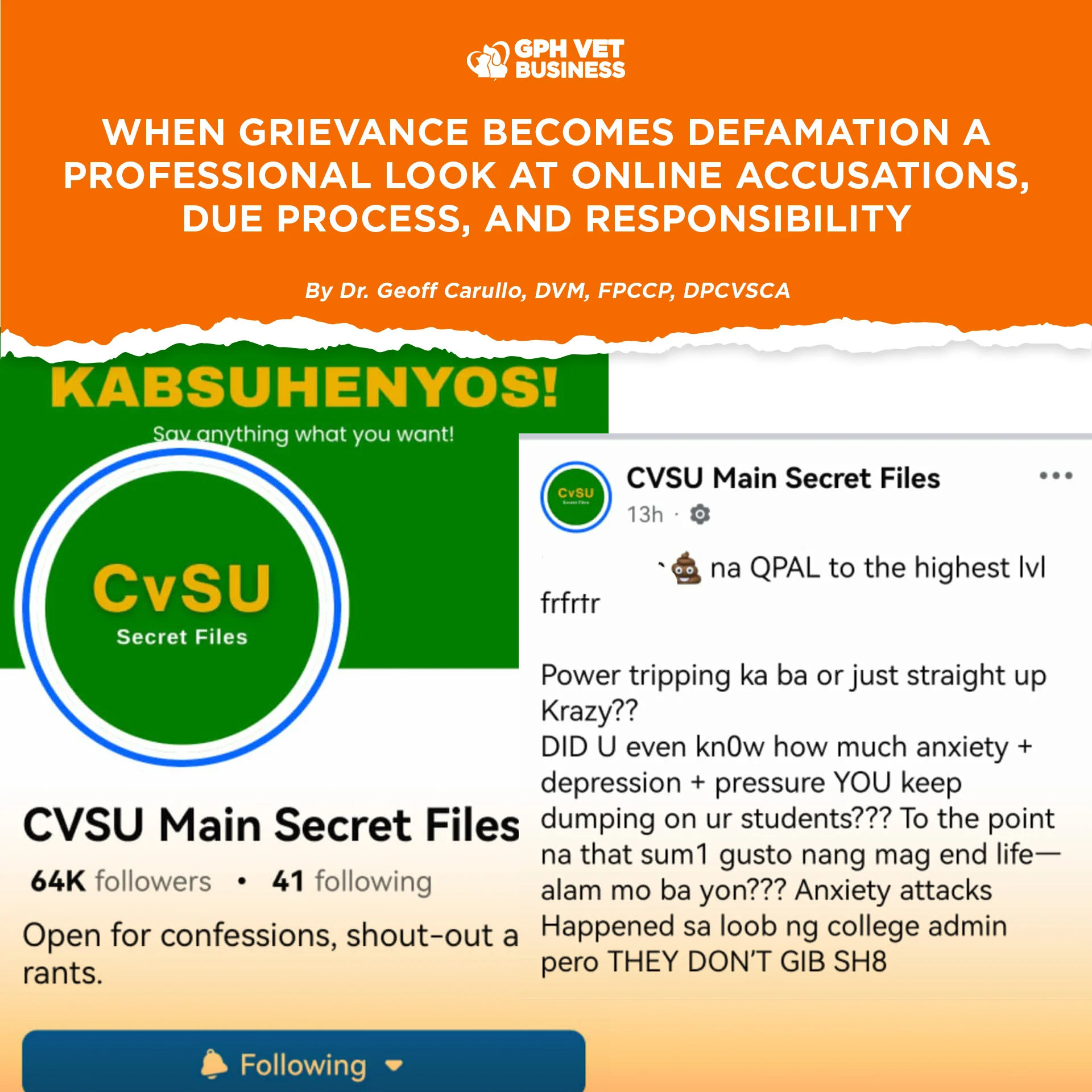
Social media has become the loudest courtroom of our time. It gives voice to frustration, pain, and anger, often instantly and without filters. But when grievances cross the line into public accusations of criminal or moral wrongdoing, the consequences become serious, not only ethically but legally.
Recent posts circulating on pages associated with Cavite State University Main Secret Files raise an important question for educators, administrators, students, and page managers alike:
“At what point does expression stop being a cry for help and start becoming defamation?”
The difference between grievance and accusation
Students have every right to express dissatisfaction with academic systems, teaching styles, or institutional policies. Academic pressure, delayed graduation, and emotional strain are real concerns that deserve to be heard and addressed.
However, there is a crucial distinction between:
- Saying a system feels unfair or overly strict, and
- Publicly accusing a specific professor of causing suicide attempts, intentionally destroying lives, abusing power, or acting with cruelty and malice.
The former is a grievance.
The latter is an allegation of grave misconduct.
Why public accusations carry legal weight
Under Philippine law, libel exists when four elements are present:
- A defamatory imputation
- An identifiable person
- Public dissemination
- Malice, which is presumed once defamation is shown
Posts that label a professor as a “life destructor,” blame them for suicide attempts, or portray them as deliberately harming students are not mere opinions. These are statements presented as fact, made publicly, directed at identifiable individuals, and delivered in a hostile tone.
Whether the platform is anonymous or not does not erase liability. Page administrators and content amplifiers can also be held accountable when defamatory material is allowed to remain online.
The danger of weaponizing mental health narratives
Mental health must be treated with care, respect, and responsibility. Using suicide or self harm allegations as rhetorical weapons in online conflicts is deeply problematic.
If such claims are unverified, they do not advance mental health advocacy. Instead, they:
- Trivialize real suffering
- Risk spreading misinformation
- Expose both authors and platforms to legal consequences
- Undermine legitimate calls for reform
Mental health concerns deserve structured support systems, not public trials by comment section.
The role of anonymous pages and administrators
Pages that brand themselves as “secret files” or confession spaces often claim neutrality. In practice, neutrality disappears when posts:
- Name or clearly identify individuals
- Accuse them of criminal or life destroying behavior
- Use inflammatory language
- Encourage public outrage without evidence
Responsible moderation is not censorship. It is ethical stewardship.
If grievances are to be published, they must be:
- De identified
- Fact based
- Free of accusations of crimes or death
- Focused on systems, not character assassination
- Directed toward constructive resolution
Due process protects everyone
Educational institutions have formal mechanisms for complaints, investigations, and appeals. These processes exist not to silence students, but to protect all parties, including complainants, from irreversible harm caused by unproven accusations.
Destroying reputations online does not fix broken systems. It often creates new victims.
A call for balance
Compassion and accountability are not opposites. We can listen to students without endorsing defamation. We can demand reform without abandoning fairness. We can protect mental health without using it as a shield for reckless speech.
Freedom of expression is powerful. With that power comes responsibility.
Dr. Geoff Carullo is a Fellow and the current President of the Philippine College of Canine Practitioners.
Sharing this helps others understand what it really means to be a vet. Like and follow if you’re with us.