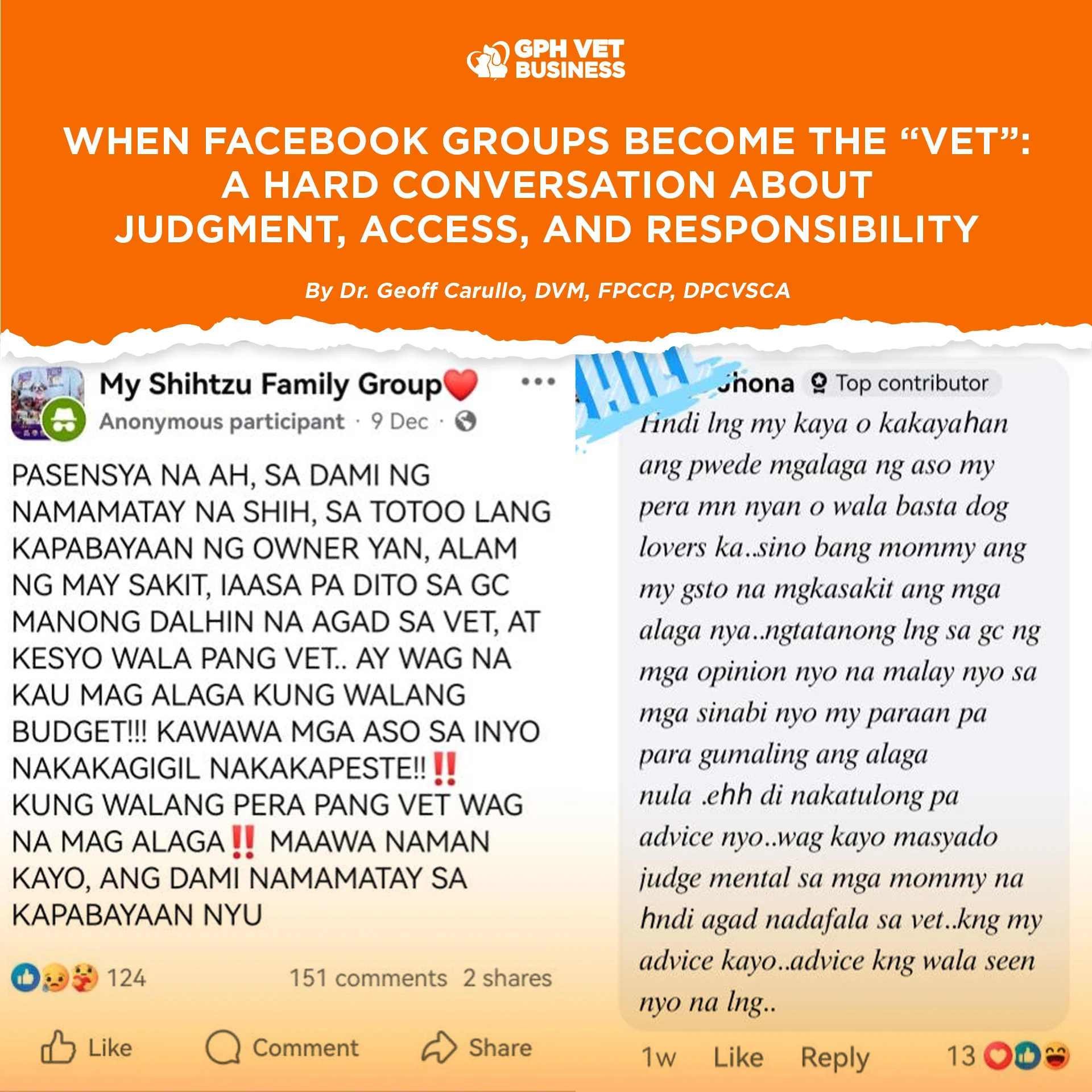
In almost every breed-specific Facebook group, the pattern is the same.
A distressed pet owner posts photos of a sick dog.
Symptoms are described.
A plea for help follows.
And then the comments explode.
“Dalhin mo agad sa vet.”
“Kung walang budget, huwag mag-alaga.”
“Kasalanan mo yan.”
“Maaawa ka ba kung namatay?”
From the outside, the anger feels justified. We are trained to see red flags. We know delays cost lives. We see preventable deaths every single day.
But from the owner’s side, the story is rarely that simple.
The Reality Vets Know (But Social Media Forgets)
As veterinarians, we work in the intersection of medical urgency and economic reality.
Not all owners delay because they are careless.
Some delay because:
- The nearest clinic is hours away
- The clinic is closed
- The emergency fee alone exceeds their weekly income
- They are genuinely trying to understand what is happening before panicking
- They are afraid of being judged more than they are afraid of being wrong
When owners turn to group chats or Facebook groups, it is not always because they want to replace veterinarians.
Often, it is because they feel locked out of veterinary care.
Judgment Does Not Save Patients
Shaming an owner does not:
- Reverse disease progression
- Lower mortality
- Magically produce money
- Improve compliance
- Create trust in the profession
What it does create is silence.
Owners who feel attacked stop asking questions.
They delay longer next time.
They hide symptoms.
They wait until the condition is irreversible.
As vets, we must acknowledge an uncomfortable truth: fear of judgment is now a barrier to care.
But Let’s Be Clear: Advice Is Not Treatment
At the same time, we must also be honest with owners.
Facebook advice is not veterinary care.
Group opinions do not replace diagnostics.
Home remedies can delay life-saving intervention.
As veterinarians, we see the end result:
- Parvo cases treated too late
- Pyometra ignored until rupture
- Tick-borne diseases mismanaged
- Respiratory distress dismissed as “hangin lang”
The intention may be good, but the outcome can still be fatal.
Where Do We Draw the Line?
This is where professional maturity comes in.
We can hold two truths at the same time:
Owners have a responsibility
If you choose to own an animal, veterinary care is part of that responsibility. Planning, budgeting, and knowing where to go in emergencies matters.
The system is imperfect
Access, cost, clinic hours, emergency fees, and geography are real barriers, especially in the Philippines.
Blaming alone solves neither.
A Better Role for Veterinarians in These Spaces
We cannot control Facebook groups.
But we can influence the tone of the profession.
What helps more than judgment:
- Clear red-flag education
- Explaining why urgent care is needed
- Providing realistic next steps
- Encouraging without humiliating
- Redirecting owners to proper care firmly but humanely
“Dalhin mo agad sa vet” is correct.
But how we say it determines whether the owner actually goes.
The Bigger Picture
Every angry comment comes from compassion for animals.
Every defensive reply comes from fear and helplessness.
As veterinarians, we stand in the middle.
Our challenge is not just to heal animals, but to educate without alienating, to advocate without shaming, and to protect animal welfare without forgetting human reality.
If we lose empathy, we lose trust.
If we lose trust, we lose patients.
And in the end, the animal always pays the price.
Sharing this helps others understand what it really means to be a vet. Like and follow if you’re with us.