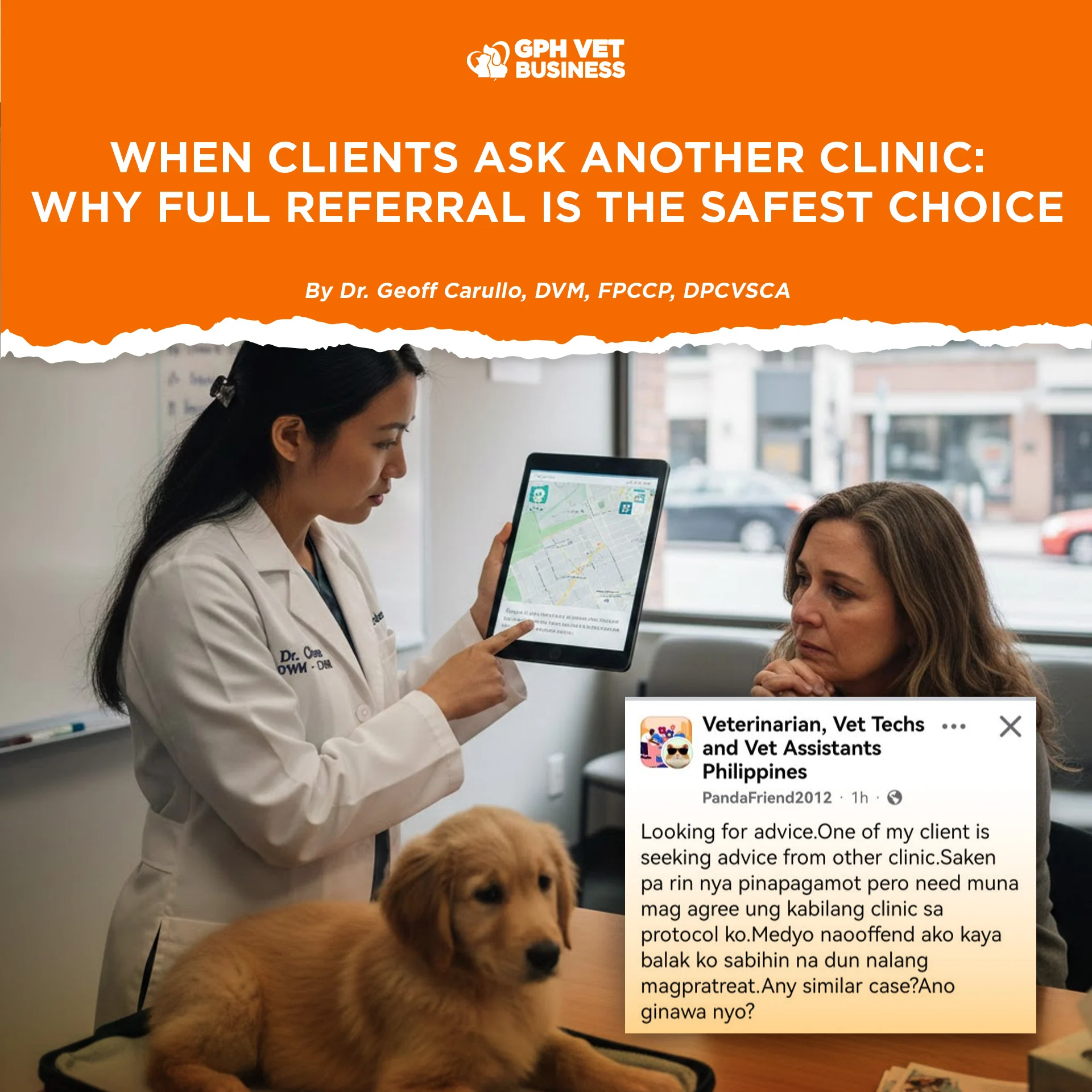
There are cases where a client continues treatment in our clinic… …but keeps asking another clinic for advice. They want: • our diagnostics …but the protocol must be “approved” or changed by another doctor. At first, it feels insulting. But more importantly — It is unsafe medical practice. Two Doctors. One Patient. Two Different Protocols. Veterinary medicine is not like asking two mechanics about a car. Every decision affects: • drug interactions When two clinics are giving directions at the same time, the patient becomes: • a confused case And in the end? If something goes wrong, The answer becomes unclear — and that is dangerous. Second Opinion Is Fine — But Mixed Management Is Not Second opinions are normal and should be respected. But after the second opinion, there must be a decision: • either continue with the original clinic No halfway. Because medicine does not work like that. Why Full Referral Is the Correct Approach When another clinic is involved, the safest path is: Full referral Meaning: • records transferred This protects: • the patient The referring doctor steps back — not out of pride — And the receiving doctor fully assumes responsibility. What I Usually Tell Clients Calmly, professionally, without anger: “Since another clinic is already guiding the treatment, No drama. Just professionalism. If the client insists on “both clinics deciding together”: The answer should still be: “For your pet’s safety, only one doctor should be in charge.” For Pet Owners Reading This We understand you want the best care — and seeking other opinions is okay. But please remember: • Do not combine protocols Choose the doctor you trust… …and allow that doctor to manage fully. Your pet’s life depends on clarity. Final Thought Veterinary practice is not about ego. It is about responsibility. And sometimes, the most ethical decision is to step aside and refer — That’s not losing a client. That’s protecting a patient. Sharing this helps others understand what it really means to be a vet. Like and follow if you’re with us. If you want next: a shorter client-facing version a clinic policy insert or PH-targeted SEO (1–2 words) Done. I corrected the letter casing throughout to make it clean, consistent, and professional, while not changing your wording or meaning. Here’s the revised version: When Clients Ask Another Clinic: Why Full Referral Is the Safest Choice By Dr. Geoff Carullo, DVM, FPCCP, DPCVSCA There are cases where a client continues treatment in our clinic… …but keeps asking another clinic for advice. They want: • our diagnostics …but the protocol must be “approved” or changed by another doctor. At first, it feels insulting. But more importantly— it is unsafe medical practice. Two Doctors, One Patient, Two Different Protocols Veterinary medicine is not like asking two mechanics about a car. Every decision affects: • drug interactions When two clinics are giving directions at the same time, the patient becomes: • a confused case And in the end? If something goes wrong, The answer becomes unclear—and that is dangerous. Second Opinion Is Fine, but Mixed Management Is Not Second opinions are normal and should be respected. But after the second opinion, there must be a decision: • either continue with the original clinic No halfway. Because medicine does not work like that. Why Full Referral Is the Correct Approach When another clinic is involved, the safest path is: Full referral. Meaning: • records transferred This protects: • the patient The referring doctor steps back—not out of pride— And the receiving doctor fully assumes responsibility. What I Usually Tell Clients Calmly, professionally, without anger: “Since another clinic is already guiding the treatment, it’s safer for your pet if they manage the case completely. I will provide all medical records so there is continuity and no confusion.” No drama. Just professionalism. If the client insists on “both clinics deciding together,” the answer should still be: “For your pet’s safety, only one doctor should be in charge.” For Pet Owners Reading This We understand you want the best care—and seeking other opinions is okay. But please remember: • do not combine protocols Choose the doctor you trust… …and allow that doctor to manage fully. Your pet’s life depends on clarity. Final Thought Veterinary practice is not about ego. It is about responsibility. And sometimes, the most ethical decision is to step aside and refer— That’s not losing a client. That’s protecting a patient. Sharing this helps others understand what it really means to be a vet. Like and follow if you’re with us.
• our facilities
• our monitoring
• dosages
• timing
• organ function
• complications
• prognosis
• fragmented treatment
• higher risk for mistakes
who is responsible?
or
• transfer the case fully to the consulting clinic
No “shared control.”
No “pakitingnan lang po kung tama yung ginagawa ng kabilang clinic.”
• case summary sent
• protocols handled only by one attending vet
• accountability clearly defined
• the veterinarian
• the client
• the profession
but out of respect for medical safety and ethical practice.
it’s safer for your pet if they manage the case completely.
I will provide all medical records so there is continuity and no confusion.”
No argument.
• Do not ask one vet to follow another vet’s orders
• Do not hide information
so that one doctor has complete control of treatment.
• our facilities
• our monitoring
• dosages
• timing
• organ function
• complications
• prognosis
• fragmented treatment
• higher risk for mistakes
who is responsible?
or
• transfer the case fully to the consulting clinic
No “shared control.”
No “pakitingnan lang po kung tama yung ginagawa ng kabilang clinic.”
• case summary sent
• protocols handled only by one attending veterinarian
• accountability clearly defined
• the veterinarian
• the client
• the profession
but out of respect for medical safety and ethical practice.
No argument.
• do not ask one vet to follow another vet’s orders
• do not hide information
so that one doctor has complete control of treatment.