For most people, an email is just an email.
But for many veterinarians, one unexpected letter from the board, one complaint notice, one formal review — can feel like the ground disappears beneath our feet.
You open the message.
You see your name.
And before finishing the first paragraph, panic slowly creeps in.
Not because you are careless.
Not because you intended harm.
But because in our profession, doing your best still doesn’t protect you from complaints, accusations, and investigations.
-
The story behind the screenshot
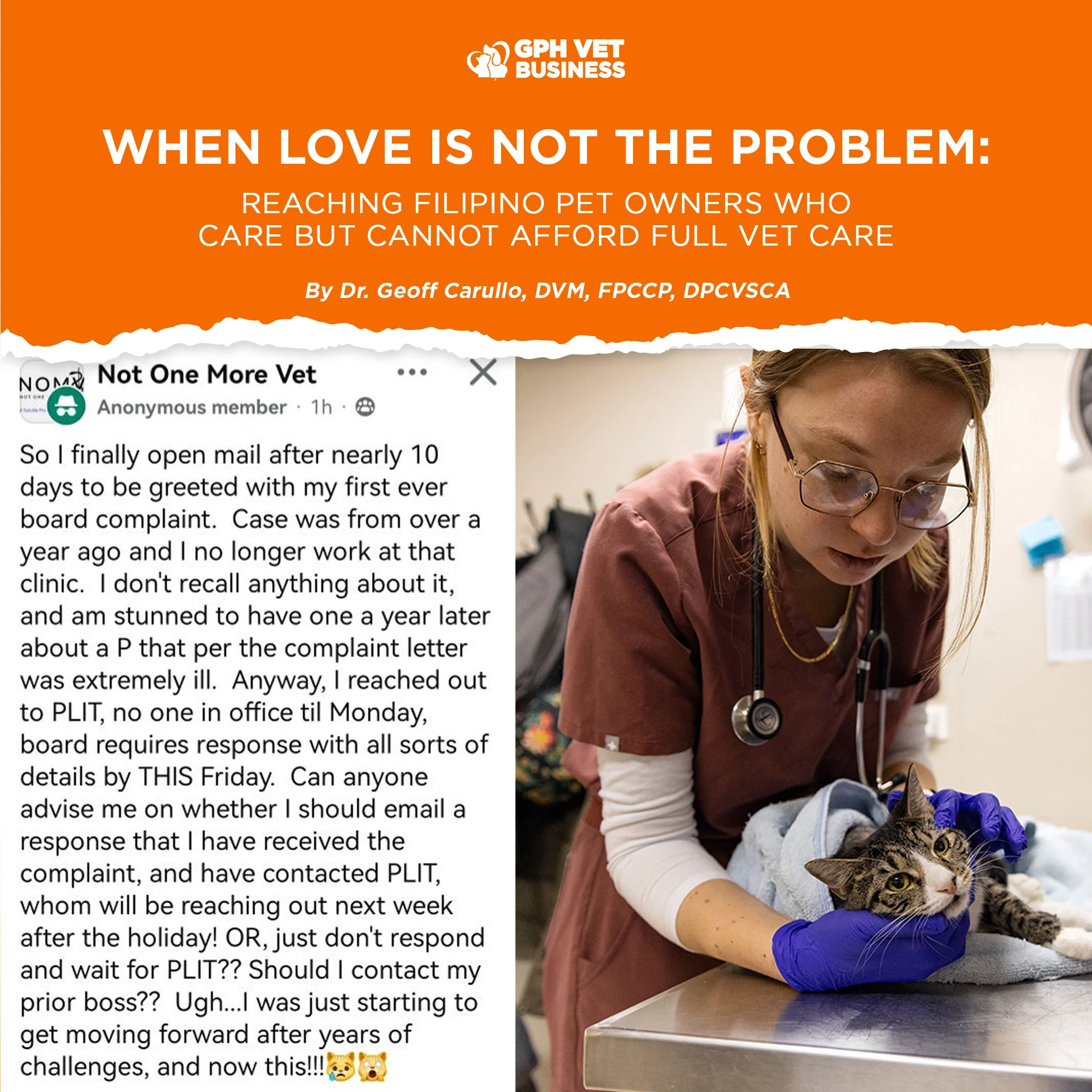
In the image above, a veterinarian from another country shared something many vets are now experiencing:
They opened their mail after several days, only to discover:
- a formal board complaint
- about a case from more than a year ago
- involving a clinic they no longer work in
- with a deadline requiring detailed answers immediately
They wrote about their shock, their fear, their confusion.
And they asked other vets:
“Do I respond now?
Or do I wait for PLIT?”
For colleagues outside the United States, this may sound unfamiliar.
1.1 Where did the complaint letter actually come from?
In the United States, complaints like this usually begin when a pet owner — or sometimes another veterinarian — submits a written complaint to the State Veterinary Medical Board.
Almost every U.S. state has its own veterinary licensing board. This is the government body that:
- issues veterinary licenses
- investigates complaints
- enforces the Veterinary Practice Act
Today, many boards have online portals where a frustrated or grieving client can:
- fill out a form
- upload documents or photos
- describe what happened
- click “submit”
Sometimes it takes only a few minutes.
Once the board reviews the complaint and decides it falls under their authority, they open a case and prepare an official notice. That letter is then sent to the veterinarian — usually by postal mail, sometimes by email — with strict deadlines to respond and provide records.
So what the vet in the screenshot opened was not simply a casual email.
It was an official communication from the state licensing board, triggered by a complaint that may have been filed months — or even more than a year — earlier.
For the client, it was just an online form.
For the veterinarian, it suddenly becomes months or years of stress, investigations, paperwork, and fear about their license and career.
-
What is PLIT — and why U.S. vets rely on it?
In the United States, many veterinarians are insured through:
AVMA PLIT (Professional Liability Insurance Trust).
It is not the board.
It is not the government.
It is their malpractice and license-defense insurance.
When a complaint arrives, PLIT helps by:
- connecting the veterinarian with an experienced attorney
- advising what to say (and what not to say)
- helping organize medical records and documentation
- covering many legal costs, depending on the policy
So when U.S. vets say:
“I will wait for PLIT”
what they really mean is:
“I need legal guidance. I am scared to face this alone.”
For many, PLIT becomes their emotional and legal safety net.
-
But even with insurance — the emotional trauma remains
No matter where we practice, a board complaint hits the heart first.
It brings:
- shame
- fear
- self-doubt
- sleepless nights
- constant replaying of the case
We begin to ask ourselves:
“Did I fail this patient?”
“What if they suspend my license?”
“What will happen to my career?”
Even when a case is eventually dismissed, the emotional wound often lingers.
-
A system that often forgets we are human
Clients see only outcomes.
Boards see only documents and signatures.
They do not see:
- the complicated case histories
- the financial limitations
- the emergencies we try to stabilize
- the pressure to decide quickly
- the compassion behind every difficult decision
And sometimes…
One letter can make a veterinarian quietly think:
“Maybe I shouldn’t continue in this profession.”
Not because they are incompetent — but because they are exhausted.
-
To all veterinarians — wherever you are
Whether you practice in the United States, the Philippines, or anywhere else:
If a complaint arrives:
- You are not alone.
- You are not automatically guilty.
- You are not defined by one case.
Reach out to mentors.
Seek legal advice where appropriate.
Talk to colleagues who understand.
Do not carry it silently by yourself.
-
What our profession needs to remember
We must build systems that:
- ✔ protect animals
- ✔ protect owners
- ✔ and protect veterinarians, too
That means:
- clearer communication training
- fairer investigation processes
- stronger mental-health support
- realistic public expectations
- less judgment from colleagues
Because when veterinarians live in constant fear, animals ultimately suffer.
-
A message from one vet to another
If reading this made your chest feel heavy…
Pause.
Breathe.
Remember the animals you have saved.
Remember the families you have helped.
Remember the lives made better because of your care.
You chose this path out of compassion.
And the world still needs compassionate veterinarians.
Sharing this helps others understand what it really means to be a vet.
Like and follow if you’re with us.