The Gold Standard: dFAT
In the Philippines, the Direct Fluorescent Antibody Test (dFAT) remains the gold standard for confirming rabies infection in dogs and cats. This method, recommended by the World Health Organization (WHO) and the World Organisation for Animal Health (WOAH), detects rabies virus antigen directly in fresh brain tissue using fluorescein-labeled antibodies.
Why dFAT?
High accuracy: It is both highly sensitive and specific when performed on fresh, well-preserved samples.
Global recognition: It is the benchmark against which all new rabies diagnostic methods are compared.
Local adoption: In the Philippines, the Bureau of Animal Industry (BAI) has integrated dFAT into its national rabies surveillance and case confirmation protocols.
The Role of the FDA in Diagnostics
In the Philippines, the Food and Drug Administration (FDA) regulates veterinary biologicals, drugs, and medical devices—including diagnostic kits. For a test kit to be legally sold, marketed, or used in veterinary practice, it must first be registered with the FDA and issued a Certificate of Product Registration (CPR).
This registration ensures:
- Product quality – The kit has been evaluated for accuracy and reliability.
- Safety – It does not pose risks to users or animals.
- Regulatory compliance – It can legally be used in veterinary clinics, LGUs, and field programs.
The Current Situation: No FDA-Registered Rabies Test Kits
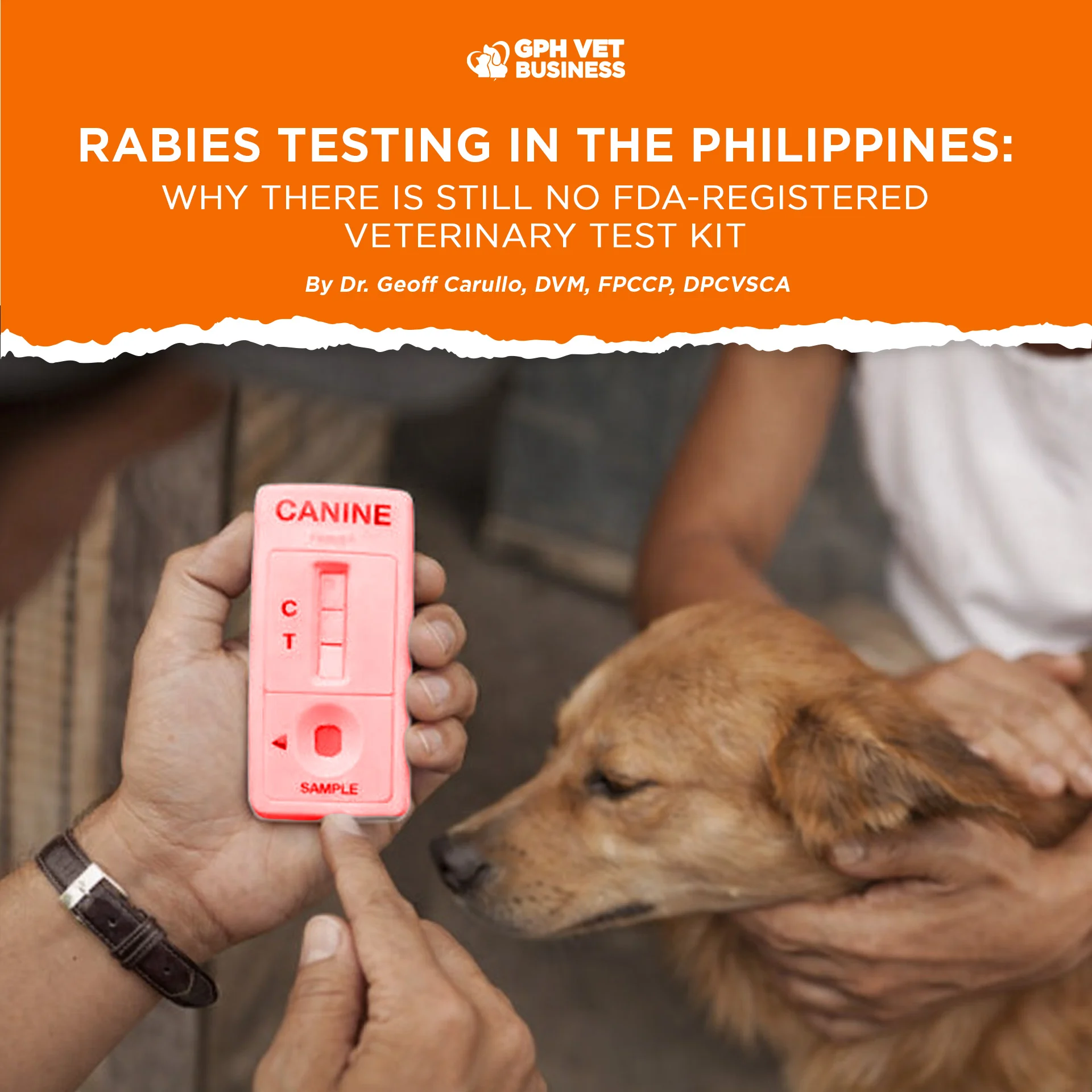
As of 2025, a review of the FDA Veterinary Products List confirms that no rabies rapid diagnostic kits are registered in the Philippines for veterinary use. The list includes other veterinary diagnostics (for diseases like distemper, leptospirosis, and avian influenza), but none for rabies.
Implication:
Veterinarians, clinics, and LGUs cannot legally use any rabies rapid test kit in the Philippines unless it has FDA approval.
Any test kit purchased online or from unverified suppliers falls outside regulatory compliance and may yield unreliable results.
Why This Matters for Practice
Reliance on dFAT: Without registered kits, definitive rabies confirmation in animals must go through the BAI/RADDL laboratory network.
Field limitations: While rapid kits exist in other countries and are sometimes used for surveillance, their use in the Philippines is not permitted without FDA registration.
Risk of non-compliance: Clinics that use unregistered kits risk regulatory penalties, professional liability, and potential misdiagnosis.
Moving Forward: What Vets Should Do
For suspected rabies cases:
Immediately isolate and report.
Coordinate with BAI or the Regional Animal Disease Diagnostic Laboratory (RADDL) for safe specimen collection and dFAT confirmation.
For clinics considering rapid kits:
Verify the product on the FDA’s official database before purchase or use.
Do not use unregistered kits, even for “screening,” since they carry no legal standing.
For industry players:
Companies wishing to distribute rabies rapid tests must apply for FDA registration. This would open the possibility of safe, legal, point-of-care rabies testing in the future.
Key Takeaways
dFAT is still the gold standard for rabies confirmation in the Philippines.
No rabies rapid test kits are FDA-registered for veterinary use as of 2025.
Veterinarians must comply with FDA and BAI guidelines, relying on the RADDL network for confirmation.
Until registration happens, field kits cannot replace dFAT and should not be used in official diagnostics.
Rabies remains one of the deadliest zoonoses. By aligning with FDA regulations and relying on gold-standard testing, veterinarians safeguard not only animal health but also public health and professional integrity.
Sharing this helps others understand what it really means to be a vet. Like and follow if you’re with us.