“Mukha Lang Pera?”
A Hard Truth About Compassion, Rescue Cases, and Veterinary Reality
By Dr. Geoff Carullo, DVM, FPCCP, DPCVSCA
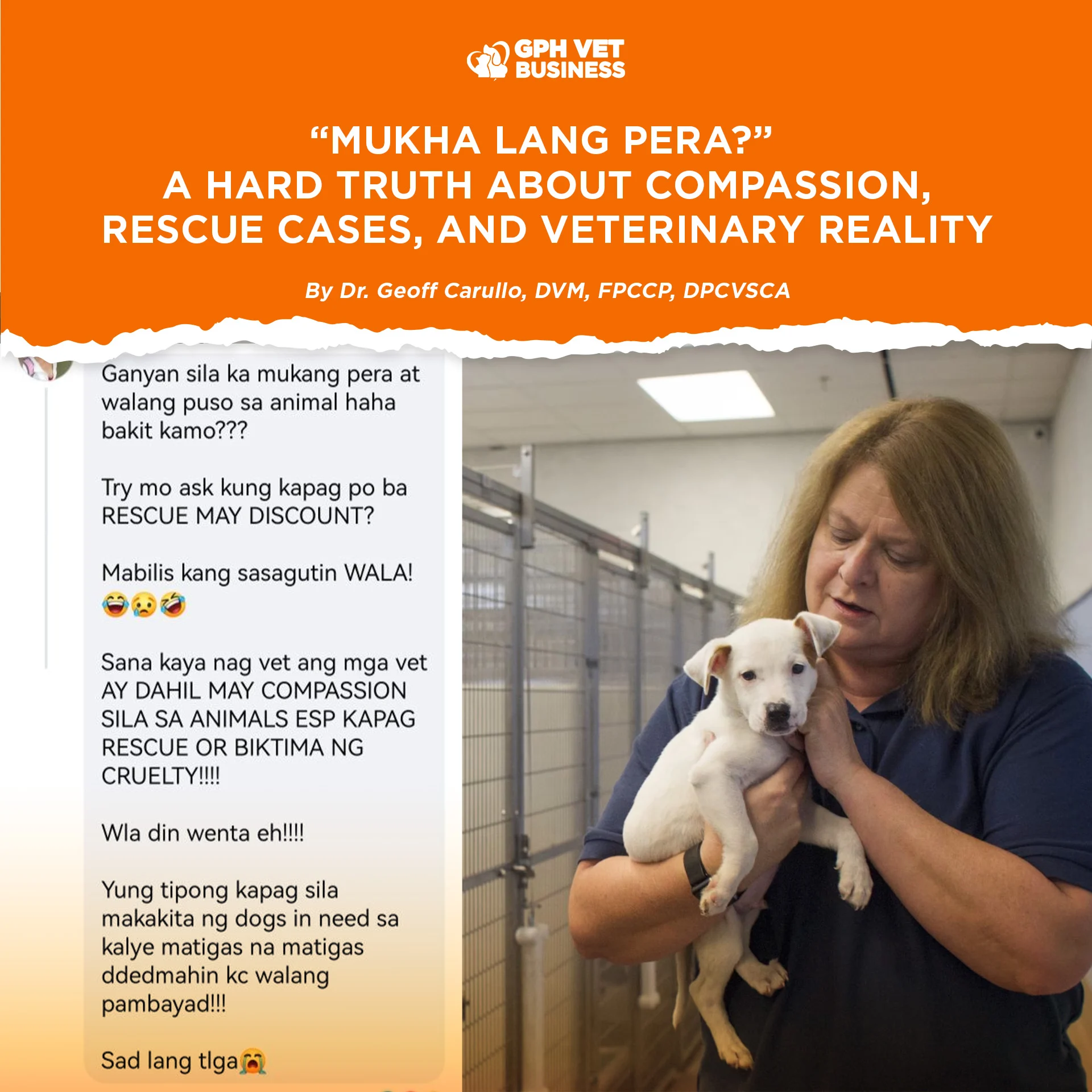
A comment circulating online struck a nerve:
“Ganyan sila ka mukhang pera at walang puso sa animal… Sana kaya nag-vet ang mga vet ay dahil may compassion sila lalo na sa rescue or biktima ng cruelty.”
It’s painful to read.
Not because veterinarians are perfect.
But because this statement reflects a deep misunderstanding of how compassion actually works in real life veterinary practice.
Let’s talk about this honestly, without anger.
Compassion Is Not the Absence of Fees
Compassion is often mistaken as free service.
But in veterinary medicine, compassion is not measured by how much a vet gives away for free. It is measured by:
• Showing up even when exhausted
• Taking cases that are emotionally heavy
• Treating animals that may never recover
• Facing cruelty cases repeatedly without becoming numb
Charging a fee does not erase compassion.
If it did, no veterinarian could survive past their first year.
“Rescue May Discount?” Is Not a Universal Rule
This needs to be said clearly.
There is no law and no ethical mandate that says clinics must automatically discount rescue cases.
Why?
Because most clinics are:
• Privately owned
• Self-funded
• Paying rent, salaries, utilities, taxes
• Absorbing unpaid bills regularly
Some clinics choose to give discounts. Some partner with NGOs. Some have charity days.
But discounts are a privilege, not an obligation.
The Reality Behind “Walang Pambayad”
Veterinarians hear this daily:
• “Rescue po kasi”
• “Naawa lang po kami”
• “Wala po kaming budget”
And many vets still help.
What people don’t see is:
• The unpaid procedures
• The bounced promises
• The follow-ups that never come
• The supplies paid out of pocket
Over time, unchecked “free compassion” does not make a vet kinder.
It burns them out.
Why Vets Sometimes Say No
Saying no does not mean walang puso.
It often means:
• The clinic is already operating at a loss
• Staff salaries are at risk
• Supplies are limited
• Previous rescue debts remain unpaid
A veterinarian who collapses financially cannot help any animal at all.
The Myth of the “Street Dog Savior Vet”
There’s a romantic idea that vets should always pick up dogs on the street, treat them for free, and absorb the cost.
In reality:
• Vets are not funded by government
• Clinics are not NGOs
• Compassion without sustainability kills clinics
True animal welfare requires systems, not guilt.
Who Really Has the Responsibility?
Animal rescue is a shared responsibility.
It belongs to:
• Local government units
• Animal welfare organizations
• Communities
• Donors
• Volunteers
Veterinary clinics are medical service providers, not sole bearers of rescue burden.
A More Honest Definition of Compassion
Compassion is:
• Explaining options without judgment
• Treating animals with dignity
• Making medical decisions, not emotional ones
• Staying in the profession long enough to help thousands, not just one
Compassion does not mean self-destruction.
A Message to Pet Owners and Rescuers
If you truly care about animals:
• Build funds for rescue
• Partner with clinics transparently
• Ask respectfully, not demand
• Understand boundaries
Kindness goes both ways.
Final Thought
Most veterinarians entered this profession because of compassion.
But compassion that is demanded, shamed, or weaponized turns into resentment.
If we want vets to keep helping animals, we must allow them to survive too.
Sharing this helps others understand what it really means to be a vet. Like and follow if you’re with us.