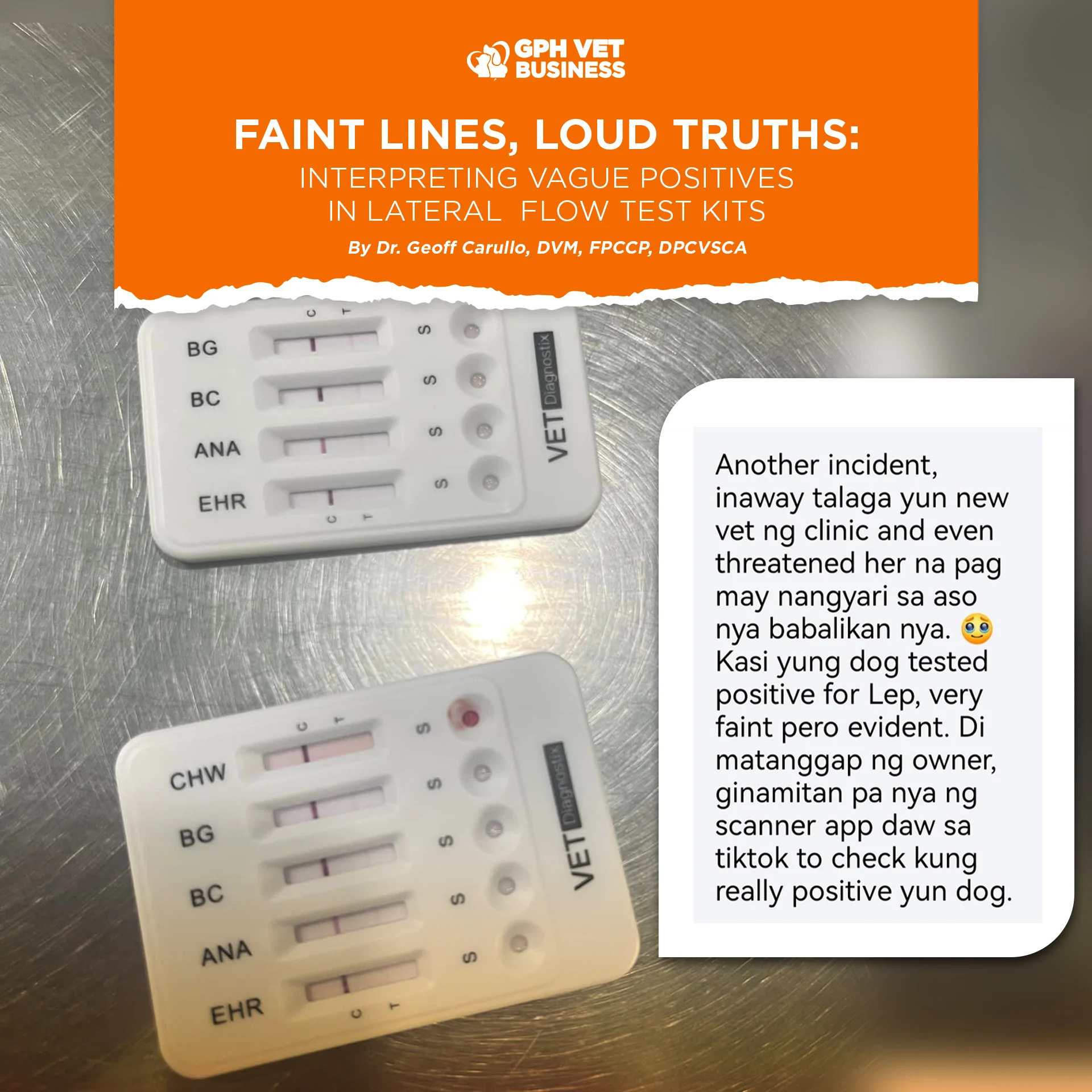
In veterinary practice, we sometimes encounter test results that spark more debate than clarity: the faint positive line. For us vets, the interpretation is straightforward. For some clients, however, that faint line becomes a battlefield of doubt, denial, and even distrust.
The Science of Faint Positives
Rapid test kits, like those we use at Vet Diagnostix, are designed to detect antigens at different levels. A line—whether bold or faint—still indicates the presence of the target antigen, provided it appears within the correct time frame.
- A bold line often means higher antigen levels.
- A faint line can mean low antigen levels, early infection, or borderline concentration.
- Either way, a line is still a line, and the result must be respected.
The Heartworm Lesson
One vet shared a case of a dog testing positive for heartworm with a very faint line. To the naked eye, it looked dismissible. But after recommending echocardiography, the vet cardiologist confirmed the presence of two adult worms. That faint line saved the pet from misdiagnosis.
The Leptospirosis Dilemma
Another case involved a faint positive leptospirosis result. Instead of trusting the veterinarian’s explanation, the client reacted aggressively—arguing, threatening, and even trying to “verify” the test result using a TikTok app. Distrust shifted from the test to the vet, causing unnecessary conflict and stress.
This is the deeper wound faint lines expose: a lack of trust in veterinarians.
Veterinary medicine is not based on how dark a line looks to the human eye. It is based on science, protocols, and professional judgment.
A faint line is still positive until proven otherwise.
Confirmatory tests like PCR, microfilaria check, or imaging are valid next steps if owners want absolute certainty.
But dismissing faint lines as “nothing” is dangerous—for the pet and unfair to the veterinarian.
No vet deserves to be bullied, threatened, or disrespected for doing their job and following established diagnostic protocols.
A Call for Trust
To my fellow vets: stand your ground. Explain, document, and offer confirmatory options, but don’t let intimidation weaken your medical judgment.
To pet owners: remember, your vet is not your enemy. That faint line might be your pet’s only chance at early detection. Trust the process, trust the science, and most importantly, trust the professional who has dedicated their life to saving animals.
Because sometimes, it’s the faintest lines that tell us the loudest truths.
Sharing this helps others understand what it really means to be a vet.
Like and follow if you’re with us.