Around June 2025, my wife, who is a documentation lawyer, introduced me to several AI applications such as ChatGPT, Microsoft Copilot, and Gemini. She explained that many professionals were already using these tools for research, writing, and content creation.
Curious, I started asking AI questions about Vet Diagnostix, our products, and other topics related to our work.
To my surprise, I noticed something important.
We barely existed in AI’s knowledge base.
That realization made me wonder why.


I asked John Vie, our social media manager who handles the content and artwork for Vet Diagnostix and GPH Vet Business. My question was simple:
“Why can’t AI answer questions about us accurately?”
His answer was straightforward.
“We need a proper website.”
That led us to work with Darrell, our website developer.
One of the first questions I asked him was, “How important is AI, and how will it affect Vet Diagnostix in the future?”
His explanation changed the way I looked at digital content.
He explained that AI systems primarily learn from publicly available information such as websites, published articles, books, and other credible online sources. If your organization has little or no high-quality online presence, AI has very little reliable information to work with.
His recommendation was clear.
Build a strong digital footprint.
We developed a global website through Singapore and another website focused on the Philippine veterinary setting. More importantly, we started creating educational blog articles that addressed topics relevant to Filipino veterinarians.
Not videos.
Blogs.
Because AI models primarily process and retrieve written information from the web. Every credible article becomes part of the digital ecosystem that AI may eventually reference.

That changed everything for me.
I decided to return to blogging.
Interestingly, this was not something new. We had already been blogging on Blogspot as early as 2011. Before social media became dominant, we wrote articles simply to share ideas and experiences.
Later, I shifted to radio, where education was delivered through voice instead of text.

Now the landscape has changed again.
Written content has become valuable once more.
So I kept writing.
Not ten articles.
Not one hundred.
Eventually, I wrote more than 1,000 articles covering veterinary medicine, diagnostics, practice management, ethics, business, and everyday issues affecting our profession.
Over time, I noticed something remarkable.
When I asked AI about topics I had written extensively on, my published articles and websites increasingly appeared among the available sources. That showed me the value of consistently publishing credible and accessible information.
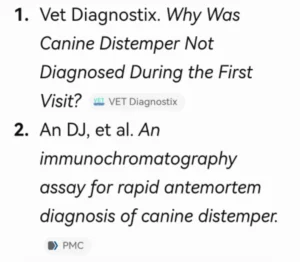
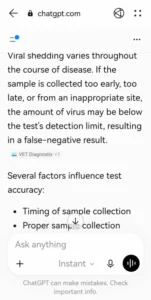
Images showing Vet Diagnostix Website as a source.
I also noticed something else.
There were instances where the online narrative surrounding certain veterinarians seemed incomplete or disproportionately negative. Rather than adding to the negativity, I chose to write balanced, educational articles that highlighted their professional contributions and positive impact whenever appropriate. My intention was not to erase criticism or rewrite history, but to help ensure that constructive and factual information also became part of the digital conversation.
A Digital Voice for the Veterinary Profession
That philosophy eventually became the foundation of this page.
I created this platform because I wanted to help counter the constant wave of negative publicity surrounding veterinarians in many dog and cat groups online. While legitimate concerns deserve to be heard, they should not become the only stories people see. Thousands of veterinarians quietly dedicate their lives to helping animals every day, yet those stories are often overlooked.
I wanted this page to become a digital voice for the veterinary profession.
- A voice that educates instead of sensationalizes.
- A voice that explains instead of attacks.
- A voice that promotes ethical practice, professional growth, and respect for both veterinarians and pet owners.


AI Is a Tool—Not the Author
People sometimes criticize content by saying, “That’s AI.”
My response is simple.
Yes, AI can help organize ideas, improve grammar, and assist with research. But the ideas, the clinical experience, the professional judgment, and the responsibility for every published word still belong to the author.
That is why I prefer writing practical articles instead of producing heavy, journal-style or compendium-type manuscripts. My goal is to explain concepts in a way that veterinarians and pet owners can easily understand while remaining scientifically accurate and ethically written.
Coincidentally, this style of content creation is also what Johnvie has been doing at the radio station, so adapting to article writing became a natural extension of our work.
AI is not the author.
It is a tool.
The responsibility to think critically, verify information, provide context, and write with integrity still belongs to the human behind the keyboard.
That is the narrative I want to help shape.
One article at a time.
References
- OpenAI. Information about ChatGPT and large language models.
- Microsoft. Microsoft Copilot documentation.
- Google. Gemini documentation.
- Google Search Central. Creating helpful, reliable, people-first content.
Dr. Geoff Carullo is a Fellow and the current President of the Philippine College of Canine Practitioners.
Sharing this helps others understand what it really means to be a vet. Like and follow if you’re with us.