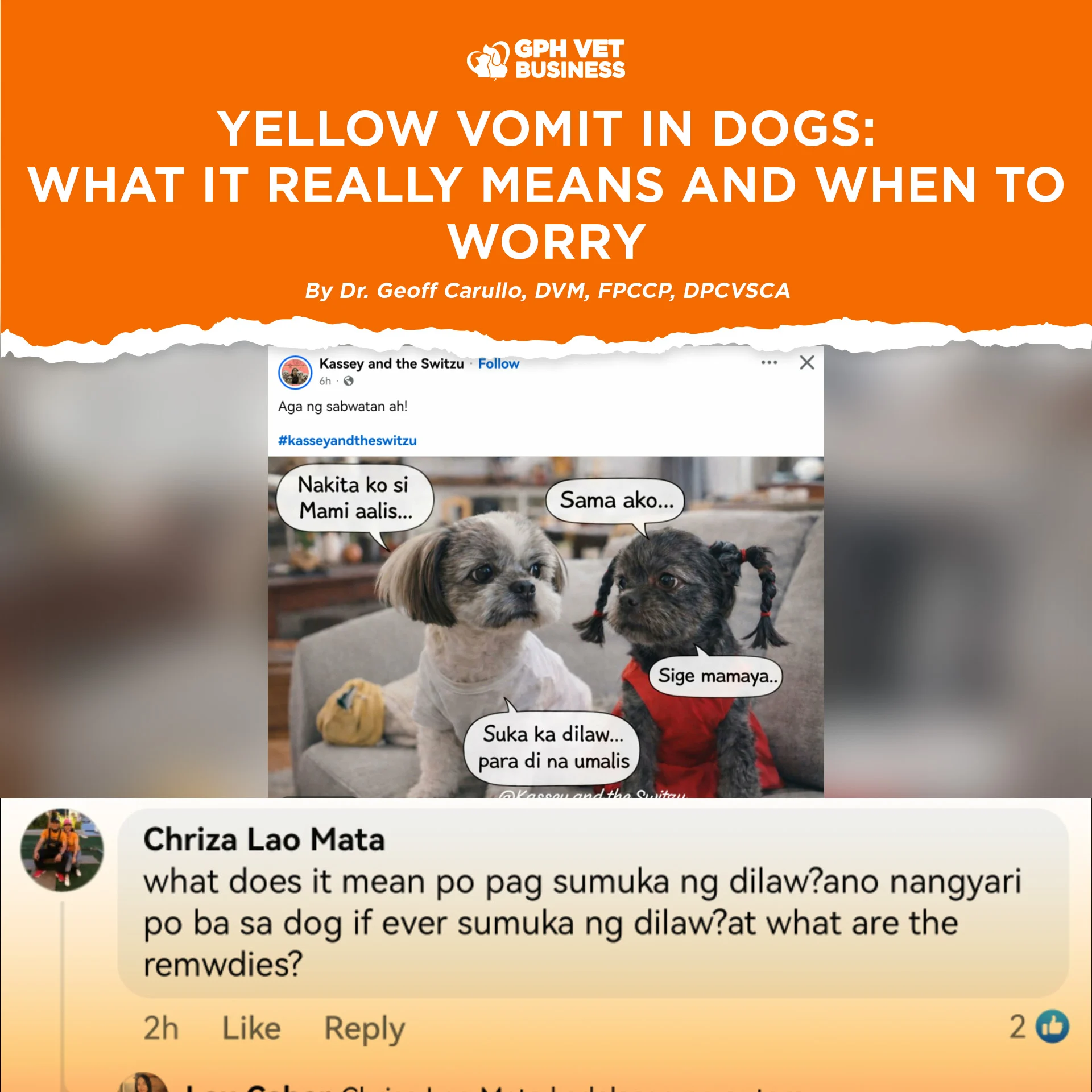
Social media jokes often say that when a dog “vomits yellow,” something dramatic is happening. In real veterinary medicine, however, yellow vomit is common—but context is everything.
One of the most frequent questions veterinarians get is:
“What does it mean when my dog vomits yellow? Is it dangerous?”
Here’s a clear, honest explanation—without panic, but without downplaying real risks.
What Is the Yellow Substance Dogs Vomit?
The yellow fluid is usually bile.
Bile is:
- Produced by the liver
- Stored in the gallbladder
- Released to help digest fats
When a dog’s stomach is empty, bile can reflux into the stomach and irritate it, leading to vomiting.
The Most Common Cause (Usually Not Dangerous)
Empty Stomach / Hunger
This is the most common reason for yellow vomiting.
Typical features:
- Happens early in the morning
- Yellow liquid only, no food
- Occurs once
- Dog is otherwise active and normal afterward
This is often referred to as bilious vomiting syndrome.
What helps:
- Avoid long gaps between meals
- Add a small late-night meal
- Adjust feeding schedules
When Yellow Vomiting Becomes a Red Flag
Yellow vomit becomes concerning when it is recurrent or accompanied by other signs.
🚩 Warning Signs:
- Repeated vomiting
- Loss of appetite
- Lethargy
- Diarrhea
- Yellowing of the eyes, gums, or skin
- Dark-colored urine
- Sudden weight loss
When these are present, it is no longer just hunger.
Serious Conditions Associated With Yellow Vomiting
1. Gastritis or Gastrointestinal Irritation
- Stress
- Sudden diet change
- Eating spoiled or inappropriate food
2. Liver Disease / Jaundice
If yellow vomiting is accompanied by yellow eyes or gums, this suggests jaundice.
Possible causes include:
- Liver inflammation or failure
- Infection (such as leptospirosis)
- Toxin exposure
- Severe hemolytic disease
⚠️ This is a medical emergency.
3. Pancreatitis
Common signs:
- Persistent vomiting
- Abdominal pain
- Refusal to eat
- Marked lethargy
4. Intestinal Obstruction
Caused by:
- Toys
- Bones
- Foreign objects
Often associated with:
- Progressive vomiting
- No bowel movements
- Rapid clinical decline
Important Clinical Pearl
❗ Not all yellow vomit means liver disease.
❗ But jaundice is always serious.
Color alone is not enough—associated signs matter more than the vomit itself.
What Pet Owners Should Do
✅ Monitoring is reasonable if:
- Vomiting happened once
- Dog was likely hungry
- Dog remains bright and eating normally
🚑 Seek veterinary care immediately if:
- Vomiting is repeated
- There is any yellowing of the eyes or gums
- The dog refuses food
- The dog is weak or depressed
- The patient is a puppy or senior dog
What Veterinarians May Do
Depending on findings, your veterinarian may recommend:
- Physical examination
- Blood tests (especially liver values)
- Abdominal ultrasound
- IV fluids
- Anti-vomiting medication
- Liver support therapy
Early evaluation often means simpler treatment and better outcomes.
Final Takeaway
Yellow vomiting in dogs is not automatically an emergency, but it should never be ignored.
Sometimes it’s just an empty stomach.
Sometimes it’s stress or gastritis.
But sometimes, it’s the first warning sign of a serious underlying disease.
When in doubt, asking early is always better than waiting too long.
Sharing this helps others understand what it really means to be a vet. Like and follow if you’re with us.