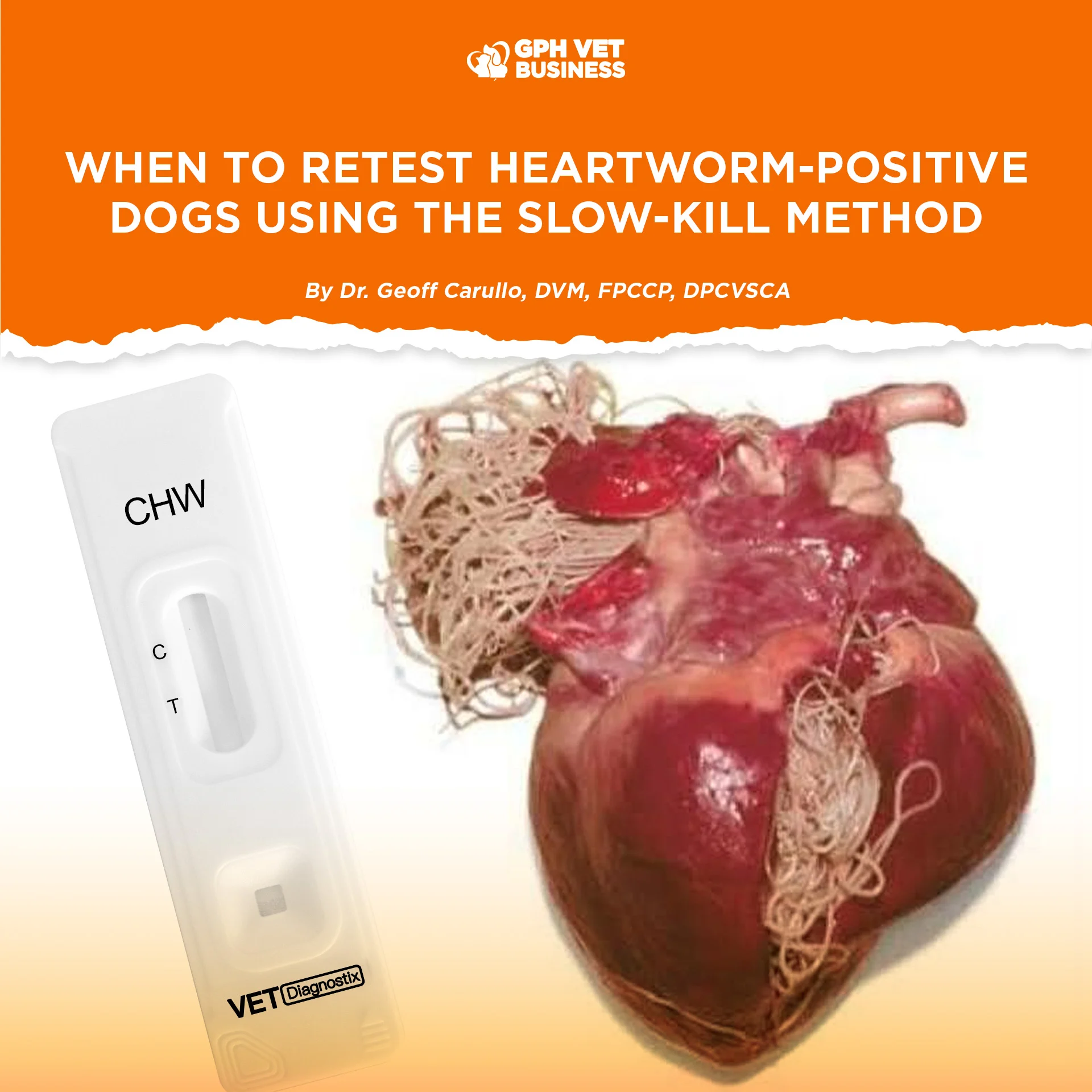
In the Philippines, the unavailability of melarsomine has forced many veterinarians to rely on the slow-kill method for managing canine heartworm disease. This approach typically involves monthly administration of a macrocyclic lactone, most commonly Heartgard, sometimes combined with doxycycline.
Because this protocol does not rapidly eliminate adult heartworms, one of the most common clinical questions is:
When should heartworm-positive dogs be retested using a lateral flow antigen test?
Understanding What Lateral Flow Heartworm Tests Detect
Heartworm antigen tests detect proteins released primarily by adult female Dirofilaria immitis. They do not detect:
- Immature larvae (L3, L4)
- Early adult worms
- Dead or fully cleared worms
This is critical in interpreting results during slow-kill therapy.
What Happens During Slow-Kill Treatment?
With monthly macrocyclic lactones:
- Microfilariae are gradually reduced
- New infections are prevented
- Adult worms die slowly, often over 12–30 months
- Adult female worms may continue to release antigen for many months, even when weakened or dying
Because of this, antigen tests will remain positive for a long time, even in clinically improving patients.
Recommended Retesting Timeline (Slow-Kill Context)
Do NOT retest too early. Early retesting often leads to confusion and unnecessary concern.
Practical, evidence-based guidance:
- Initial diagnosis: Day 0 (baseline)
- First meaningful retest:
12 months AFTER starting slow-kill therapy - Preferred retesting window:
12–18 months - If still positive at 12 months:
→ Continue monthly prevention
→ Retest again at 18–24 months
Many dogs only convert to antigen-negative after 18–30 months, depending on worm burden and individual response.
Why Early Retesting Is Misleading
Retesting at 3, 6, or even 9 months often results in:
- Persistent positive antigen tests
- Owner frustration (“Hindi ba gumagana ang gamot?”)
- False assumption of treatment failure
In reality, the test is working correctly—it is detecting surviving or dying adult female worms.
What a Negative Test Really Means
A true negative lateral flow test suggests:
- No remaining adult female heartworms
- Successful long-term suppression and clearance
Best practice is to confirm negativity with:
- Two consecutive negative tests, 6 months apart
- OR
- One negative test after ≥18–24 months of consistent prevention
Important Clinical Reminders
- Always ensure strict monthly compliance
Missed doses reset the clock - Continue exercise restriction, especially in symptomatic dogs
- Manage inflammation and secondary complications appropriately
- Educate owners early that slow-kill is a long game, not a quick cure
Key Takeaway
When using the slow-kill method for heartworm disease:
Do not retest with a lateral flow antigen test until at least 12 months after starting treatment.
Earlier testing rarely provides useful information and often creates unnecessary confusion. Patience, consistency, and proper client education are essential for successful outcomes.
Dr. Geoff Carullo is a Fellow and the current President of the Philippine College of Canine Practitioners.
Sharing this helps others understand what it really means to be a vet. Like and follow if you’re with us.