Urolithiasis in cats is something most small-animal veterinarians encounter regularly. But every once in a while, a case appears that reminds us how devastating this condition can become when obstruction is severe, delayed, or complicated by infection.
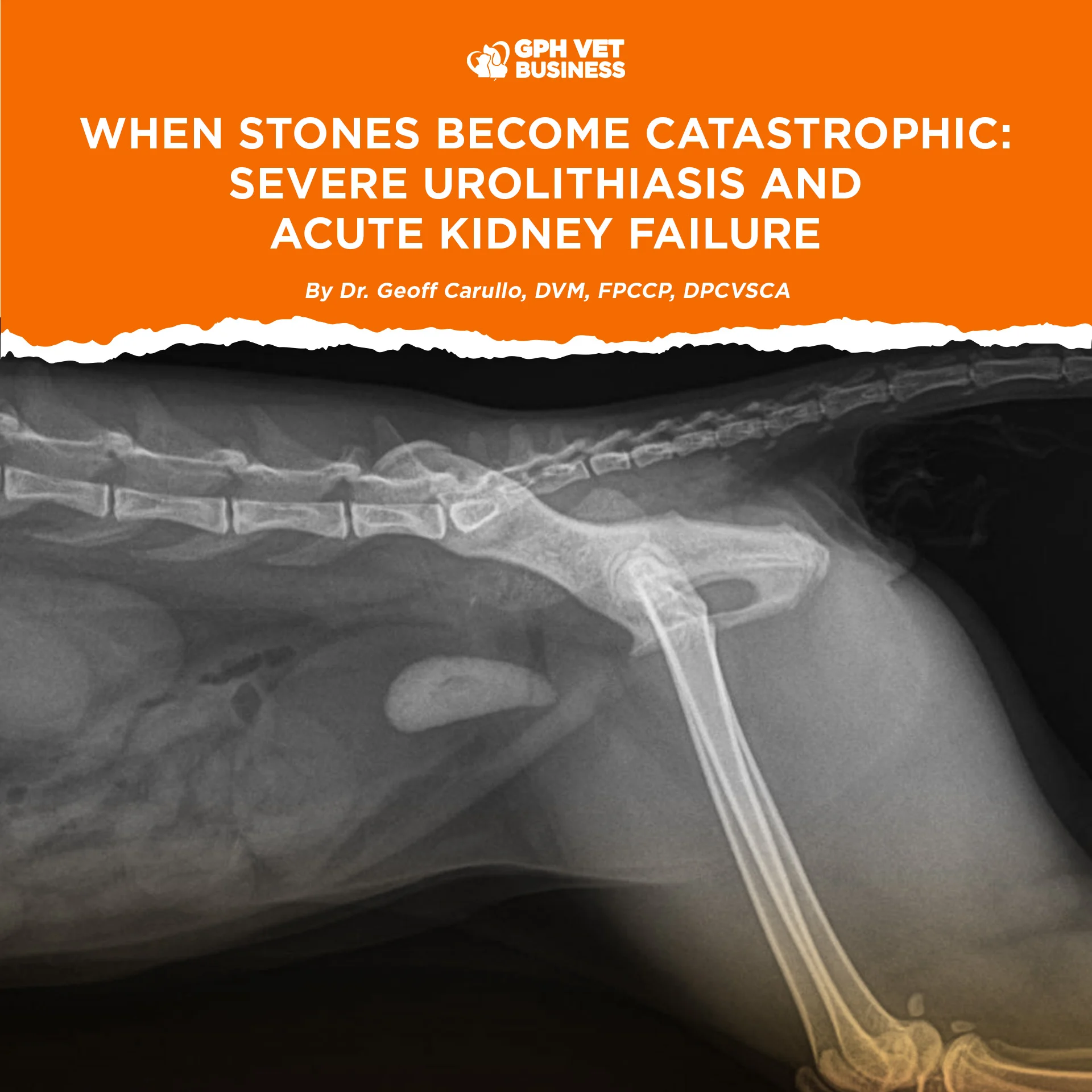
This case involved one of the largest uroliths I have personally diagnosed. The stone was so radiographically obvious that it could not be ignored. More concerning, however, was its location. The urolith lodged at the trigone of the urinary bladder, effectively obstructing urinary outflow. The result was acute urinary blockage, pus-laden urine, gross hematuria, and rapid progression to acute kidney failure.
This is urolithiasis at its worst.
Why This Case Was Dangerous
In cats, urinary obstruction is already a medical emergency. When the obstruction occurs near the trigone, it compromises both ureteral outflow and bladder emptying. Pressure rapidly builds within the urinary system, leading to:
- Post-renal azotemia
- Acute kidney injury
- Electrolyte imbalance, especially hyperkalemia
- Severe pain and systemic inflammatory response
- Secondary infection, as stagnant urine becomes a breeding ground for bacteria
In this case, the presence of pus and blood suggested a complicated obstruction, likely involving secondary bacterial cystitis on top of the mechanical blockage.
Is Feline Urolithiasis Common Today?
Yes. And in some practices, it feels more common than ever.
While we have improved diets, diagnostics, and owner awareness, we are also seeing:
- Longer-living cats
- More indoor, sedentary lifestyles
- Higher rates of obesity
- Chronic dehydration
- Increased stress-related urinary disease
All of these contribute to an environment where crystals can form, aggregate, and eventually develop into stones.
Common Types of Feline Uroliths
Although stone composition varies, the most common types seen in cats include:
- Struvite uroliths – often diet-related, sometimes infection-associated
- Calcium oxalate uroliths – increasingly common, cannot be dissolved medically
- Urate and cystine stones – rare but possible
Large stones like the one in this case are often calcium oxalate, which explains why they can grow silently over time until obstruction suddenly occurs.
Possible Causes and Contributing Factors
Urolithiasis is rarely caused by one factor alone. It is usually multifactorial.
Key contributors include:
- Low water intake (dry-food dominant diets, poor water access)
- Highly concentrated urine
- Dietary mineral imbalance
- Chronic stress leading to feline lower urinary tract disease (FLUTD)
- Obesity and inactivity
- Genetic predisposition
- Infrequent urination (dirty litter boxes, poor environmental enrichment)
In obstructive cases complicated by infection, stagnant urine allows bacteria to flourish, producing pus and worsening inflammation.
Why Acute Kidney Failure Develops
Once urine cannot exit the bladder, pressure transmits backward to the kidneys. Glomerular filtration rate drops rapidly. Toxins accumulate. Within hours to days, the cat can progress from stable to critical.
This is why urinary obstruction is not a “wait and see” condition. It is a race against time.
How Can Urolithiasis Be Prevented?
Prevention is far more effective than emergency intervention.
Key preventive strategies include:
- Encourage high moisture intake (wet diets, water fountains, multiple water sources)
- Use veterinary-formulated urinary diets when indicated
- Maintain ideal body weight
- Reduce environmental stress (adequate litter boxes, quiet spaces, routine)
- Promote frequent urination
- Perform regular urinalysis for at-risk cats
- Educate owners that straining, frequent urination, or blood in urine is an emergency
For cats with a history of stones, long-term dietary and lifestyle management is non-negotiable.
Final Thoughts
This case is a reminder that urolithiasis is not always benign. Stones can grow silently. Obstruction can occur suddenly. And once kidney failure develops, the stakes are life-and-death.
Radiographs don’t just show stones. They show missed time.
Early detection, owner education, and preventive care remain our strongest weapons against cases like this.
Sharing this helps others understand what it really means to be a vet. Like and follow if you’re with us.