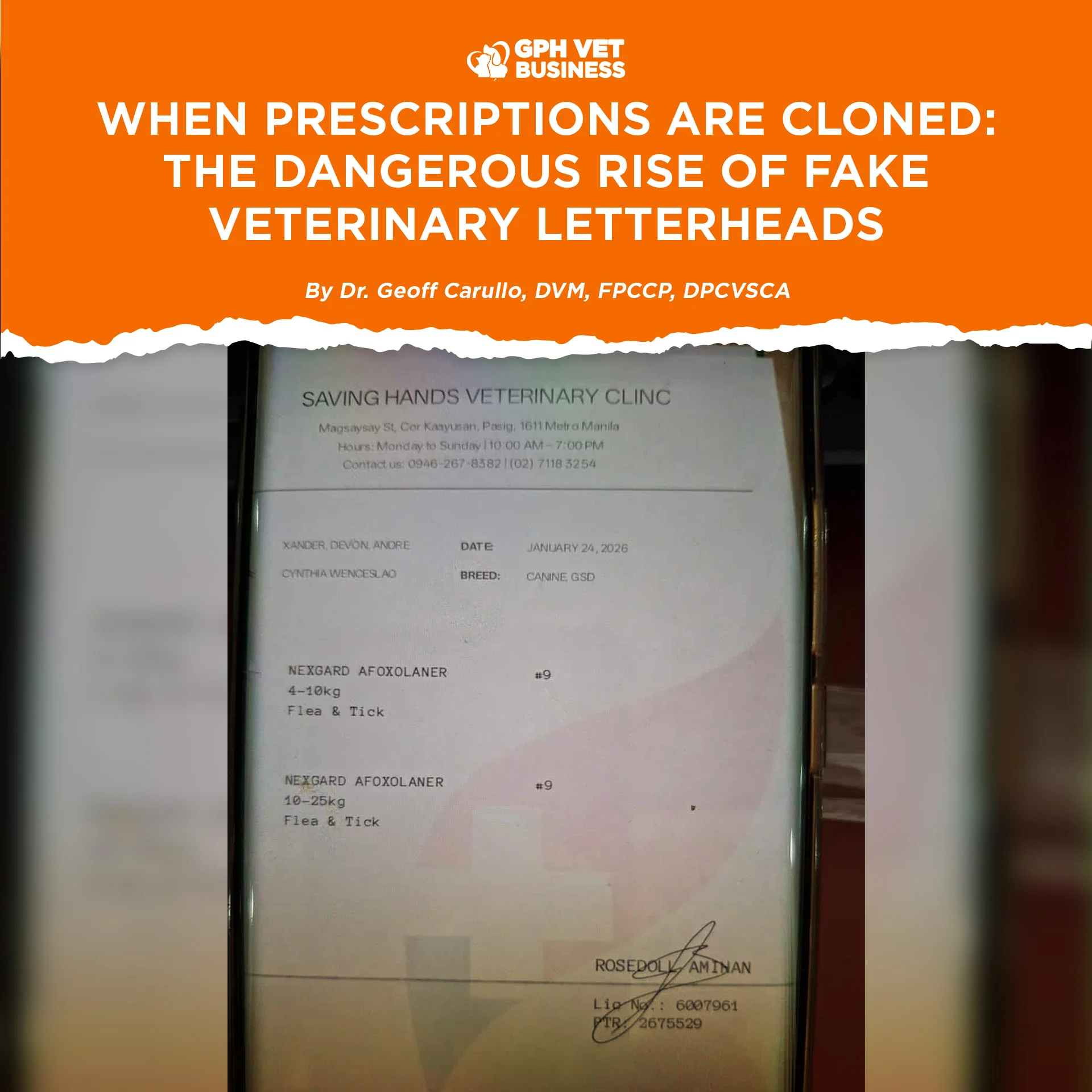
Recently, a disturbing incident circulated online involving a falsified veterinary prescription that allegedly used the official letterhead of a veterinary clinic without authorization.
A veterinary prescription.
A clinic letterhead.
A doctor’s name.
A license number.
All copied.
All circulated.
All fake.
What makes this more alarming is that even a clinic’s official identity and the name of a licensed veterinarian were reportedly used without consent. This is no longer a simple mistake. It is a serious professional breach.
Yes, it is possible to copy a prescription template.
Yes, it can be edited and redistributed within minutes.
And yes, it can damage reputations overnight.
The Anatomy of a Fake Prescription
From the outside, everything may appear legitimate.
- Complete clinic header
- Address and contact details
- Patient name and breed
- Drug name and dosage
- Signature
- License number
To the untrained eye, it looks authentic.
But authenticity is not about formatting.
It is about authority.
When someone copies a clinic template, inserts a veterinarian’s name, and fabricates a license number or signature, it becomes more than a clerical issue.
It becomes falsification.
Why This Is Dangerous
This issue goes beyond embarrassment.
It touches on:
- Prescription-only medication control
- Regulatory compliance
- Professional accountability
- Animal safety
- Public trust
A fake prescription can enable unauthorized drug acquisition. It can bypass clinical judgment. It can implicate an innocent veterinarian. It can expose a clinic to regulatory scrutiny despite having done nothing wrong.
Most importantly, it erodes trust.
And once trust is shaken, rebuilding it is far harder than printing new letterheads.
Legal and Ethical Weight
Using a licensed veterinarian’s name without authorization may constitute:
- Identity misrepresentation
- Document falsification
- Fraud
- Potential violations of professional regulation laws
In our profession, a license is not decoration.
It is responsibility.
It is not something to be copied and pasted.
A Wake-Up Call for All Clinics
This incident should remind all of us to strengthen safeguards:
- Secure digital prescription templates
- Restrict access to official letterheads
- Use traceable prescription systems when possible
- Educate staff about document security
- Verify suspicious prescription requests
Professional documents must be treated like controlled substances. Because in many ways, they are.
To Our Fellow Veterinarians
Before reacting publicly, verify carefully.
Protect colleagues from misinformation.
Defend due process.
In a digital age where screenshots spread faster than facts, professionalism must remain steady.
To Pet Owners
If you receive or see a prescription online:
- Contact the clinic directly.
- Verify the prescribing veterinarian.
- Do not rely solely on forwarded images.
Your pets deserve legitimate medical decisions made by real professionals, not copied documents.
This is not merely about one clinic.
It is not merely about one name.
It is about protecting the integrity of veterinary medicine in the Philippines.
Because when prescriptions are cloned, it is not just paper being copied.
It is trust.
Dr. Geoff Carullo is a Fellow and the current President of the Philippine College of Canine Practitioners.
Sharing this helps others understand what it really means to be a vet. Like and follow if you’re with us.