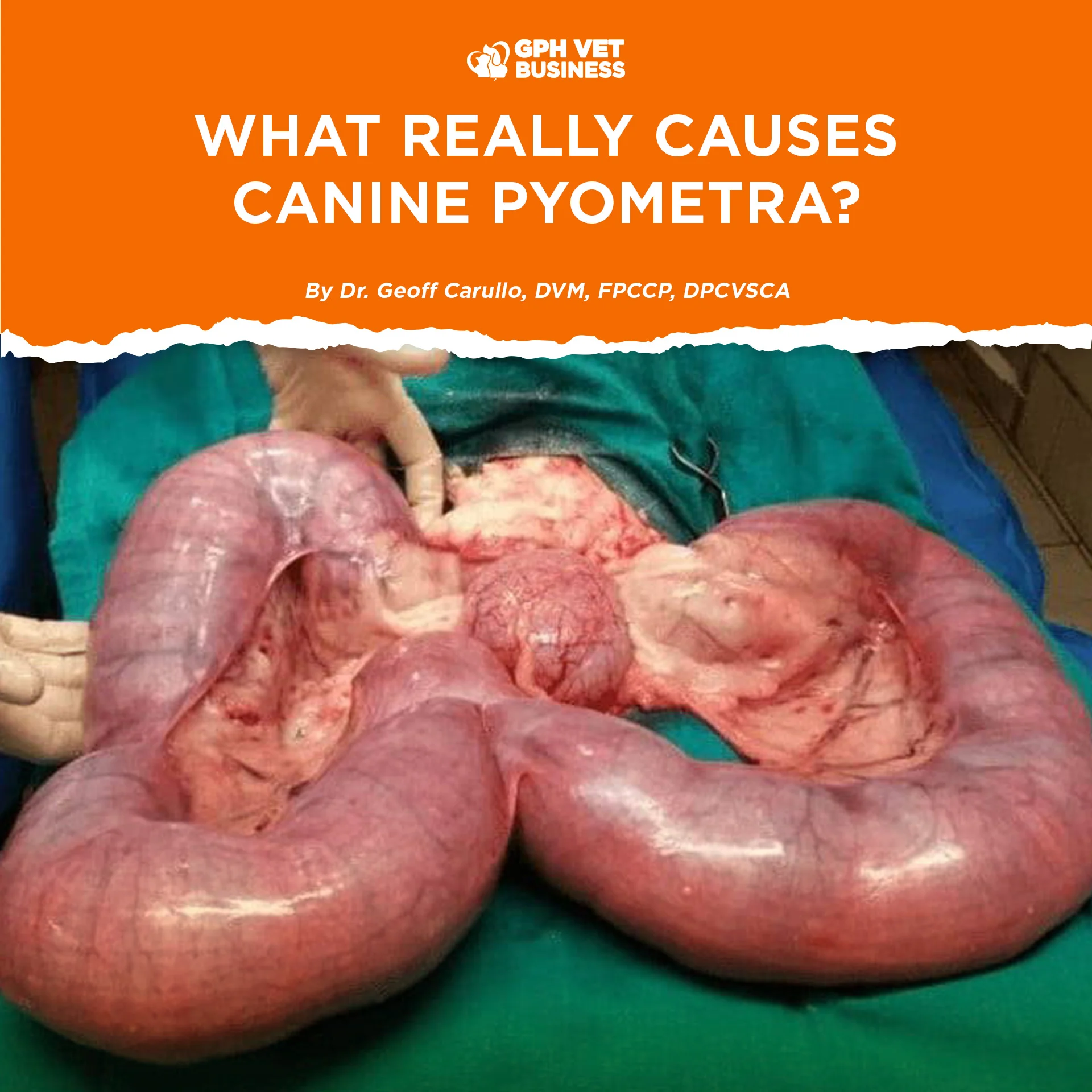
Pyometra is one of the most common and life-threatening reproductive diseases in intact female dogs. Almost every small animal veterinarian eventually encounters it. Yet many pet owners think it is simply a random uterine infection.
The truth is more complex. Pyometra is not caused by bacteria alone. It develops through a combination of hormonal influence, structural changes in the uterus, and bacterial invasion. Understanding this process helps explain why the disease happens and why surgery is often the definitive treatment.
The Hormonal Trigger: Progesterone
The starting point of pyometra is the hormone progesterone, which dominates the reproductive cycle after a female dog finishes her heat.
During the diestrus phase, progesterone prepares the uterus for pregnancy. If the dog becomes pregnant, this hormone helps maintain the gestation. But if pregnancy does not occur, repeated exposure to progesterone over multiple cycles can gradually damage the uterus.
Progesterone causes several important changes:
- Thickening of the uterine lining
- Increased secretion of fluids from uterine glands
- Reduced uterine contractions
- Suppression of local immune defenses
These changes are meant to support pregnancy, but they also create a uterus that is more vulnerable to infection. Because progesterone also decreases uterine motility, bacteria that enter the uterus are less likely to be expelled.
This explains why pyometra most commonly develops about 4–8 weeks after a heat cycle, when progesterone levels are at their peak.
Cystic Endometrial Hyperplasia: The Diseased Uterus
With repeated heat cycles over time, the uterine lining may develop a condition called cystic endometrial hyperplasia (CEH).
In this condition:
- The endometrium becomes thickened
- Small cysts develop within the uterine lining
- Secretions accumulate inside the uterus
These secretions provide an ideal environment for bacterial growth. As a result, CEH is considered one of the major predisposing conditions for pyometra.
Dogs that have gone through multiple heat cycles without being bred or spayed have a higher likelihood of developing these uterine changes. That is why pyometra is more commonly seen in middle-aged to older intact female dogs.
Bacterial Infection: The Final Step
Once the uterus is hormonally primed and structurally altered, bacteria can enter and multiply.
The most commonly isolated organism is Escherichia coli (E. coli). In most cases, these bacteria originate from the dog’s own intestinal or vaginal flora and ascend through the cervix into the uterus.
Other bacteria may also be present, including:
- Staphylococcus
- Streptococcus
- Proteus
- Pseudomonas
However, E. coli is by far the most common pathogen identified in pyometra cases.
Once bacteria colonize the uterus, the infection progresses rapidly. Pus accumulates, toxins are released, and systemic illness may follow.
The Pathogenesis in Simple Terms
The development of pyometra usually follows this sequence:
- A dog enters heat.
- Progesterone rises during diestrus.
- The uterine lining thickens and secretes fluid.
- Cystic endometrial hyperplasia develops.
- Uterine defenses weaken.
- Bacteria ascend from the vagina.
- Infection develops and pus accumulates.
As the disease progresses, toxins produced by bacteria can enter the bloodstream, leading to serious complications such as sepsis, kidney dysfunction, endotoxemia, or uterine rupture.
Important Risk Factors
Certain factors increase the likelihood of pyometra:
- Intact female dogs that are not spayed
- Age above five years
- Multiple heat cycles without pregnancy
- Hormonal medications that mimic progesterone
- Pre-existing cystic endometrial hyperplasia
Studies estimate that up to one in four intact female dogs may develop pyometra before ten years of age, making it one of the most significant reproductive diseases in veterinary medicine.
Why Surgery Is Usually the Best Treatment
One of the key lessons from the pathogenesis of pyometra is this:
The problem is not just infection.
The uterus itself has become a diseased organ.
Even if antibiotics temporarily control the bacteria, the hormonal environment and structural damage remain. That is why ovariohysterectomy is considered the definitive treatment in most cases.
Final Thoughts
Pyometra is a disease that begins quietly after a normal reproductive cycle. But once the hormonal, structural, and bacterial factors align, it can rapidly become a life-threatening emergency.
For veterinarians, recognizing the underlying mechanisms of this disease helps guide faster diagnosis and appropriate treatment.
For pet owners, the message is simple: reproductive health matters, and preventive decisions such as timely spaying can eliminate the risk entirely.
Sources
- Xavier RGC et al. 2023. Canine Pyometra: A Short Review of Current Advances. Animals Journal.
- Cornell University College of Veterinary Medicine. Pyometra in Dogs.
- MSD Veterinary Manual. Cystic Endometrial Hyperplasia–Pyometra Complex in Small Animals.
- Verstegen J et al. Pyometra and the CEH-Pyometra Complex in the Bitch. Theriogenology.
- Hagman R. 2018. Pyometra in Small Animals. Veterinary Clinics of North America: Small Animal Practice.
- Smith FO. 2006. Canine Pyometra. Theriogenology.
- Pretzer SD. 2008. Clinical Presentation of Canine Pyometra and Mucometra. Veterinary Clinics of North America.
Dr. Geoff Carullo is a Fellow and the current President of the Philippine College of Canine Practitioners.
Sharing this helps others understand what it really means to be a vet. If you found this valuable, like and follow for more insights.