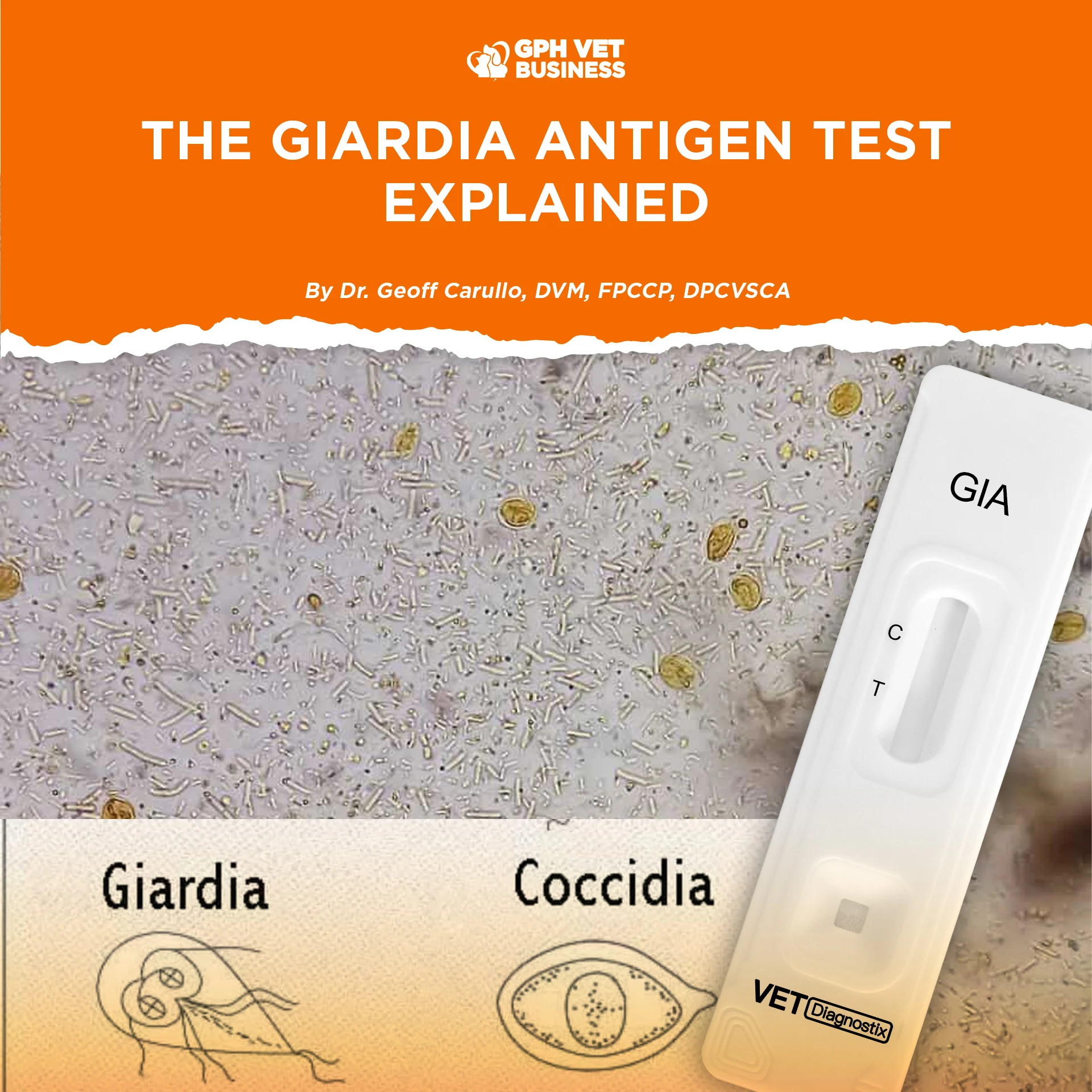
Giardia is one of the most commonly tested intestinal parasites in dogs—and also one of the most confusing for both pet owners and veterinarians. A frequent question comes up in practice:
“What exactly does the Giardia antigen test detect, and why does my patient keep testing positive?”
Let’s break it down clearly.
What Does the Giardia Antigen Test Actually Test?
The Giardia antigen test does not look for the whole parasite itself.
Instead, it detects Giardia-specific antigens—proteins released by Giardia duodenalis (also known as Giardia lamblia or Giardia intestinalis) that are present in the stool when the organism is or was recently active in the gut.
Key point:
- The test detects antigen, not live parasites.
- It does not confirm whether the organism is alive, dead, or still causing disease.
- It does not measure parasite load or severity.
This is why interpretation matters.
Why Is the Giardia Antigen Test So Widely Used?
Because Giardia cyst shedding is:
- Intermittent
- Unpredictable
- Easy to miss on routine fecal flotation
Antigen tests help catch infections even when:
- No cysts are seen microscopically
- The dog is asymptomatic or mildly symptomatic
- Shedding is inconsistent
This makes the test very sensitive—but sensitivity comes with trade-offs.
Why Does a Dog Sometimes Stay Giardia-Positive for a Long Time?
This is the part that causes confusion.
Here are the most common reasons:
1. Residual Antigen After Treatment
After successful treatment, Giardia antigens can remain in the intestinal tract and stool for weeks.
So:
- The parasite may already be cleared
- But the antigen is still detectable
- Result: persistent positive test despite clinical improvement
This is one of the most common causes of “false alarm” positives.
2. Environmental Re-Exposure (Not Treatment Failure)
Giardia is extremely hardy in the environment.
Dogs can easily get re-exposed from:
- Contaminated water bowls
- Kennel floors
- Grooming areas
- Grass, soil, or puddles
- Licking paws or fur
Even with proper medication, reinfection can happen quickly if hygiene is not strict.
3. Subclinical Carrier State
Some dogs carry Giardia without showing signs.
These dogs:
- May test positive repeatedly
- May have normal stool
- Still shed antigen intermittently
A positive test does not always mean active disease.
4. Testing Too Soon After Treatment
Testing immediately after finishing medication often leads to misleading results.
Because:
- Antigens persist longer than the parasite
- Early retesting increases false interpretation of failure
Clinical signs are often more reliable than early retest results.
5. High Sensitivity of the Test
Giardia antigen tests are designed to detect very small amounts of antigen.
This is good for screening—but it also means:
- Mild exposure
- Low-level carriage
- Residual antigen
can all trigger a positive result.
Does a Positive Giardia Antigen Test Always Mean the Dog Needs More Treatment?
No.
Treatment decisions should be based on:
- Presence of diarrhea or GI signs
- Weight loss or poor growth (especially in puppies)
- Response to previous therapy
- Environmental risk factors
- Clinical judgment—not the test alone
A dog that is:
- Clinically normal
- Eating well
- Passing formed stools
may not need repeated treatment just because the antigen test is positive.
Clinical Pearl for Veterinarians and Pet Owners
Treat the patient, not the test.
Giardia antigen tests are powerful tools—but without context, they can:
- Lead to unnecessary retreatment
- Create frustration
- Cause confusion about “chronic Giardia”
Understanding what the test actually detects helps prevent overtreatment and improves case management.
Bottom line:
A Giardia antigen test detects Giardia antigen, not necessarily active infection. Persistent positives often reflect residual antigen, reinfection, or subclinical carriage—not treatment failure.
Dr. Geoff Carullo is a Fellow and the current President of the Philippine College of Canine Practitioners.
Sharing this helps others understand what it really means to be a vet. Like and follow if you’re with us.