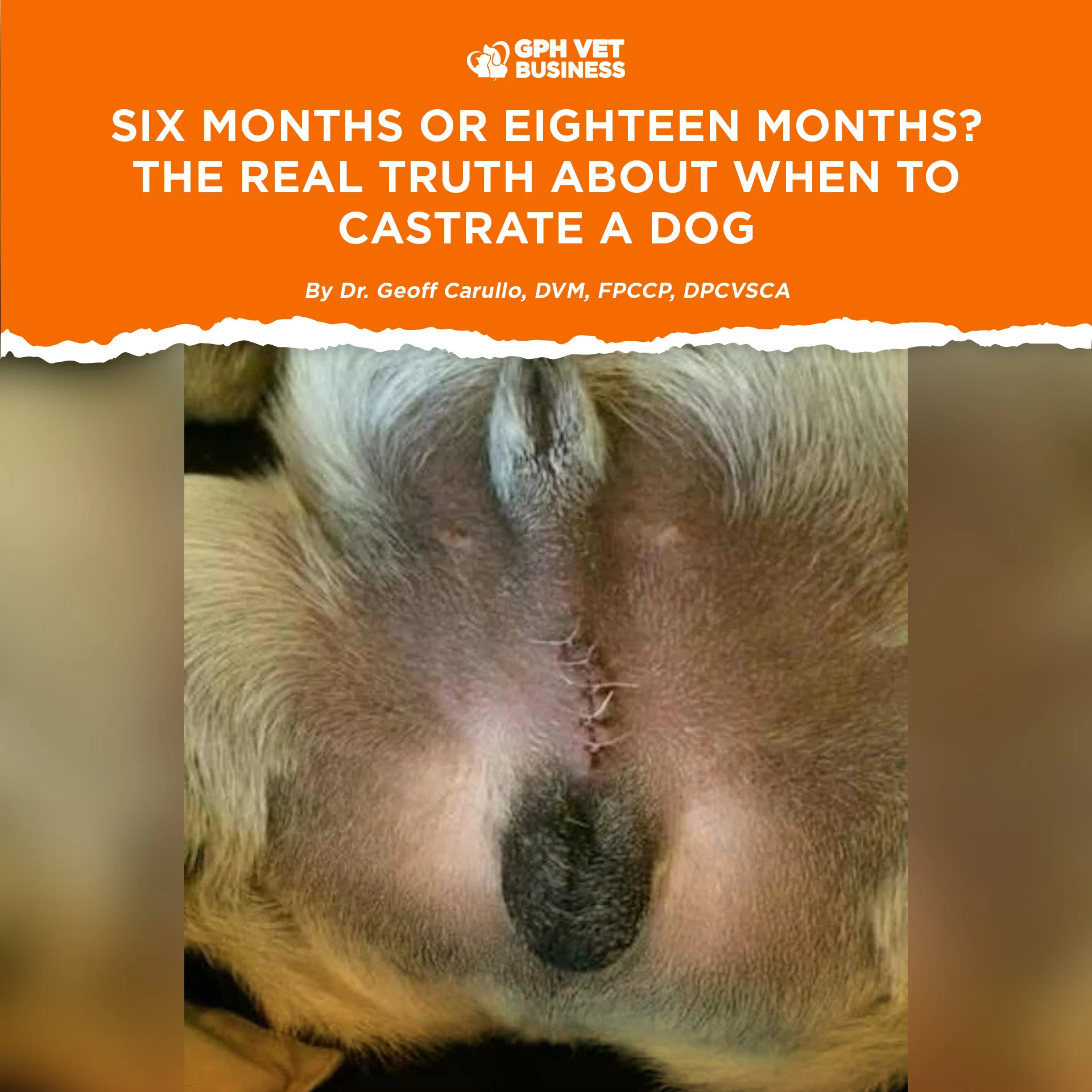
“I was told to castrate my dog at six months old — but the breeder said to wait until 18 months. What’s right?”
This question keeps coming up, and it’s a very good one. The answer today is no longer as simple as it used to be.
For decades, six months was the standard recommendation. Many veterinarians were trained this way. But veterinary medicine evolves — and so does our understanding of growth, hormones, and long-term health.
Why Six Months Became the Old Standard
Early neutering was promoted because it:
- Prevented unwanted pregnancies
- Reduced roaming and some hormone-driven behaviors
- Supported population control programs
From a public health and shelter medicine standpoint, early neutering made sense — and in many situations, it still does.
But companion animal medicine has since looked deeper into orthopedic and cancer risks, especially in large and giant breeds.
What Newer Research Tells Us
Testosterone is not just about reproduction. It plays a key role in:
- Bone growth and closure of growth plates
- Muscle development
- Joint stability
- Skeletal maturity
When testosterone is removed too early, growth plates may remain open longer. This can increase the risk of:
- Abnormal limb length and joint angles
- Cruciate ligament injuries
- Hip dysplasia in predisposed breeds
- Certain cancers in some large-breed dogs
This is why delayed neutering is now being discussed more seriously.
Why 18 Months Is Often Suggested for Large Breeds
Large and giant breeds mature later. Waiting until around 16–18 months allows:
- Natural closure of growth plates
- Better joint and muscle development
- Lower long-term orthopedic risk
In this context, a breeder recommending delayed neutering is not automatically wrong — especially when advice is breed-specific.
So… Who Is Actually Right?
Both recommendations can be right — depending on the dog.
There is no single “perfect” neutering age for all dogs.
The decision should consider:
- Breed and expected adult size
- Sex
- Lifestyle and environment
- Behavioral concerns
- Medical and genetic risks
Blanket advice no longer works.
What Pet Owners Should Do
Instead of asking “six months or eighteen months?”, ask:
- “What’s best for my dog?”
- “What risks are higher if we neuter early or late?”
- “Can we reassess as my dog grows?”
A good veterinarian individualizes recommendations rather than relying on outdated rules.
The Take-Home Message
- Six-month neutering is not wrong — but not always ideal
- Delayed neutering has real benefits, especially for large breeds
- Hormones matter
- The best choice is an informed, individualized one
Veterinary medicine is evolving, and that’s a good thing.
Dr. Geoff Carullo is a Fellow and the current President of the Philippine College of Canine Practitioners.
Sharing this helps others understand what it really means to be a vet. Like and follow if you’re with us.