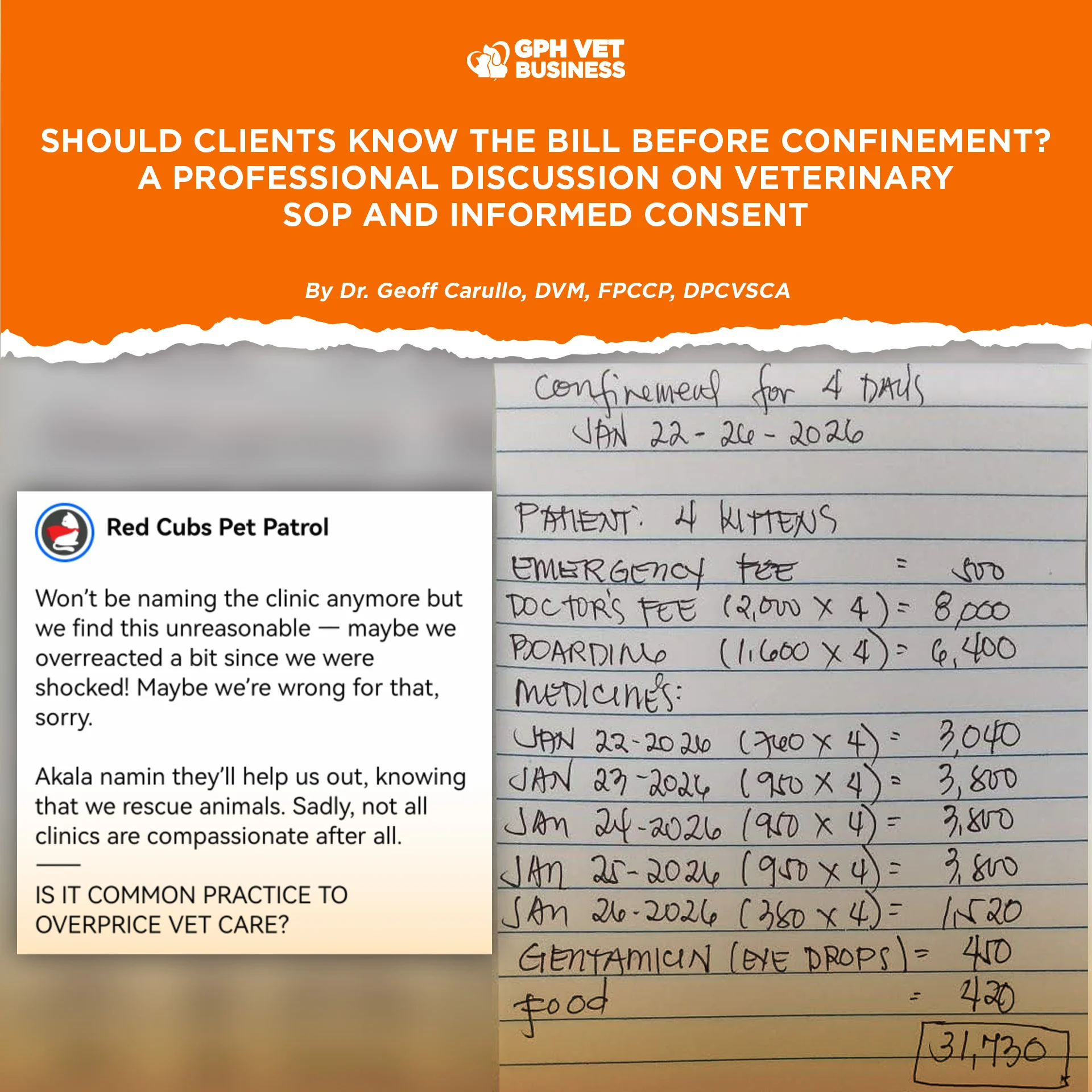
In recent days, several viral posts have circulated online involving confined veterinary patients and unexpected billing concerns.
Read: https://www.facebook.com/100080044610736/posts/891467213531424/?rdid=ehmbFop0FUpSxDkq#
Rather than discussing pricing or judging any clinic involved, it is more productive for the profession to step back and revisit a fundamental question:
Is it standard operating procedure for veterinary clinics to present an estimated bill before confinement?
The short answer is yes.
The longer answer is about professionalism, ethics, and trust.
The Role of Informed Consent in Veterinary Practice
In veterinary medicine, confinement is not a minor decision. It involves:
- Continuous responsibility for the patient
- Use of clinic space, manpower, and medical resources
- Ongoing treatment decisions
- Financial obligations on the client’s part
Because of this, informed consent is a core principle. Informed consent is not only about explaining the diagnosis or treatment plan. It also includes financial transparency.
Clients have the right to know what they are committing to before their pet is confined, except in true life-or-death emergencies where immediate action is required.
What Is the Accepted SOP in Most Clinics?
While clinics may differ in format and pricing structures, the usual SOP includes the following steps before confinement:
- Explanation of the patient’s condition
- Recommended treatment plan and monitoring needs
- Discussion of confinement versus outpatient care
- Presentation of an estimated cost or range of expenses
- Client approval, ideally written or documented
This protects both the clinic and the client.
The estimate does not have to be exact. Medicine is dynamic. But the client should not be surprised after the fact.
Why Prior Billing Discussion Matters
When billing is discussed before confinement:
- Clients can make informed decisions
- Expectations are aligned
- Financial shock and emotional distress are minimized
- Trust between clinic and client is strengthened
- Public misunderstandings are less likely to escalate
Many conflicts seen online today are not rooted in bad intentions but in missed conversations.
Emergency Cases Are the Exception, Not the Rule
In true emergencies where delay may result in death, veterinarians may proceed first and explain later. This is ethically acceptable and often necessary.
However, once the patient is stabilized, financial discussions should still follow promptly.
Emergency care does not eliminate the need for transparency. It only postpones it briefly.
Special Consideration for Rescue Groups
Rescue organizations play a vital role in animal welfare, but they operate under financial constraints. This makes early financial discussion even more critical.
Clear communication allows rescue groups to:
- Decide how long confinement is feasible
- Explore alternative treatment options
- Seek assistance proactively
- Avoid public misunderstandings later
Professional respect goes both ways.
A Reminder for the Profession
Veterinary medicine is already emotionally charged. Add financial stress, and misunderstandings can escalate quickly, especially on social media.
As veterinarians, our best protection is not silence or defensiveness, but good systems:
- Clear SOPs
- Transparent estimates
- Documented consent
- Compassionate communication
These protect the clinic, the client, and the profession as a whole.
Closing Thought
This is not about who was right or wrong.
This is about reinforcing standards that prevent conflict before it begins.
Clear conversations save relationships.
Clear SOPs save reputations.
And most importantly, they allow everyone to focus on what truly matters, the patient.
Sharing this helps others understand what it really means to be a vet. Like and follow if you’re with us.