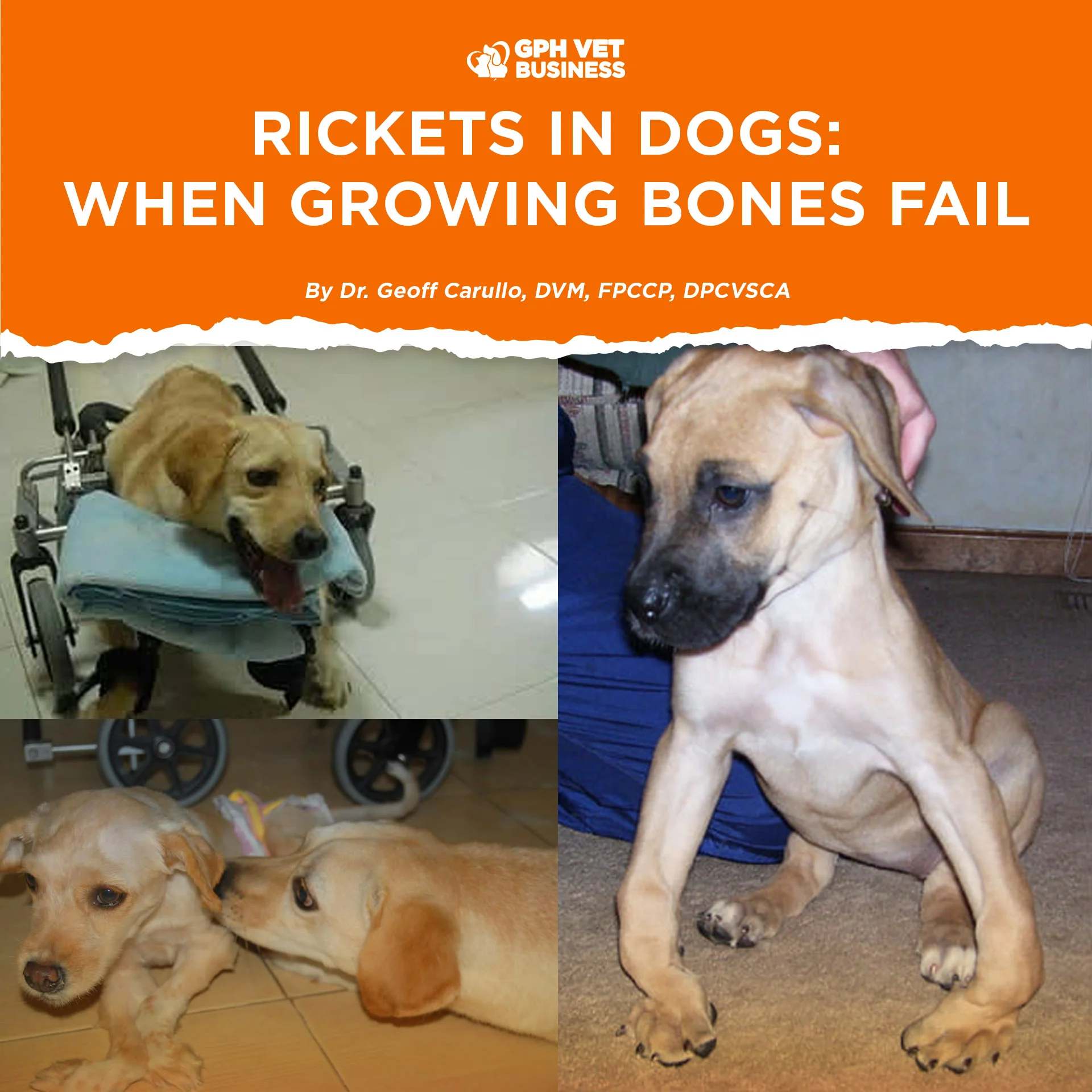
Rickets is a nutritional and metabolic bone disease of growing dogs, characterized by defective mineralization of bone and cartilage. While considered uncommon in well-managed practices, rickets still appears in real-world settings—especially in rescues, home-fed puppies, neglected litters, and chronically ill juveniles.
When missed early, it leads to permanent skeletal deformities, pain, and lifelong mobility issues.
What Is Rickets?
Rickets occurs when a puppy lacks the ability to properly mineralize growing bones due to deficiencies or imbalances in:
- Vitamin D
- Calcium
- Phosphorus
- Or impaired absorption/metabolism of these nutrients
Because puppies are actively growing, their bones are especially vulnerable.
👉 Rickets affects puppies, not adult dogs.
Adults develop osteomalacia, a related but distinct condition.
Why Rickets Still Happens
Despite commercial diets, rickets still occurs due to:
1. Improper Diet
- Home-cooked diets without veterinary formulation
- Rice + meat-only feeding
- Prolonged feeding of table scraps
- Milk-only or broth-based diets
2. Vitamin D Deficiency
- Poor-quality diets
- Malabsorption syndromes
- Chronic gastrointestinal disease
3. Calcium–Phosphorus Imbalance
- Excess phosphorus (meat-heavy diets)
- Inadequate calcium supplementation
- Incorrect supplementation ratios
⚠️ Over-supplementation can be just as dangerous as deficiency.
Clinical Signs of Rickets in Dogs
Early Signs (Often Missed)
- Lethargy
- Poor growth
- Reluctance to walk or play
- Pain on handling
Advanced Signs (Classic Presentation)
- Bowed legs
- Enlarged joints (especially carpus and tarsus)
- Soft or pliable bones
- Pathologic fractures
- Difficulty standing or walking
- Muscle weakness
- Delayed dentition
In severe cases, puppies may become non-ambulatory.
Radiographic Hallmarks (Key Clinical Pearl)
X-rays are diagnostic.
Typical findings include:
- Widened growth plates
- Decreased bone density
- Metaphyseal flaring
- Poor cortical definition
- Bowing of long bones
👉 Radiographic changes often appear before severe deformities become obvious.
Differential Diagnoses to Rule Out
- Hypertrophic osteodystrophy (HOD)
- Panosteitis
- Congenital limb deformities
- Trauma
- Neurologic disease
- Osteogenesis imperfecta (rare)
Treatment: What Actually Works
1. Correct the Diet (Most Important Step)
- Switch immediately to a balanced, complete puppy diet
- Use only veterinary-recommended commercial food or properly formulated diets
- Avoid guessing with supplements
2. Supplementation (Carefully)
- Calcium: only if deficient and properly calculated
- Vitamin D: ONLY under veterinary supervision
❗ Overdose can cause fatal hypercalcemia
Never empirically megadose.
3. Supportive Care
- Pain management
- Restricted activity to prevent fractures
- Physical support (splints or mobility aids if needed)
Prognosis: Timing Is Everything
- Early diagnosis: good to excellent prognosis
- Late diagnosis: skeletal deformities may be permanent
- Severe cases may require lifelong management
Bones that have already deformed will not always straighten, even with correct treatment.
Client Education: The Preventable Disease
Rickets is largely preventable.
Key messages for owners:
- Puppies need balanced nutrition, not “cheap” feeding
- Home diets require professional formulation
- Supplements are medications, not vitamins to guess with
👉 Most rickets cases reflect education gaps, not owner neglect.
Final Clinical Takeaway
Rickets is not rare where:
- Nutrition is poor
- Puppies are rescued or orphaned
- Home feeding is unsupervised
The disease is easy to prevent, easy to diagnose, but devastating when missed.
Early X-rays.
Early diet correction.
Early intervention.
That is how rickets stops being a lifelong sentence.
Sharing this helps others understand what it really means to be a vet. Like and follow if you’re with us.