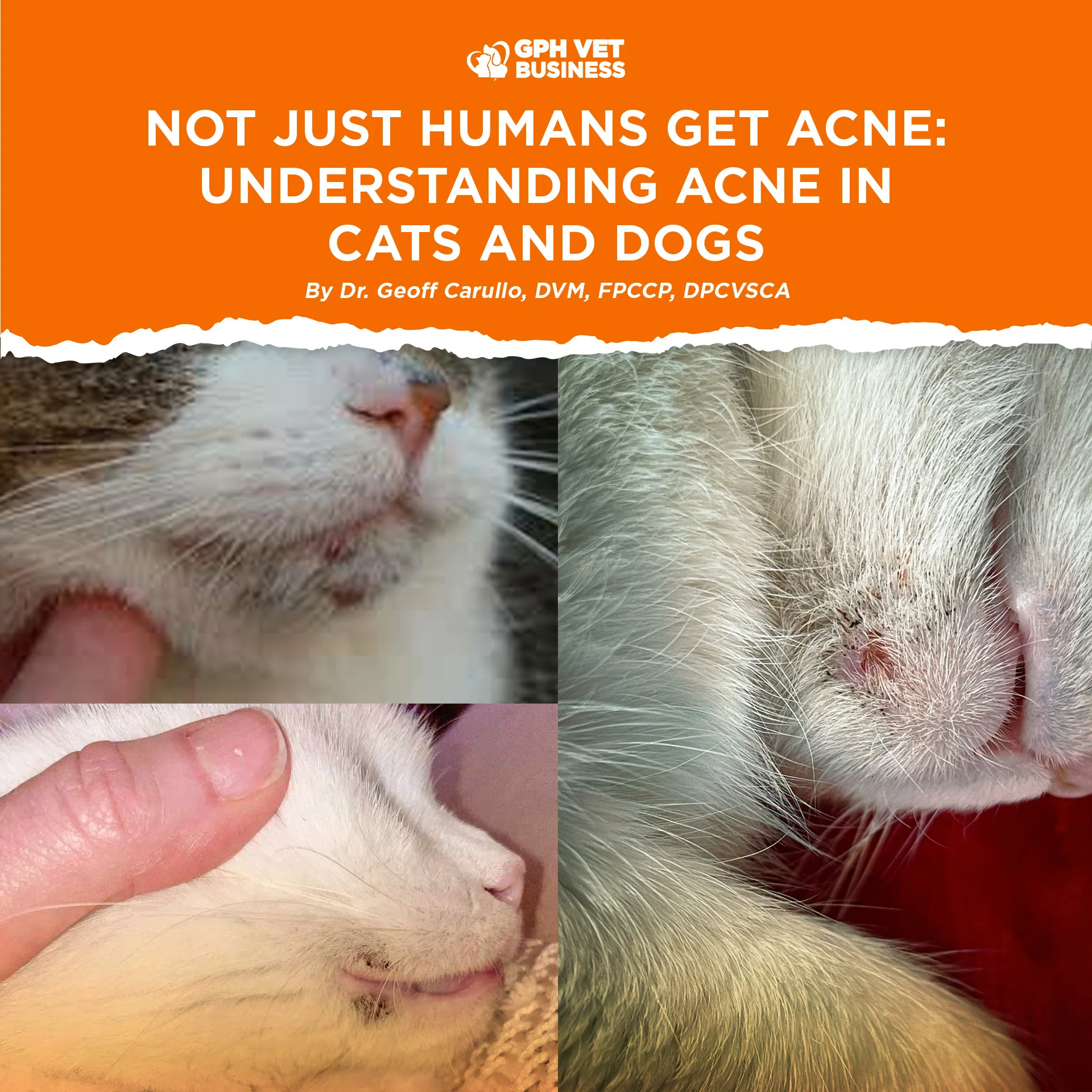
When people hear the word acne, they immediately think of human skin—teenagers, hormones, and facial cleansers. What many pet owners (and even some new practitioners) don’t realize is this:
Acne is not exclusive to humans.
Cats and dogs get acne too.
In veterinary practice, acne is a common, real, and often misunderstood condition that deserves proper recognition and management.
What Is Veterinary Acne?
Veterinary acne is an inflammatory disorder of the hair follicles, most commonly affecting the chin and lips of cats and dogs. It can range from mild cosmetic lesions to painful, infected skin disease.
Lesions may include:
- Comedones (blackheads)
- Papules and pustules
- Crusting and swelling
- Secondary bacterial infection
Unlike human acne, veterinary acne is not primarily hormonal.
Feline Acne: A Common but Underestimated Condition
Feline acne most often presents as:
- Black, dirt-like debris on the chin
- Crusting or thickened skin
- Pain or swelling in advanced cases
Cats of any age or breed can be affected. Contributing factors include:
- Follicular keratinization defects
- Poor grooming of the chin
- Stress
- Secondary bacterial infection
- Use of plastic food or water bowls
Left untreated, mild acne can progress to furunculosis and abscessation.
Canine Acne: More Than a Puppy Problem
Canine acne is frequently seen in:
- Young dogs
- Short-coated breeds
- Dogs that rest their chin on rough or hard surfaces
Clinical signs include:
- Papules and pustules on the chin
- Pain on palpation
- Swelling and erythema
- Secondary bacterial infection
Trauma and friction play a significant role in disease development.
Why Acne Becomes a Problem
Acne worsens when:
- Lesions are squeezed or manipulated
- Secondary infection develops
- Repeated trauma occurs
- Treatment is inconsistent or stopped too early
Once infected, acne can become chronic, painful, and scarring.
Diagnosis: Primarily Clinical
Diagnosis is usually based on:
- Lesion location (chin and lips)
- Appearance of lesions
- History and recurrence pattern
Additional diagnostics are considered when:
- Lesions are severe or atypical
- There is poor response to treatment
- Demodicosis, dermatophytosis, or other conditions are suspected
Treatment: Simple, but Requires Consistency
Treatment depends on severity.
Mild Cases
- Improved chin hygiene
- Topical antiseptic washes
- Avoidance of trauma
- Replacement of plastic bowls with stainless steel (especially in cats)
Moderate to Severe Cases
- Topical antibacterial or anti-inflammatory medications
- Systemic antibiotics for secondary infection
- Long-term topical maintenance for recurrent cases
Important note: Acne is usually managed, not permanently cured.
Prognosis
- Good to excellent with proper management
- Recurrence is common and expected
- Early treatment prevents scarring and chronic skin changes
Final Thought
Acne in pets is a reminder that not all skin conditions are dramatic at first—but neglect can turn a minor issue into a chronic problem.
Early recognition, realistic expectations, and consistent care make all the difference for both the patient and the owner.
Sharing this helps others understand what it really means to be a vet. Like and follow if you’re with us.