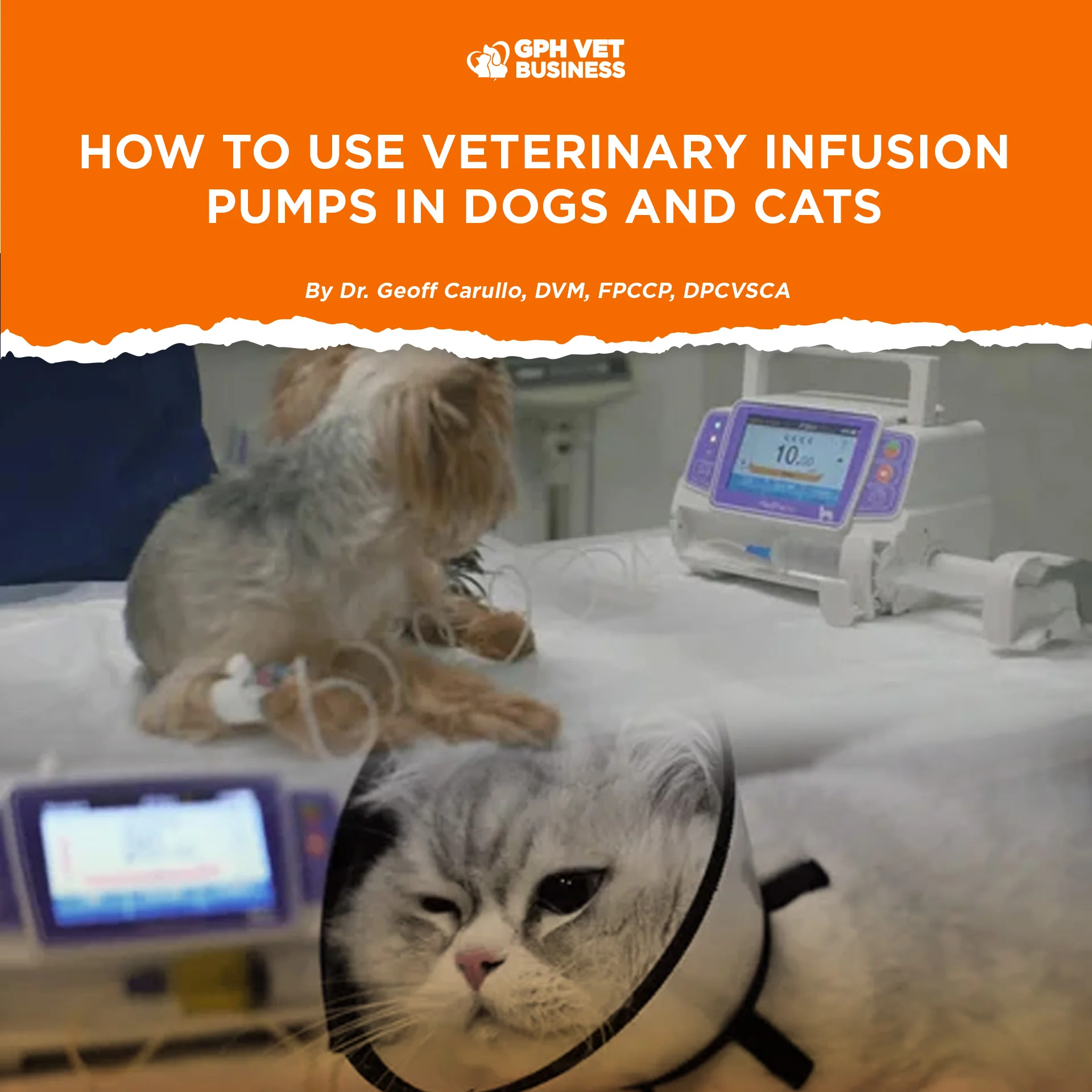
Intravenous fluid therapy is one of the most common and most critical procedures in small animal practice. When accuracy matters, especially in cats, pediatric patients, ICU cases, or animals on vasoactive or high-risk drugs, gravity drip sets are often not enough. This is where veterinary infusion pumps become essential.
This article walks through the practical, step-by-step use of infusion pumps in dogs and cats, including fluid calculations, pump setup, and common clinical pitfalls.
What Is a Veterinary Infusion Pump?
A veterinary infusion pump is a device that delivers fluids or medications intravenously at a precisely controlled rate, usually expressed in mL per hour. Unlike gravity sets, pumps maintain accuracy regardless of patient movement, catheter height, or line resistance.
Infusion pumps are commonly used for:
- Maintenance and correction fluids in cats
- Critical care and ICU patients
- Anesthetic and perioperative fluid control
- Continuous drug infusions such as CRIs
- Neonates and very small dogs
When Should You Use an Infusion Pump?
Use an infusion pump when:
- The patient weighs less than 5 kg
- Precise hourly delivery is required
- Fluid overload is a concern
- Drugs are given as continuous infusions
- The patient is anesthetized or unconscious
Cats with renal, cardiac, or hepatic disease benefit the most from pump-controlled fluids.
Step 1: Calculate the Fluid Requirement
Before touching the pump, you must know exactly how much fluid the patient needs.
Basic Maintenance Fluid Formula
- Dogs: 60 mL/kg/day
- Cats: 40 to 45 mL/kg/day
Convert Daily Volume to Hourly Rate
Hourly rate = Total daily fluid ÷ 24
Example (Cat):
4 kg cat
Maintenance = 40 mL/kg/day
Total daily = 160 mL/day
Hourly rate = 160 ÷ 24 = 6.7 mL/hr
This value is what you will program into the pump.
Step 2: Add Deficits or Ongoing Losses if Needed
If the patient is dehydrated or losing fluids:
- Calculate dehydration deficit
- Replace slowly over 12 to 24 hours unless in shock
- Add ongoing losses such as vomiting, diarrhea, or polyuria
Always reassess hydration every 6 to 12 hours, especially in cats.
Step 3: Prepare the IV Line and Fluids
- Select the correct IV catheter size
Cats usually 22 to 24 G
Dogs 18 to 22 G depending on size - Prime the IV line fully
No air bubbles should remain - Attach the IV line securely to the fluid bag
- Connect the line to the infusion pump according to manufacturer instructions
- Never load an unprimed line into the pump.
Step 4: Program the Infusion Pump
Most veterinary infusion pumps follow the same logic.
Basic Pump Settings
- Mode: Continuous infusion
- Rate: mL per hour
- Volume to be infused (optional but recommended)
- Alarm limits activated
Using the earlier example:
- Set rate to 6.7 mL/hr
- Set volume limit if desired, for example 160 mL over 24 hours
- Double-check the decimal point. A misplaced decimal is a common and dangerous error.
Step 5: Connect to the Patient
- Flush the IV catheter to confirm patency
- Connect the pump line to the catheter
- Secure the catheter and line properly
- Start the pump
- Observe the first few minutes closely
- Look for swelling, resistance, or alarms
Step 6: Monitor the Patient Closely
Infusion pumps do not replace monitoring.
Check every 2 to 4 hours:
- Hydration status
- Body weight
- Urine output
- Lung sounds
- Heart rate and respiratory rate
- IV site integrity
In cats, even small overages can lead to fluid overload.
Using Infusion Pumps for Drug CRIs
- Calculate dose in mg/kg/hr
- Convert to total drug per hour
- Dilute in a known fluid volume
- Set pump rate to deliver the correct dose
- Always label CRI lines clearly and never piggyback without clarity.
Common Mistakes to Avoid
- Forgetting to convert daily fluids to hourly rates
- Decimal point errors in cats
- Running pumps without volume limits
- Ignoring alarms
- Poor catheter fixation leading to extravasation
- Using pumps without regular recalibration
Final Thoughts
Infusion pumps are not luxury equipment. They are safety tools. In cats and small dogs, they dramatically reduce the risk of fluid overload and dosing errors. When used correctly, they elevate the standard of care and give veterinarians precise control over one of the most powerful treatments we administer.
Mastery of infusion pump use is not about technology. It is about discipline, calculation, and constant patient reassessment.
Sharing this helps others understand what it really means to be a vet. Like and follow if you’re with us.