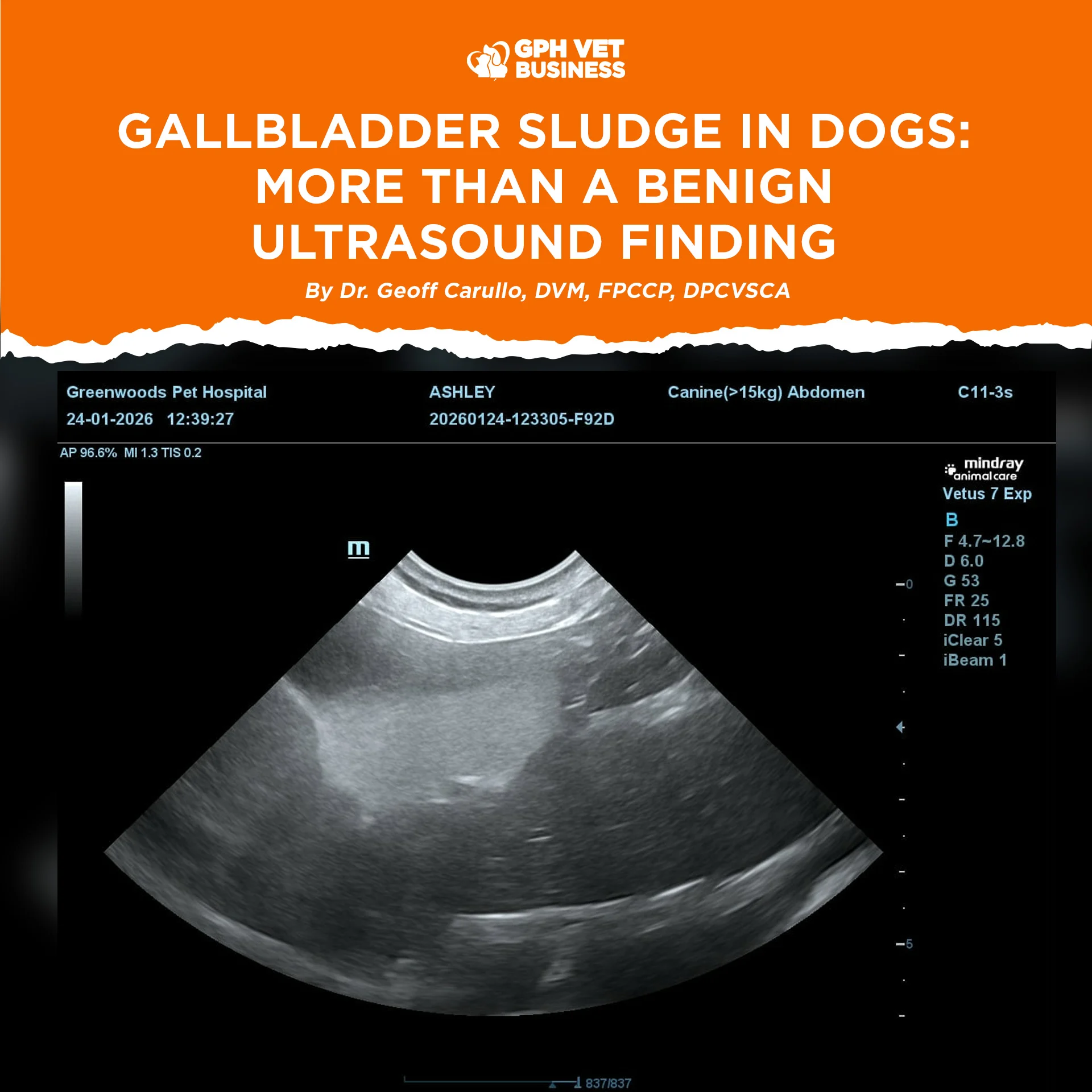
Gallbladder sludge is one of the most commonly overlooked findings in small animal abdominal ultrasound. Often dismissed as “incidental,” sludge can actually be an early marker of hepatobiliary dysfunction, especially in predisposed breeds and patients with chronic disease.
Understanding when gallbladder sludge is harmless and when it is clinically significant is critical for proper case management.
What Is Gallbladder Sludge?
Gallbladder sludge refers to echogenic, gravity-dependent material within the gallbladder lumen that does not produce acoustic shadowing. Sonographically, it appears as:
- Low- to moderately echogenic sediment
- Layering along the dependent portion of the gallbladder
- Mobile or semi-mobile with patient repositioning
Sludge is composed of bile pigments, cholesterol crystals, calcium salts, and mucus.
Why Does Sludge Form?
Gallbladder sludge develops when there is bile stasis or altered bile composition. Common contributing factors include:
- Cholestasis
- Reduced gallbladder motility
- Prolonged fasting
- Chronic hepatopathy
- Endocrine disease (e.g., hyperadrenocorticism)
- Drug effects (especially steroids)
In many cases, sludge is not a primary gallbladder disease but a reflection of underlying liver pathology.
Breed and Patient Risk Factors
Certain breeds appear overrepresented, including:
- Chow Chow
- Shetland Sheepdog
- Cocker Spaniel
- Miniature Schnauzer
Intact females and middle-aged to older dogs are also commonly affected, particularly those with concurrent endocrine or hepatic disease.
Ultrasound Characteristics That Matter
Not all sludge is equal. Pay close attention to:
- Amount of sludge – mild vs. gallbladder-filling
- Mobility – mobile sludge is less concerning than immobile
- Gallbladder wall thickness – thickening raises concern for inflammation
- Presence of stellate or kiwi-like patterns – may indicate evolving mucocele
- Pericholecystic fluid – suggests inflammation or impending rupture
Sludge with a smooth gallbladder wall and no pericholecystic changes is often stable, but progression is possible.
Clinical Significance: When Should You Worry?
Gallbladder sludge becomes clinically relevant when:
- Liver enzymes are persistently elevated
- The patient shows GI signs (vomiting, anorexia, abdominal pain)
- Sludge volume increases over time
- Gallbladder contents become immobile or organized
- There is concurrent hepatomegaly or diffuse hepatopathy
Sludge can be a precursor to gallbladder mucocele, especially in breeds already predisposed.
Recommended Workup
When gallbladder sludge is identified, consider:
- ALT, ALP, GGT
- Total bilirubin
- Pre- and post-prandial bile acids
- Repeat ultrasound monitoring
- Endocrine screening when indicated
Ultrasound follow-up is often more valuable than a single snapshot in time.
Management Principles
Management depends on the clinical picture:
- Asymptomatic patients may only require monitoring
- Hepatoprotectants and choleretics may be considered
- Dietary management can support bile flow
- Progressive cases require close imaging follow-up
Surgical intervention is not indicated for sludge alone, but early recognition helps prevent progression to surgical disease.
Key Takeaway
Gallbladder sludge is not a diagnosis.
It is a signal.
A signal that bile flow is altered, liver function may be compromised, and the patient deserves closer attention before more serious hepatobiliary disease develops.
Ignoring sludge is easy.
Understanding it is good medicine.
Sharing this helps others understand what it really means to be a vet. Like and follow if you’re with us.