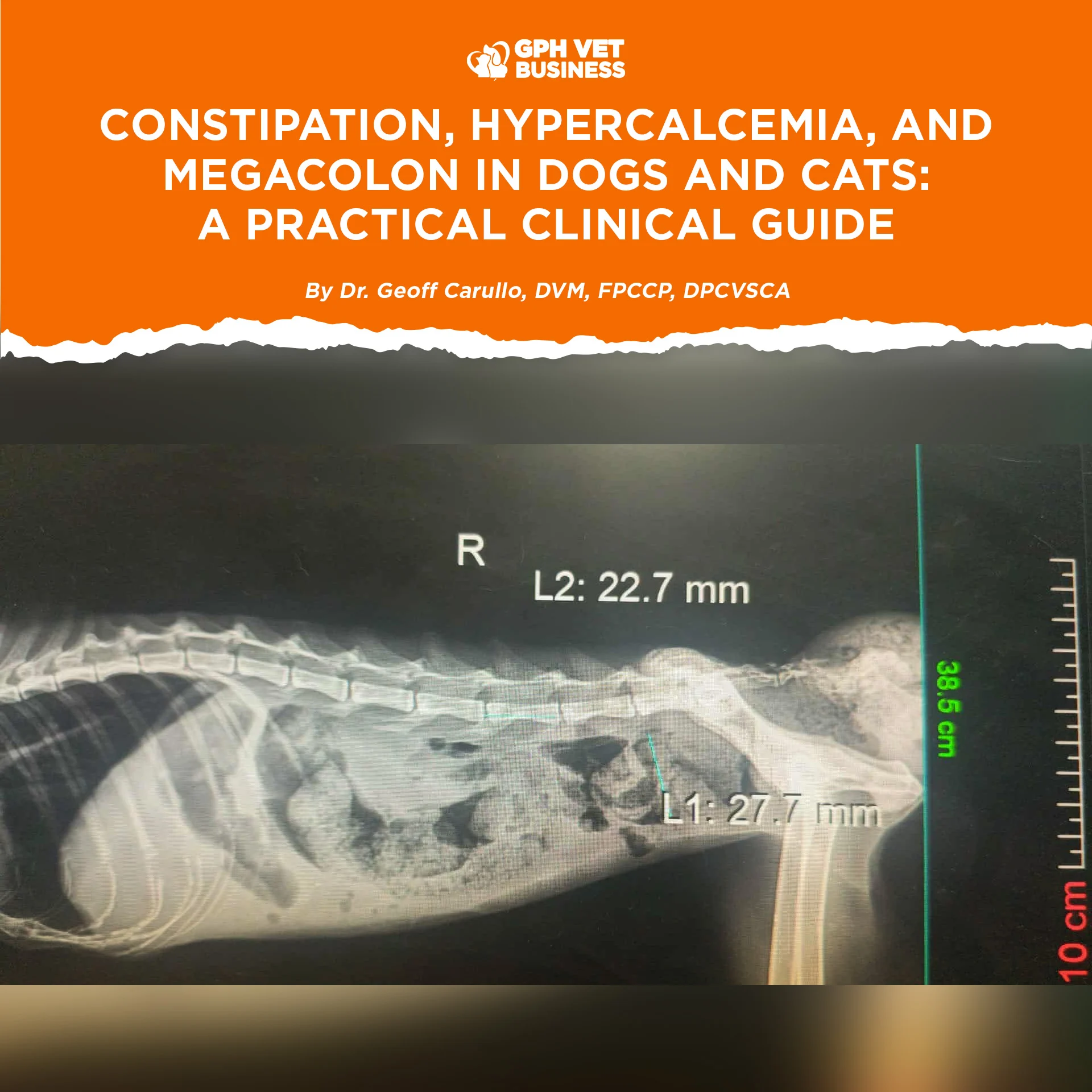
Constipation in small animal practice is often treated as a simple gastrointestinal problem. In reality, it is frequently a multifactorial condition and, in cats especially, may be the first visible sign of a systemic or metabolic disorder such as hypercalcemia.
This article outlines a structured approach to constipation in dogs and cats, with emphasis on radiographic assessment, common underlying causes, and rational stepwise management.
Radiographic Assessment: Constipation vs Megacolon
Abdominal radiography remains one of the most useful tools in evaluating constipated patients.
A commonly used guideline in cats compares maximal colonic diameter to the length of the fifth lumbar vertebra (L5):
- Colon diameter < 1.5 × L5 → Consistent with constipation
- Colon diameter > 1.5 × L5 → Suggestive of megacolon
This distinction matters because megacolon is not just severe constipation. It often represents a chronic or irreversible motility disorder requiring long-term management or surgery.
Common Causes of Constipation
Constipation is rarely idiopathic on first presentation. The following causes should always be considered:
- Hypercalcemia — Reduces smooth muscle contractility and intestinal motility. Cats may present with constipation before other systemic signs are obvious.
- Hypokalemia — Leads to generalized muscle weakness, including the colon.
- Pelvic canal narrowing or stenosis — Often secondary to previous trauma or malunited fractures.
- Dehydration — Results in excessive water reabsorption from feces.
- Neurologic injury — Sacral, spinal, or peripheral nerve dysfunction affecting defecation.
- Congenital or breed-related sacral deformities — Commonly reported in Manx and Manx-type cats.
- Chronic enteropathy / IBD — Although diarrhea is more common, altered motility may rarely present as constipation.
Importantly, constipation should be viewed as a clinical sign, not a diagnosis.
Initial Management Principles
Management should be graduated and evidence-based, not immediately aggressive.
Hydration
- Encourage increased water intake
- Multiple water bowls, fountains
- Add water to wet food
- Address systemic dehydration if present
Dietary Modification
- Transition to wet diets
- Consider hydrolyzed, high-fiber, or low-residue diets depending on the case
- No single diet fits all patients
Fiber Supplementation
- Psyllium husk or soaked chia seeds can improve stool bulk and motility
- Introduce gradually to avoid worsening discomfort
Laxative Therapy
Polyethylene glycol (PEG 3350) is currently preferred in cats:
- More effective and better tolerated than lactulose
- Minimal gas production
- Flexible dosing
Typical approach:
- Start with ½ teaspoon every 12 hours
- Dissolve in water and mix with food
- Goal: at least one bowel movement per day
If no defecation for more than 36 hours:
- Temporarily increase dose until feces are passed
- Reassess hydration and underlying causes
Role of Prednisolone
If constipation persists after mechanical, dietary, and metabolic causes have been addressed, a short therapeutic trial of prednisolone may be considered in selected cases:
- Particularly when inflammatory or idiopathic motility disorders are suspected
- Trial duration: approximately 3 weeks
- Only after ruling out infectious and metabolic causes
Long-acting injectable steroids should be avoided, especially in cats, due to the well-documented risk of steroid-induced diabetes mellitus.
Megacolon: When Medical Management Fails
Megacolon represents a severe and often chronic form of colonic dysfunction.
Key points:
- May be idiopathic or secondary
- Requires higher doses of laxatives and strict long-term management
- Some patients fail medical therapy
For refractory cases, subtotal colectomy remains a valid and often life-changing option. Most cats adapt remarkably well post-surgery with appropriate case selection and client counseling.
Clinical Takeaway
Constipation is never “just constipation.”
When presented with a constipated dog or cat:
- Measure, don’t guess
- Look beyond the colon
- Rule out metabolic and neurologic causes
- Treat progressively, not blindly
A systematic approach improves outcomes and prevents progression to irreversible disease.
Dr. Geoff Carullo is a Fellow and the current President of the Philippine College of Canine Practitioners.
Sharing this helps others understand what it really means to be a vet. Like and follow if you’re with us.