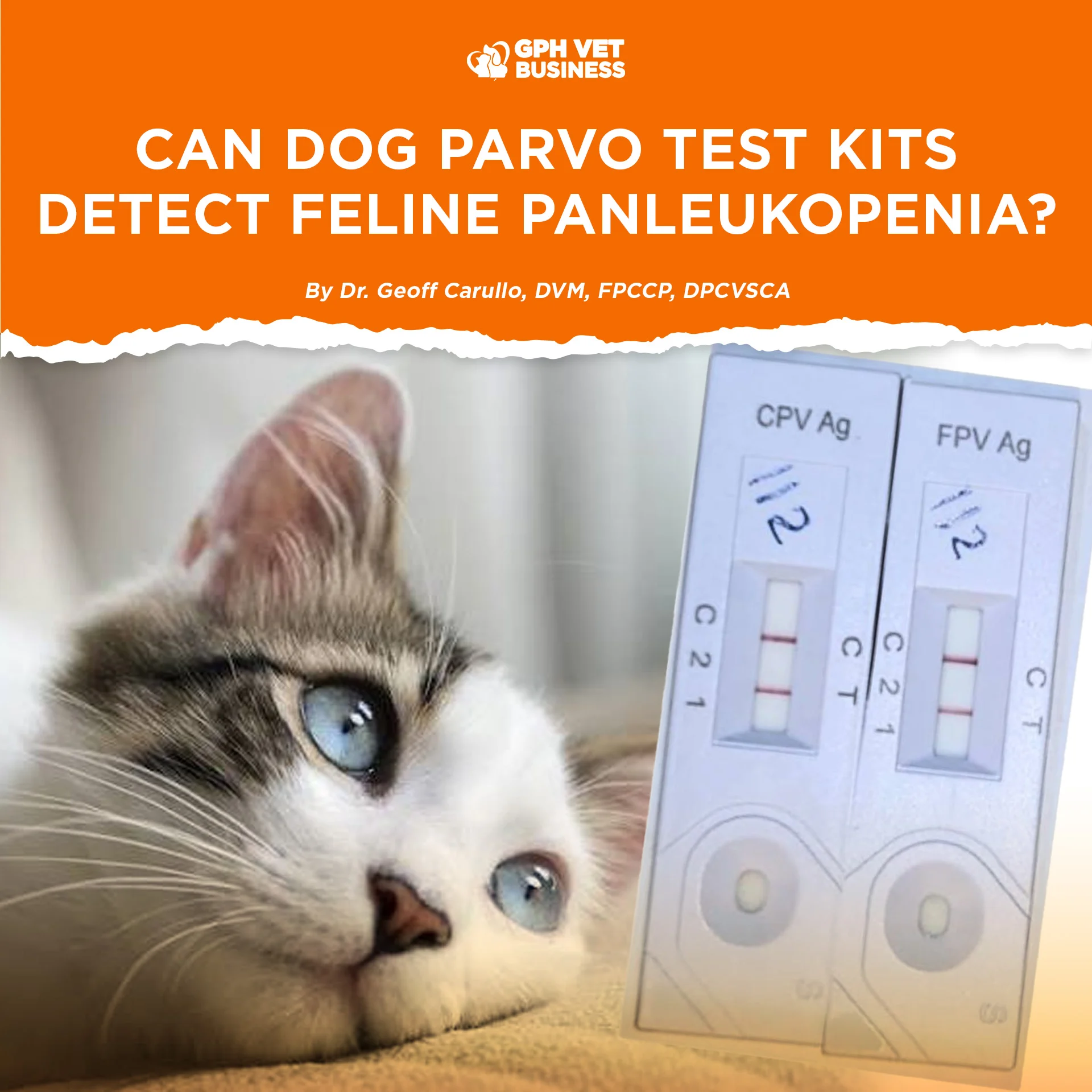
In practice, veterinarians often make decisions using the tools available, not always the tools we wish we had. One common example is diagnosing feline panleukopenia, a serious and often fatal viral disease in cats.
The question many colleagues have asked over the years is simple:
“Can a canine parvovirus test kit be used to detect feline panleukopenia?”
Recent research suggests the answer may be yes.
Read here: https://www.facebook.com/share/p/1a5QjfZShE/
Understanding the Viruses
Feline panleukopenia is caused by FPV, a virus closely related to canine parvovirus (CPV). They belong to the same family and share many structural similarities. That similarity is the reason why some diagnostic kits designed for dogs can also react with the feline virus.
In short: the viruses are different species, but genetically close enough that certain tests can detect both.
What the Study Found
In one study involving 50 cats, researchers compared:
- Kits designed for canine parvovirus
- Kits designed specifically for feline panleukopenia
Thirty cats showed symptoms of acute gastroenteritis (vomiting, diarrhea, lethargy), while twenty healthy cats served as controls. PCR and viral sequencing were used as gold-standard confirmation.
The results were striking. The canine and feline kits showed almost perfect agreement in detecting the virus. Most positives were FPV, though a few involved CPV variants that can infect cats.
Why This Matters in Real Practice
In many clinics, especially smaller ones or those in developing areas, feline-specific kits are not always available. They may be more expensive, harder to source, or temporarily out of stock.
In those situations, veterinarians have sometimes relied on canine parvo kits based on experience. This study provides scientific support for that practice. It shows that when a cat presents with symptoms consistent with panleukopenia, a positive result on a canine kit can still be meaningful.
Interpreting Weak Positives
We’ve all seen faint or weak positive lines on rapid tests. The study suggests that in sick, unvaccinated cats showing clinical signs, even a weak positive may represent a real infection. This can help veterinarians make more confident decisions when PCR is not immediately available.
Important Limitations
Of course, caution is still needed. The study only evaluated two brands of kits, so results may vary with others. More research is needed to confirm reliability across different manufacturers and to better understand how often CPV variants infect cats.
The Practical Takeaway
For everyday practice, the message is encouraging.
If a cat presents with signs of panleukopenia and only a canine parvo kit is available, a positive result can still guide clinical decisions. It is not a perfect substitute for feline-specific testing or PCR, but it can be a useful tool when speed, access, and cost matter.
Sometimes the tools already in our hands are more useful than we thought.
Dr. Geoff Carullo is a Fellow and the current President of the Philippine College of Canine Practitioners.
Sharing this helps others understand what it really means to be a vet. If you found this valuable, like and follow for more insights.