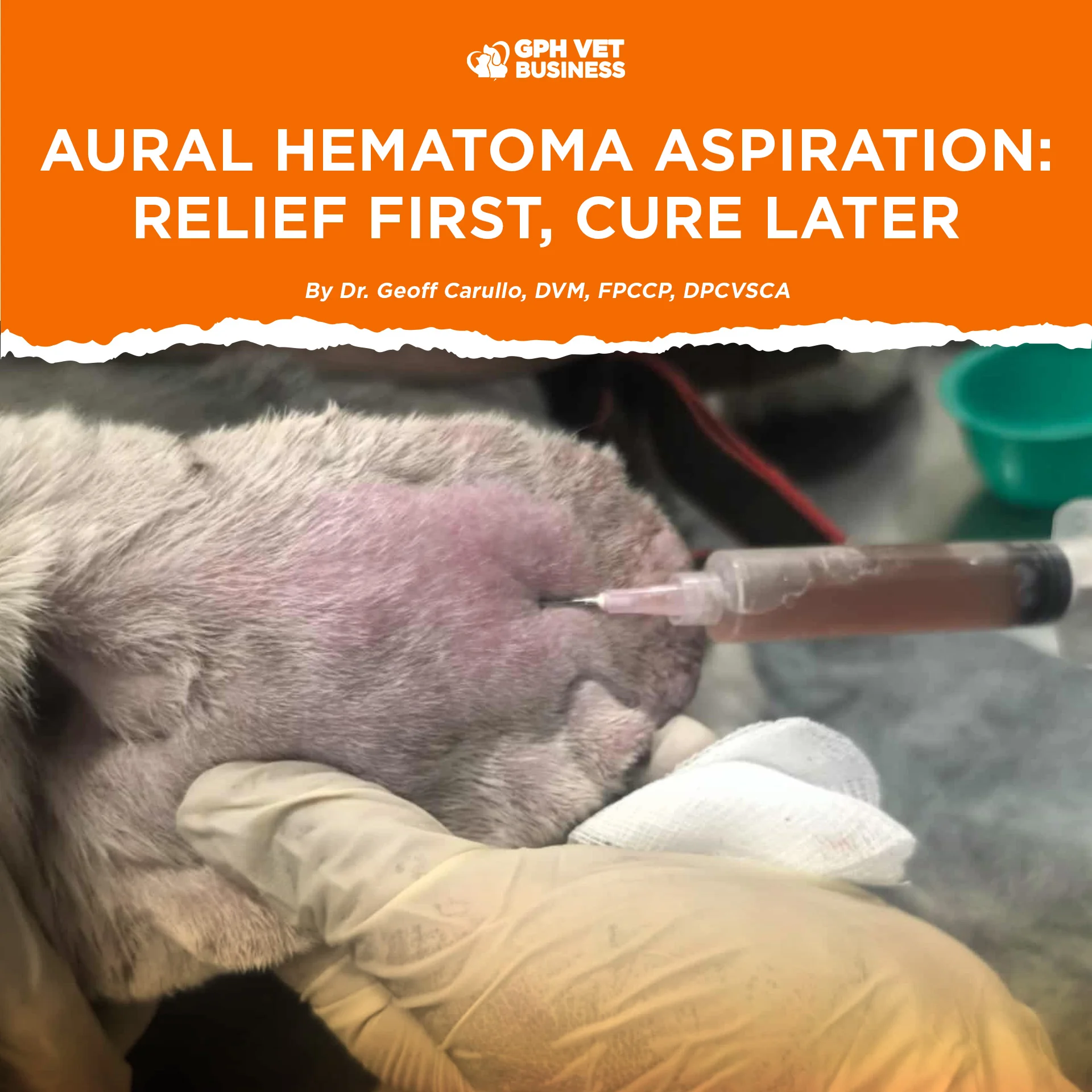
Aural hematoma is one of the most dramatic and uncomfortable conditions we see in small animal practice. The ear pinna swells with blood trapped between the skin and cartilage, becoming heavy, tense, warm, and painful. Patients shake their heads constantly and scratch because the pressure is unbearable.
This leads to a common question: is aspiration allowed to relieve pain and inflammation?
The answer is yes. And in many cases, it is the right thing to do.
Why Aspiration Matters
Aspiration reduces pressure inside the ear flap. When the hematoma is tense, the stretching of skin and cartilage causes significant discomfort. Removing the accumulated blood decompresses the pinna and often brings immediate relief. Many patients stop shaking their heads and settle down soon after the procedure.
From a welfare standpoint, aspiration is humane. Leaving a painful hematoma untreated while waiting for surgery prolongs suffering. Decompression improves comfort while preparing for definitive treatment.
Relief, Not Cure
Aspiration must be understood for what it is: palliative, not curative.
The biggest limitation is recurrence. Because the underlying cause remains—whether otitis externa, ear mites, allergic dermatitis, or chronic inflammation—the ear often refills within days. Without addressing the primary disease, aspiration alone rarely solves the problem.
Still, that does not make aspiration wrong.
When Aspiration Helps Most
Aspiration is valuable when:
- The hematoma is large and painful
- Anesthesia must be delayed
- The patient is not a good surgical candidate
- Owners need time to decide on surgery or manage finances
In these situations, relieving pain immediately is good medicine.
Better outcomes can be achieved when aspiration is paired with medical therapy. Anti-inflammatories, treatment of ear infections, and control of allergic disease all reduce recurrence. Some veterinarians also use intralesional corticosteroids to calm inflammation.
The Role of Surgery
Despite these options, surgical drainage remains the most reliable long-term solution. Surgery allows continuous drainage and encourages the skin to adhere back to the cartilage, reducing recurrence and minimizing permanent ear deformity.
A practical approach is simple: aspirate to relieve pressure when needed, treat the underlying disease aggressively, monitor for recurrence, and recommend surgery if the hematoma refills.
The Takeaway
Veterinary medicine is not always about choosing one treatment over another. Sometimes it is about using the right treatment at the right time.
Aspiration relieves pain.
Definitive treatment prevents recurrence.
Good veterinarians understand the difference—and use both appropriately.
Dr. Geoff Carullo is a Fellow and the current President of the Philippine College of Canine Practitioners.
Sharing this helps others understand what it really means to be a vet. If you found this valuable, like and follow for more insights.