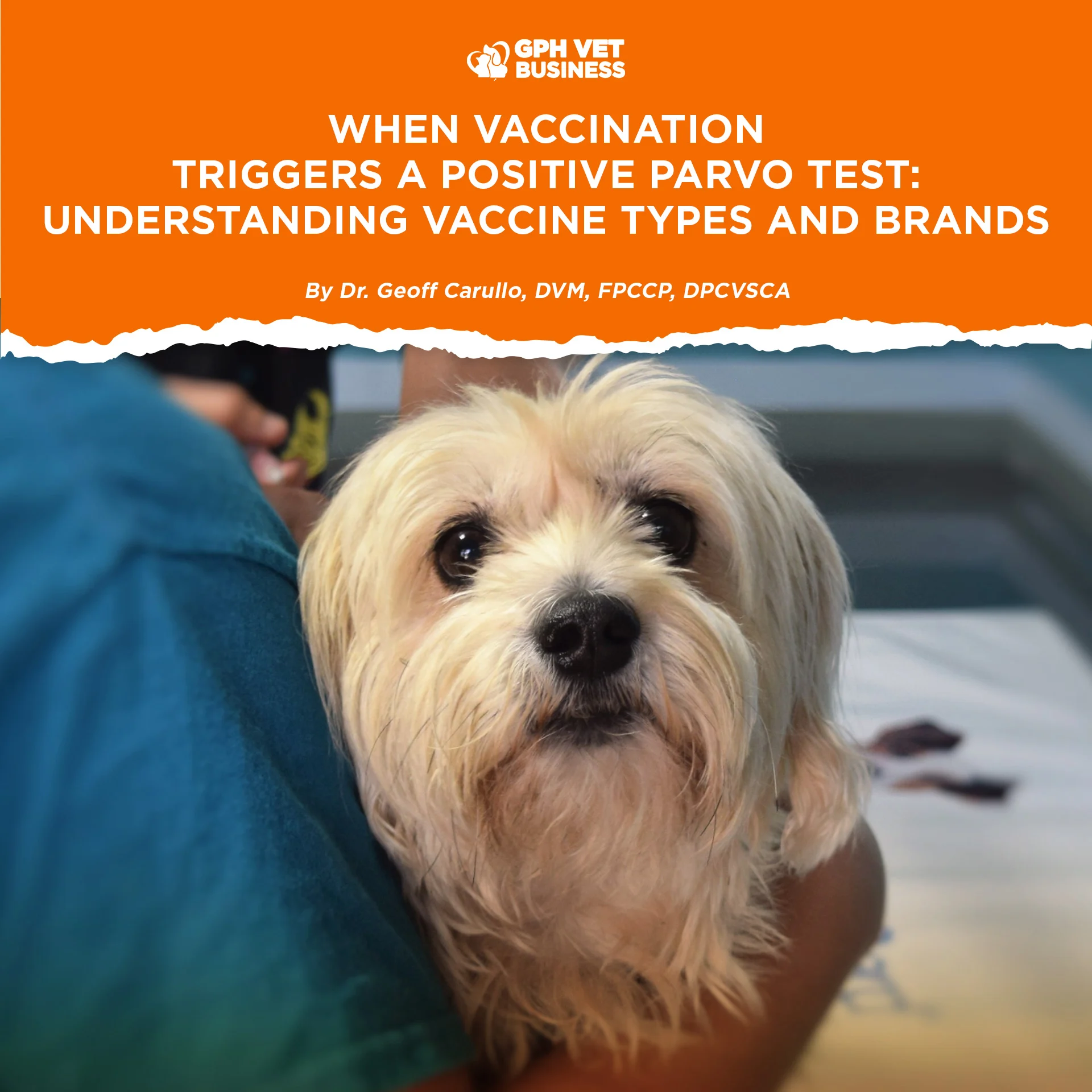
In small animal practice, a confusing situation sometimes occurs: a puppy tests positive on a canine parvovirus lateral flow antigen test, yet the dog appears clinically normal and was recently vaccinated with a DHLPPi vaccine.
This raises an important clinical question: Is the puppy truly infected, or could the vaccine itself influence the test result?
To answer this properly, veterinarians must understand the type of vaccine used.
The Vaccine Type That Can Cause Positive Lateral Flow Tests
The vaccine type most likely to produce a temporary positive parvovirus antigen test is the Modified Live Virus (MLV) vaccine.
MLV vaccines contain attenuated but living viruses that are capable of limited replication inside the dog’s body. This replication is intentional. It mimics natural infection just enough to stimulate a strong immune response without causing disease.
Because the vaccine virus replicates, small amounts of vaccine-derived parvovirus may be shed in the feces for several days after vaccination.
Lateral flow test kits detect viral antigen, but they cannot differentiate between vaccine virus and wild field virus. As a result, if a test is performed within several days after vaccination, the kit may detect the vaccine antigen and produce a positive result.
This is why veterinarians occasionally encounter positive parvo tests in recently vaccinated but otherwise healthy puppies.
Common DHLPPi Brands That Use Modified Live Parvovirus
Most DHLPPi vaccines used globally are modified live vaccines, including several well-known brands used in veterinary clinics.
Examples include:
- Nobivac DHPPi
- Vanguard Plus 5
- Duramune Max 5
- Canigen DHPPi
- Biocan DHPPi
All of these vaccines contain modified live parvovirus, which means temporary antigen detection after vaccination is biologically possible.
Why Killed Vaccines Do Not Cause This Problem
Killed or inactivated vaccines contain viruses that have been chemically or physically inactivated.
These viruses:
- Cannot replicate
- Cannot multiply inside the dog
- Cannot be shed in feces
Because no viral replication occurs, no viral antigen is produced in the body after vaccination. As a result, lateral flow antigen tests will not detect vaccine-derived antigen.
This means killed vaccines do not create false-positive parvovirus rapid tests.
However, killed vaccines generally produce weaker immune stimulation compared with modified live vaccines and often require strong adjuvants and more frequent boosters.
How Recombinant Vaccines Work
Another modern vaccine technology is the recombinant vaccine.
Recombinant vaccines do not contain the full virus. Instead, they use genetic engineering to insert a small piece of viral genetic material into another harmless carrier virus.
This carrier virus then produces specific viral proteins that stimulate immunity.
Because recombinant vaccines:
- Do not contain whole replicating parvovirus
- Do not cause viral shedding
- Do not produce fecal viral antigen
They are very unlikely to produce positive lateral flow antigen test results.
An example of recombinant technology used in canine vaccines is the recombinant distemper component found in:
- Recombitek C4
However, it is important to note that some combination vaccines may still include modified live parvovirus components, even if other components are recombinant.
When Vaccine-Related Positives Usually Occur
Vaccine-related antigen detection typically occurs within approximately:
- 3 to 10 days after vaccination
During this period, vaccine virus replication and mild shedding may still be occurring.
Outside this timeframe, a positive antigen test is more likely to represent true infection.
The Clinical Bottom Line
Modified live DHLPPi vaccines are highly effective and remain the gold standard for inducing strong and lasting immunity in dogs. However, because they contain replicating virus, they can occasionally lead to temporary positive parvovirus antigen test results shortly after vaccination.
Understanding the type of vaccine used and the brand administered helps veterinarians interpret diagnostic results correctly and avoid unnecessary concern.
Ultimately, rapid tests are valuable tools, but clinical judgment, vaccination history, and patient assessment remain essential in making the correct diagnosis.
Dr. Geoff Carullo is a Fellow and the current President of the Philippine College of Canine Practitioners.
Sharing this helps others understand what it really means to be a vet. Like and follow if you’re with us.