In small animal practice, diagnostic rapid tests have become indispensable. Lateral flow antigen kits are widely used for diseases such as canine parvovirus, distemper, and other infectious agents because they provide quick results and help guide clinical decisions within minutes.
However, a common question arises in practice:
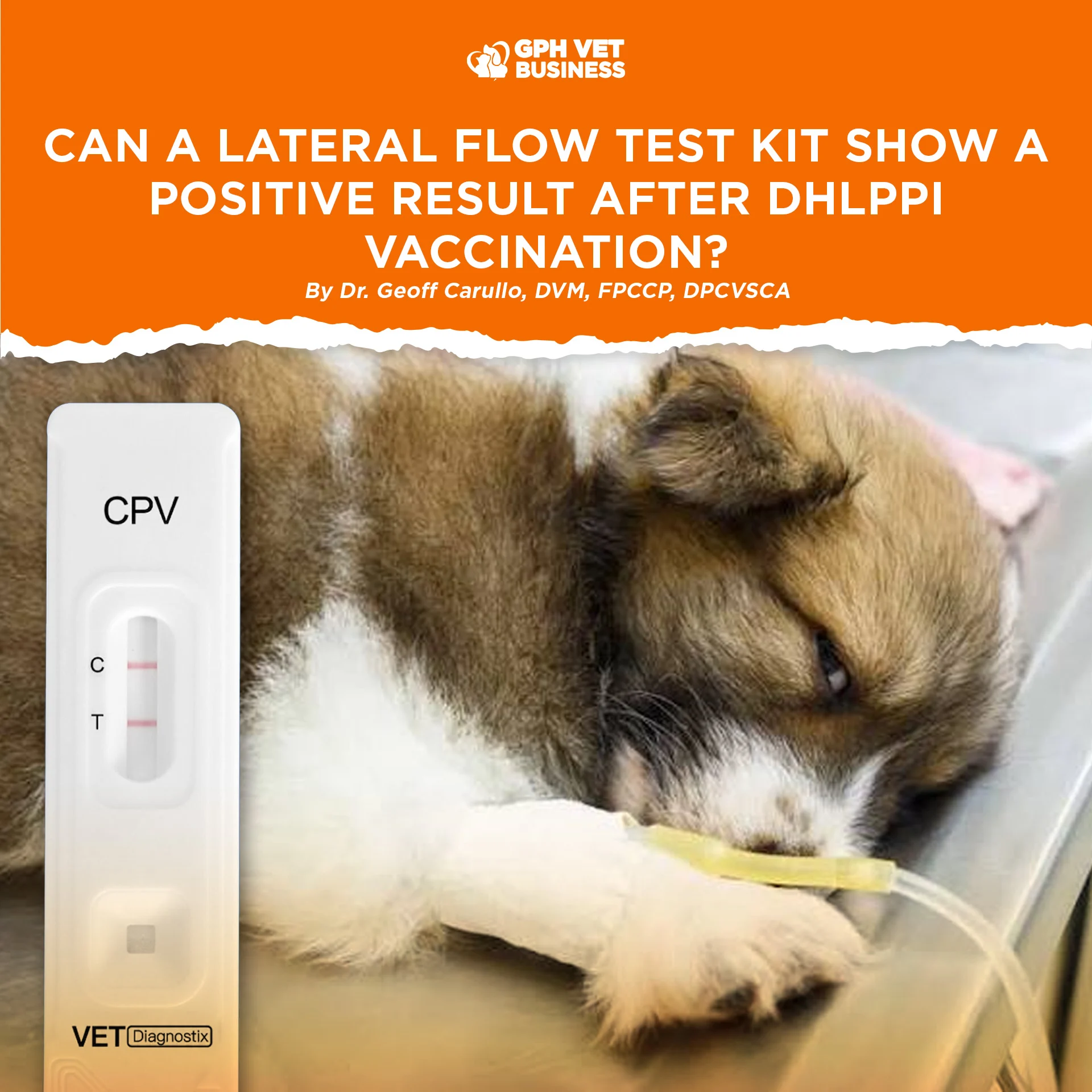
“Can a lateral flow test kit produce a positive result days after a dog receives a DHLPPi vaccination?”
The short answer is yes, it can happen, and understanding why is important for proper interpretation.
Understanding the DHLPPi Vaccine
The DHLPPi vaccine protects dogs against several serious viral diseases:
- Distemper
- Hepatitis (Adenovirus)
- Leptospirosis
- Parainfluenza
- Parvovirus
Most combination vaccines contain modified live virus (MLV) components for distemper and parvovirus. These live attenuated viruses are designed to replicate mildly in the body to stimulate the immune system and create protective immunity.
Because of this replication, vaccine virus particles may temporarily be present in the dog’s body after vaccination.
How Lateral Flow Tests Work
Lateral flow antigen tests detect viral proteins (antigens) in a sample such as feces or nasal discharge.
These tests do not distinguish between:
- Wild-type field virus
- Vaccine-derived virus
They simply detect the presence of viral antigen.
Why False Positives May Occur After Vaccination
After administration of a modified live parvovirus vaccine, some dogs may shed small amounts of vaccine virus in their feces for several days.
If a lateral flow parvo test is performed during this shedding period, the kit may detect the vaccine antigen and produce a positive result, even though the dog is not infected with the natural disease.
This phenomenon has been documented in veterinary studies and clinical experience.
How Long Can Vaccine Interference Last?
In most cases, vaccine-related antigen detection may occur for approximately:
- 3 to 10 days after vaccination, although it can occasionally persist slightly longer depending on the vaccine strain and the dog’s immune response.
This is why many clinicians recommend avoiding parvovirus antigen testing shortly after vaccination unless clinically necessary.
The Importance of Clinical Correlation
A positive rapid test should never be interpreted in isolation.
Veterinarians should always consider:
- Vaccination history
- Timing of the test
- Clinical signs
- Signalment and exposure risk
For example:
A healthy puppy with normal appetite and no vomiting or diarrhea that tests positive a few days after vaccination may simply be showing vaccine antigen detection, not true infection.
On the other hand, a puppy with severe vomiting, hemorrhagic diarrhea, lethargy, and leukopenia should always be treated seriously, regardless of vaccination history.
When Additional Testing Is Helpful
If the diagnosis remains unclear, additional diagnostic tools may help:
- PCR testing
- Serial antigen testing
- Complete blood count
- Clinical monitoring
PCR can sometimes differentiate between vaccine strain and field strain virus, depending on the laboratory.
The Takeaway for Practicing Veterinarians
Lateral flow antigen tests are extremely useful tools in daily practice, but like any diagnostic method, they have limitations.
A positive result shortly after vaccination does not automatically mean infection. The veterinarian must interpret the result in the context of clinical signs, vaccination timing, and overall patient assessment.
Diagnostic kits guide us, but clinical judgment remains the most powerful diagnostic tool in veterinary medicine.
Dr. Geoff Carullo is a Fellow and the current President of the Philippine College of Canine Practitioners.
Sharing this helps others understand what it really means to be a vet. Like and follow if you’re with us.