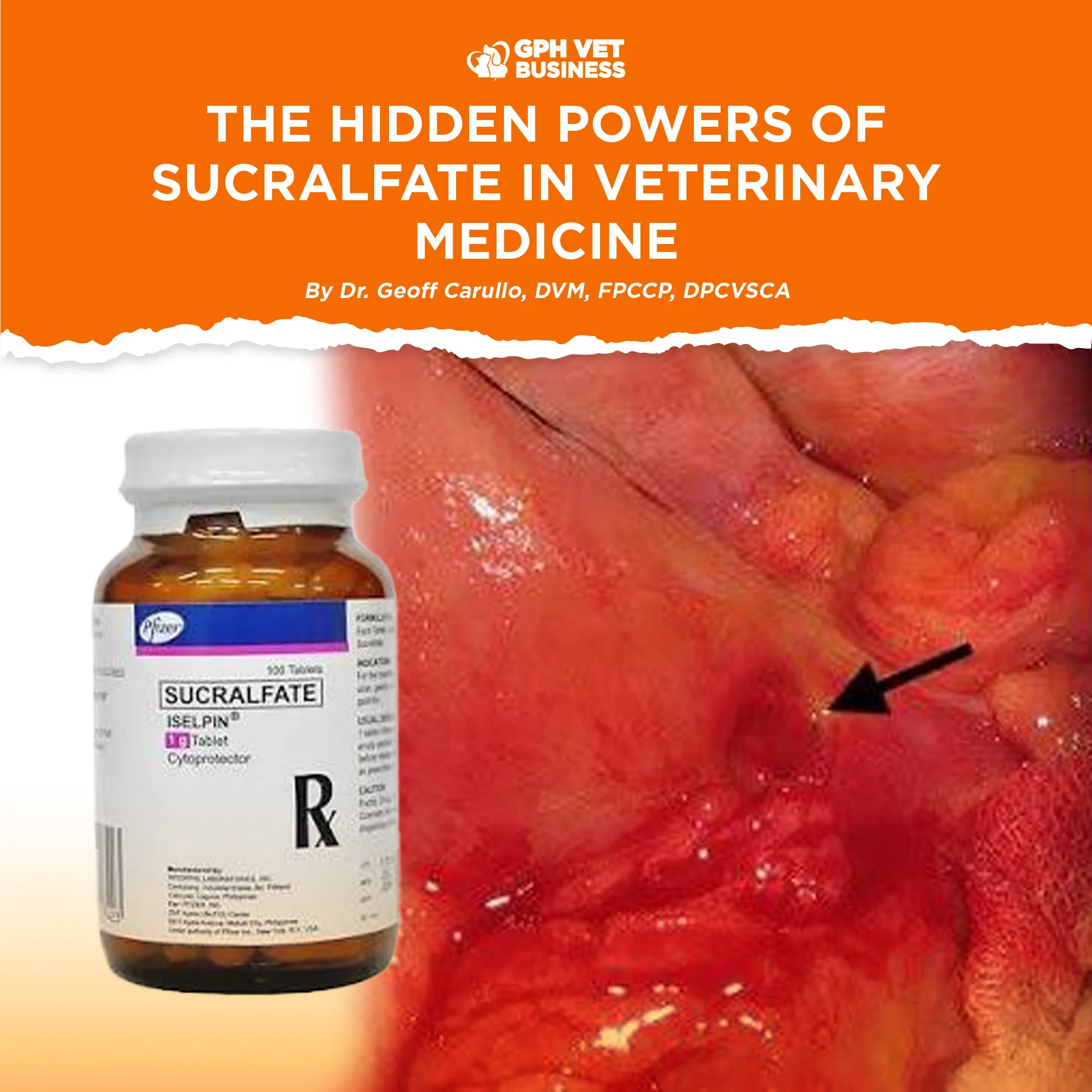
The Hidden Powers of Sucralfate in Veterinary Medicine
By Dr. Geoff Carullo, DVM, FPCCP, DPCVSCA
In veterinary medicine, some drugs are dramatic. They stop seizures, reverse shock, or rapidly eliminate parasites. Their effects are obvious and immediate.
Then there are medications that work quietly in the background. They do not look impressive at first glance, yet they play a critical role in healing.
One of those drugs is sucralfate.
Often remembered simply as a “stomach coating medication,” sucralfate actually has several powerful and practical applications in small animal practice. For veterinarians who understand its properties well, it becomes one of the most versatile supportive medications in both dogs and cats.
What Sucralfate Actually Does
Sucralfate is a gastroprotectant derived from sucrose sulfate and aluminum hydroxide. When it reaches an acidic environment in the stomach, it forms a thick, sticky paste-like barrier that adheres to damaged mucosal surfaces.
Instead of suppressing acid like proton pump inhibitors or H2 blockers, sucralfate works by physically protecting injured tissue.
Think of it as a biological bandage for the gastrointestinal tract.
Once attached to ulcerated tissue, it helps:
- Shield the lesion from gastric acid
- Protect against bile salts and digestive enzymes
- Promote local prostaglandin production
- Enhance mucosal healing
Because of this unique mechanism, sucralfate is extremely valuable in several clinical situations.
1. Gastric and Duodenal Ulcers
The most common use of sucralfate in veterinary practice is the treatment of gastric or duodenal ulcers.
Ulcers may develop due to:
- NSAID administration
- Steroid therapy
- Kidney disease
- Liver disease
- Severe systemic illness
- Stress-related mucosal injury
Sucralfate adheres directly to the ulcer crater and acts like a protective dressing, allowing the damaged tissue to repair itself while minimizing further irritation.
It is commonly combined with proton pump inhibitors such as omeprazole for better ulcer control.
2. Esophagitis
One of the most underrated uses of sucralfate is the treatment of esophageal inflammation.
Esophagitis can occur from:
- Pill-induced irritation (especially doxycycline in cats)
- Chronic vomiting
- Acid reflux
- Anesthesia-related reflux
When prepared as a sucralfate slurry, it coats the esophageal lining and protects the inflamed mucosa during swallowing.
Many veterinarians have seen dramatic improvement in patients with painful swallowing once sucralfate therapy is initiated.
3. Gastritis and Severe Vomiting Cases
In patients presenting with acute gastritis or persistent vomiting, the gastric mucosa may become irritated or eroded.
Sucralfate helps by:
- Coating inflamed stomach lining
- Reducing further irritation from acid
- Promoting mucosal recovery
This is particularly helpful in dogs hospitalized for gastroenteritis or toxin exposure.
4. Kidney and Liver Disease Patients
Patients with chronic kidney disease or liver disease are prone to developing gastrointestinal ulceration due to uremic toxins or metabolic disturbances.
In these patients, sucralfate becomes an important supportive medication to prevent further mucosal injury and gastrointestinal bleeding.
5. Post-Surgical Gastrointestinal Protection
Sucralfate can also be used after gastrointestinal surgery or trauma where the mucosal lining may be compromised.
By forming a protective layer over healing tissue, it helps reduce irritation while the gastrointestinal tract recovers.
Practical Tips for Veterinary Use
For veterinarians, a few clinical pearls make sucralfate more effective:
- Give on an empty stomach. Sucralfate binds best in an acidic environment and before food is introduced.
- Avoid giving with other medications. Because it can bind to certain drugs, it is best given 1–2 hours apart from other oral medications.
- Use as a slurry when possible. Crushing the tablet and mixing it with water helps improve mucosal coating, especially in cases of esophagitis.
A Simple Drug with Powerful Value
Sucralfate may not be the most glamorous medication in veterinary pharmacology. It does not dramatically change vital signs or produce immediate visible results.
But in many patients, it quietly protects fragile tissue, reduces pain, and allows healing to take place.
For clinicians managing vomiting patients, esophagitis cases, or ulcerative gastrointestinal disease, sucralfate remains one of the most dependable tools in supportive therapy.
Sometimes the most powerful medications are not the ones that fight aggressively.
They are the ones that protect while the body heals.
Dr. Geoff Carullo is a Fellow and the current President of the Philippine College of Canine Practitioners.
Sharing this helps others understand what it really means to be a vet. Like and follow if you’re with us.