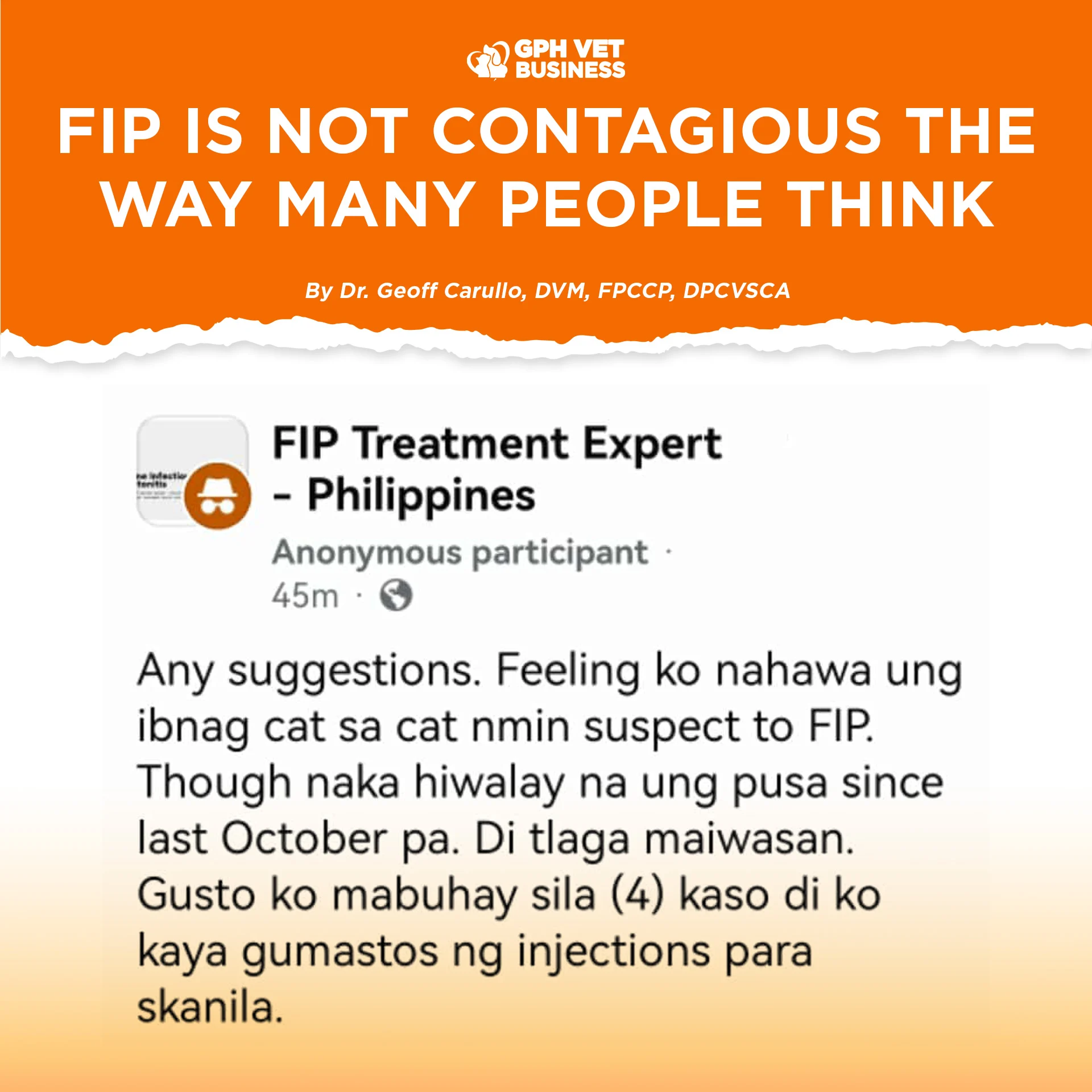
From time to time, posts appear online from worried cat owners who fear that one cat with suspected FIP will automatically infect all the other cats in the household. The concern is understandable. Feline Infectious Peritonitis is a frightening diagnosis, and when several cats live together, the instinct is to assume the disease spreads directly from one to another.
But here is the important clarification that every cat owner should understand.
FIP itself is not directly transmissible from cat to cat.
What spreads between cats is feline coronavirus, not FIP.
Most cats in multi-cat environments such as homes, shelters, or catteries may already be exposed to feline coronavirus at some point in their lives. The virus is commonly transmitted through fecal contamination, shared litter boxes, or close contact between cats. In fact, many cats carry feline coronavirus without ever becoming seriously ill.
In the majority of cases, the virus causes either mild intestinal signs or no signs at all.
FIP develops only when the feline coronavirus mutates inside an individual cat’s body. This mutation allows the virus to infect immune cells and spread throughout the body, leading to the severe inflammatory disease we know as FIP.
This mutation happens inside the cat, not because another cat directly transmitted FIP.
This is why in many households:
- Several cats may have coronavirus exposure
- Only one cat develops FIP
- The others remain completely healthy
So when an owner says, “Nahawa ng FIP ang ibang pusa,” what is more accurate is that the cats may have been exposed to coronavirus, which is common among cats. The development of FIP depends on multiple factors including:
- The individual cat’s immune response
- Age, with kittens and young cats being more susceptible
- Stress and environmental factors
- Viral mutation within the body
This understanding is important because it helps prevent unnecessary panic or guilt among cat owners who believe they accidentally spread FIP between their pets.
The goal in multi-cat households is still good management:
- Maintain clean litter boxes
- Reduce overcrowding
- Provide proper nutrition
- Minimize stress among cats
- Seek veterinary consultation if any cat develops concerning signs
FIP remains a complex disease, but it is not a simple contagious infection passed from one cat to another like many people assume.
Education is one of the most powerful tools we have to help both veterinarians and pet owners respond calmly and rationally to difficult diseases like this.
Dr. Geoff Carullo is a Fellow and the current President of the Philippine College of Canine Practitioners.
Sharing this helps others understand what it really means to be a vet. Like and follow if you’re with us.