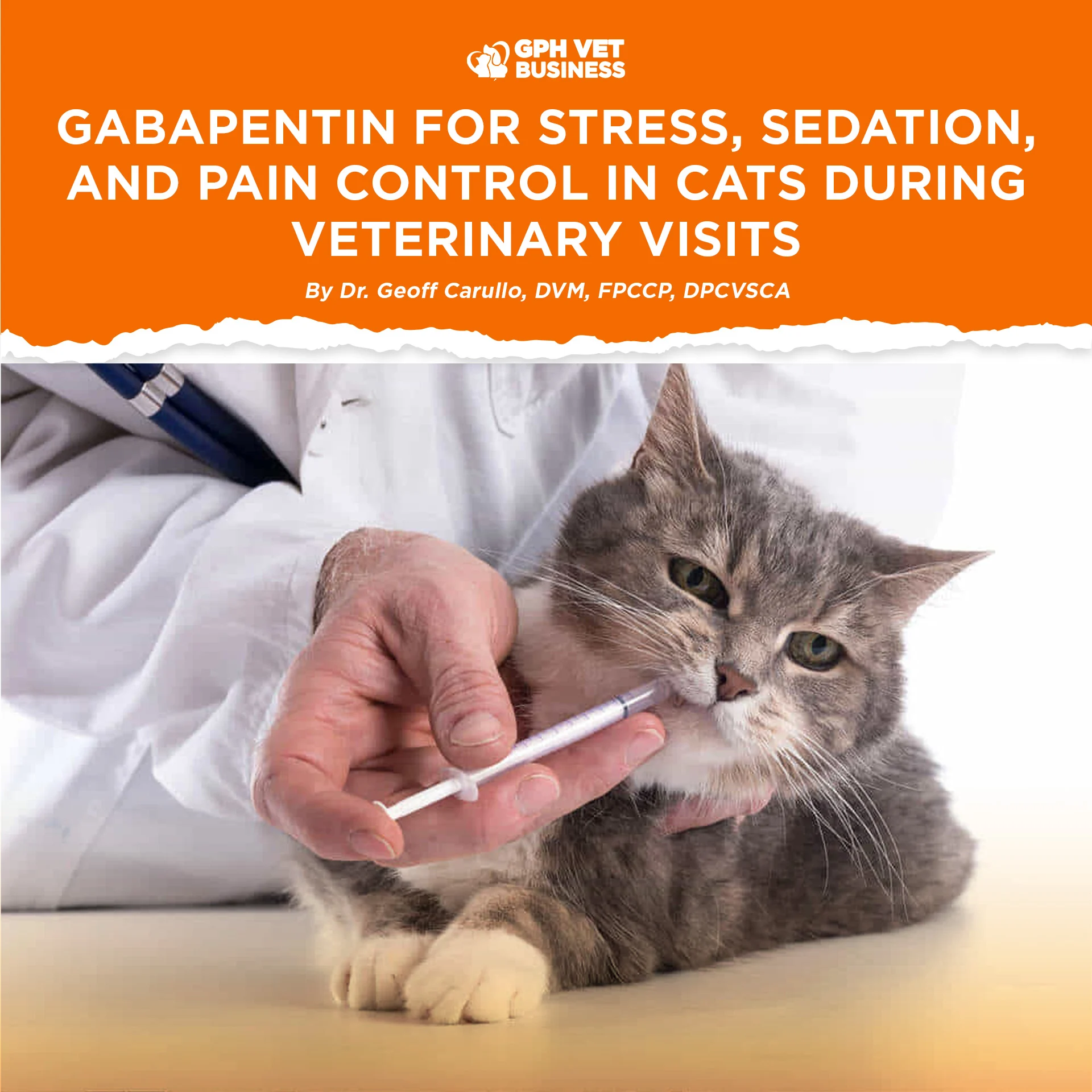
Handling cats in a clinical setting is often one of the most challenging aspects of small animal practice. Fear, anxiety, and stress can rapidly escalate into defensive or aggressive behavior, placing both the patient and veterinary staff at risk. In recent years, gabapentin has emerged as one of the most practical pharmacologic tools to reduce feline stress during veterinary visits.
A recent systematic review of 20 published studies provides strong, consolidated evidence on how gabapentin affects feline behavior, sedation, pain, and cardiovascular safety in the clinical setting. This article translates those findings into practical insights for everyday veterinary use.
Why Gabapentin Matters in Feline Practice
Gabapentin is a structural analogue of GABA, but it does not act directly on GABA receptors. Instead, it binds to the alpha-2-delta subunit of voltage-gated calcium channels in the central nervous system. This reduces calcium influx and suppresses the release of excitatory neurotransmitters such as glutamate, norepinephrine, and substance P.
The result is a combination of:
- Anxiolytic effect
- Mild to moderate sedation
- Behavioral calming
- Adjunct analgesia, especially for chronic or neuropathic pain
Although still considered an off-label drug in cats, gabapentin is now widely used in feline medicine because of its predictable effects and favorable safety profile.
Effects on Stress and Behavior
Across randomized controlled trials and observational studies, gabapentin consistently reduced fear-related behaviors in cats during veterinary visits.
Key findings include:
- Reduced anxiety and fear responses
- Improved handling compliance
- Decreased aggressive or avoidance behavior
- Calmer transport from home to clinic
Cats given gabapentin 60 to 120 minutes before travel or examination were significantly more approachable and easier to examine. These effects were observed even in cats previously classified as fear-aggressive.
Importantly, individual response varies. Some cats show dramatic calming, while others exhibit only mild changes, regardless of dose.
Sedation and Dose Considerations
Gabapentin produces mild to moderate sedation, not full chemical restraint. This makes it ideal for:
- Routine examinations
- Blood sampling
- Imaging
- Nail trims
- Geriatric or chronically ill cats
Reported doses in the literature ranged from 9 to 47 mg/kg, with many studies using fixed doses such as:
- 100 mg per cat
- 150 mg for cats over 7 kg
Higher doses tend to increase sedation but also raise the risk of side effects. Some studies suggest dose-dependence, while others found behavioral response to be more individual than dose-related.
Analgesic Role in Cats
Gabapentin showed the most consistent analgesic benefit in:
- Chronic pain conditions such as osteoarthritis
- Neuropathic pain
- Postoperative pain when used as part of multimodal analgesia
Short-term analgesic effects were inconsistent when gabapentin was used alone. However, with repeated administration, several studies reported improved pain scores and activity levels, suggesting an accumulation effect over time.
Cardiovascular Safety
One of the most reassuring findings of this review is gabapentin’s cardiovascular safety.
Across multiple studies:
- Heart rate remained stable
- Blood pressure was not significantly altered
- No clinically relevant echocardiographic changes were observed
Even in cats with hyperthyroidism, gabapentin did not produce clinically significant cardiovascular effects. This makes it particularly useful in patients where alpha-2 agonists or benzodiazepines may be less desirable.
Adverse Effects to Watch For
Gabapentin is generally well tolerated. When side effects occur, they are usually:
- Dose-related
- Mild
- Transient
Reported adverse effects include:
- Ataxia
- Hypersalivation
- Lethargy or stupor
- Third eyelid protrusion
- Vomiting or diarrhea
These effects typically resolve within 8 to 10 hours without intervention.
Administration Tips
All studies reviewed used oral administration. Practical points include:
- Mixing capsules with wet or dry food
- Administering directly by syringe when needed
- Giving the dose 60 to 120 minutes before travel or examination
Transdermal administration is not recommended due to poor bioavailability.
Clinical Takeaway
Based on current evidence, gabapentin is one of the most reliable and veterinarian-friendly medications for managing feline stress during veterinary visits.
It offers:
- Consistent anxiolysis
- Predictable mild sedation
- Behavioral improvement
- Adjunct pain control
- Excellent cardiovascular safety
While dosing protocols still vary, gabapentin remains a valuable tool for improving feline welfare, diagnostic accuracy, and safety for both patients and veterinary staff.
Further research is encouraged to standardize dosing guidelines and long-term use, but current evidence strongly supports its role in modern feline practice.
Dr. Geoff Carullo is a Fellow and the current President of the Philippine College of Canine Practitioners.
Sharing this helps others understand what it really means to be a vet. Like and follow if you’re with us.