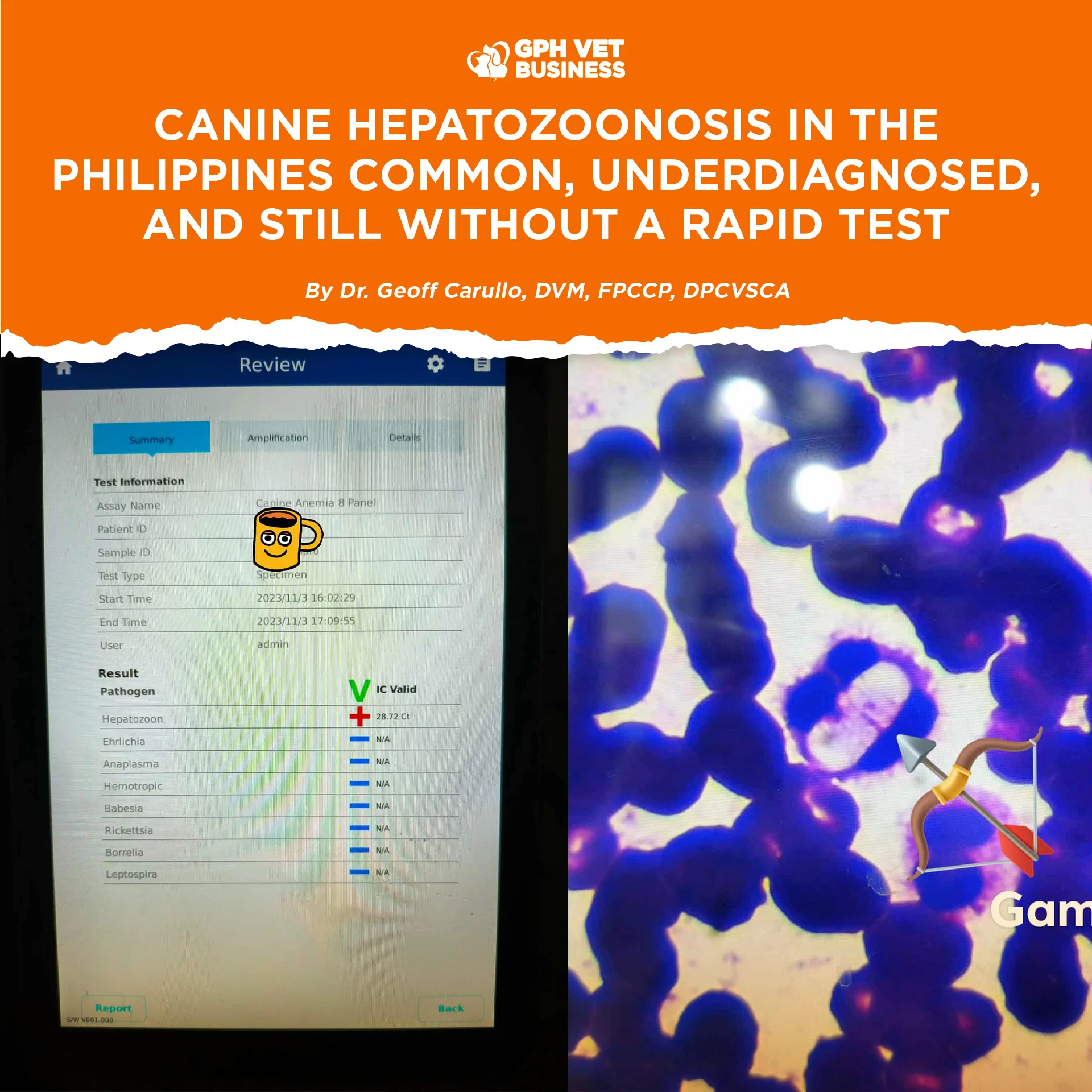
Canine hepatozoonosis is far more common in the Philippines than most clinicians expect. Yet it remains underdiagnosed because there is still no available lateral flow or rapid test kit locally.
Detection relies primarily on PCR, with blood smear examination serving as a valuable supportive tool when the organism is visualized.
At Greenwoods Pet Hospital, we were able to confirm one case via PCR and, notably, also identify Hepatozoon organisms on a properly prepared blood smear, reinforcing both the diagnosis and the importance of classic microscopy in modern practice.
Why Hepatozoonosis Is Common Locally
- Year-round tick exposure
- Tropical climate favoring vector survival
- Free-roaming and outdoor dogs
- Inconsistent tick prevention
- Frequent co-infection with other tick-borne diseases
Because most routine tick panels do not include Hepatozoon, many cases are missed unless PCR is specifically requested.
Clinical Signs
Clinical presentation ranges from subclinical to chronic debilitating disease.
Common findings include:
- Intermittent or persistent fever
- Lethargy and weakness
- Weight loss, poor appetite
- Pale mucous membranes
- Muscle pain or stiffness
- Lameness
- Leukocytosis and anemia on CBC
- Poor response to standard tick-borne disease treatment
Any dog with unexplained anemia, chronic illness, and heavy tick exposure should raise suspicion.
Diagnosis
PCR (Gold Standard)
- Most reliable and sensitive method
- Detects low parasite loads
- Currently the primary diagnostic tool in the Philippines
Blood Smear Examination
- Lower sensitivity but highly specific when positive
- Look for elongated gamonts inside neutrophils or monocytes
- Best examined at the feathered edge
- Positive findings should always be PCR-confirmed
UPDATED LINE OF TREATMENT (WITH DOSING)
There is no single protocol that guarantees complete parasite elimination, but current treatment focuses on reducing parasite burden and improving clinical signs.
1. Imidocarb Dipropionate (Primary Drug)
Dose:
- 5–6 mg/kg
Route:
- Intramuscular (IM)
- Subcutaneous route is avoided due to irritation and poor absorption
Schedule:
- Two injections, 14 days apart
Important notes:
- Administer atropine (0.02–0.04 mg/kg IM or SC) before imidocarb to reduce cholinergic side effects
- Monitor for pain at injection site, salivation, vomiting, or diarrhea
Imidocarb reduces circulating gamonts and improves clinical signs but may not fully clear tissue stages.
2. Doxycycline (Adjunct Therapy)
Used to address possible co-infections and modulate inflammation.
Dose:
- 10 mg/kg per day
Route:
- Oral
Schedule options:
- 10 mg/kg once daily
- 5 mg/kg twice daily
Duration:
- 21–28 days
Always give with food or water to reduce risk of esophagitis.
3. Supportive and Adjunctive Care
Depending on clinical status:
- Hematinics for anemia
- NSAIDs for muscle pain and inflammation (if renal status allows)
- Nutritional support
- Fluid therapy if indicated
4. Tick Control (NON-NEGOTIABLE)
Treatment will fail without strict tick prevention.
- Start immediately and maintain long-term
- Environmental tick control is equally important
- Reinfection is possible if tick ingestion continues
Monitoring and Prognosis
- Clinical improvement often occurs within weeks
- CBC may normalize before PCR turns negative
- Some dogs remain PCR-positive despite clinical recovery
- Relapses are possible
Repeat PCR is recommended for monitoring, especially in working dogs or those with persistent signs.
Take-Home Message for Philippine Practice
Canine hepatozoonosis is endemic but frequently overlooked. The absence of a rapid test means diagnosis depends on clinical suspicion, PCR testing, and careful blood smear evaluation.
The case detected at Greenwoods Pet Hospital highlights an important truth. Even in the era of molecular diagnostics, good microscopy still saves lives.
Dr. Geoff Carullo is a Fellow and the current President of the Philippine College of Canine Practitioners.
Sharing this helps others understand what it really means to be a vet. Like and follow if you’re with us.