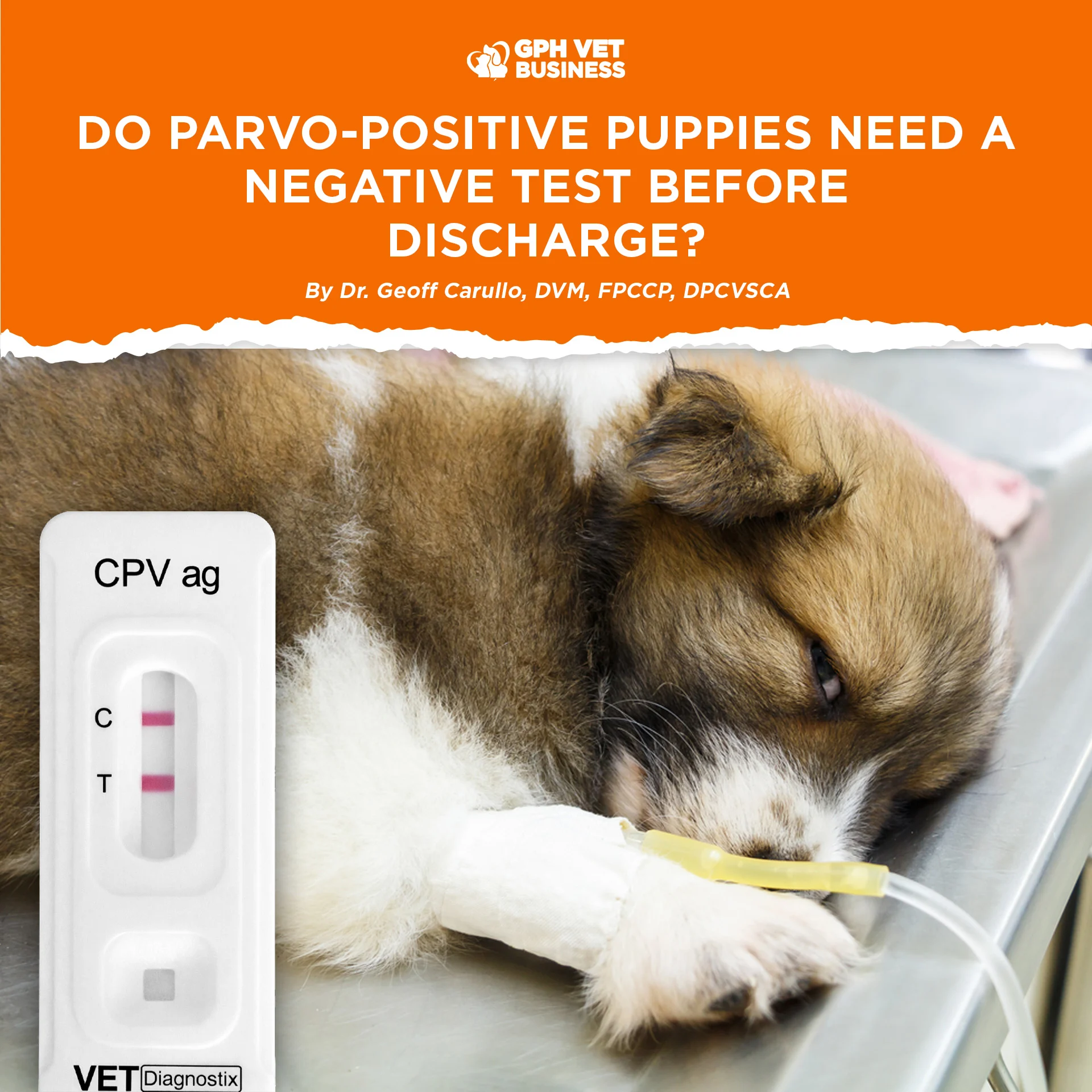
One of the most common concerns raised by pet owners—and even among veterinary teams—is this:
“If the parvo test is still positive, is it safe to send the puppy home? Won’t it continue spreading the virus at home?”
This concern is valid. But the answer depends on understanding what the test detects, how parvovirus behaves, and how risk is actually managed.
What the Parvo Antigen Test Really Detects
Parvo antigen tests detect viral antigen shed in the stool.
They do not measure:
- Ongoing intestinal damage
- Disease severity
- Clinical recovery
- Real-time infectivity
A puppy may be clinically stable or improving and still test positive because viral shedding can continue for days to weeks after recovery. This is normal parvovirus biology—not treatment failure.
Is a Negative Test Required Before Discharge?
No.
A negative parvo antigen test is not required before discharge because:
- A positive test does not mean the puppy is still critically ill
- A negative test does not guarantee zero viral shedding
- Waiting for a negative strip does not significantly reduce real-world risk
Discharge decisions are based on the patient’s clinical condition, not the test result.
Can the Puppy Still Shed Virus at Home?
Yes.
After discharge:
- Puppies may continue shedding parvovirus in their stool
- Shedding can persist even after appetite, energy, and hydration normalize
- This is expected and unavoidable
For this reason, infection control responsibility shifts from the hospital to the home.
Clinical Criteria for Safe Discharge
A parvo patient may be discharged when it is clinically stable:
- No vomiting for at least 24 hours
- Diarrhea significantly improved or manageable
- Eating and keeping food down
- Stable hydration without IV fluids
- Bright, alert, and ambulatory
- No signs of sepsis or complications
If these criteria are met, prolonged confinement just to wait for a negative test is not medically necessary.
Why Routine Repeat Testing Can Be Misleading
Repeating parvo tests before discharge may:
- Prolong hospitalization without benefit
- Increase cost and stress
- Cause unnecessary anxiety when results remain positive
- Create the false belief that recovery equals a negative test
Parvo antigen tests are diagnostic tools, not recovery clearance tools.
Managing the Real Risk at Home
Because viral shedding may continue, owner education is critical.
1. Strict Home Isolation
- No contact with other dogs, especially unvaccinated puppies
- No public walks, parks, or grooming visits
- No visitors with dogs
Isolation is recommended for at least 14 days after discharge, longer in high-risk environments.
2. Designated Defecation Area
- One controlled area only
- Preferably tiled or cemented
- Avoid soil, grass, or porous surfaces
3. Proper Disinfection (Essential)
Parvovirus is highly resistant, but bleach is effective.
Recommended protocol:
- Household bleach (sodium hypochlorite)
- 1:30 dilution
- Remove organic material first
- Apply solution and allow 10 minutes contact time before rinsing
Disinfect daily:
- Floors
- Crates
- Bowls
- Leashes
- Shoes and slippers
4. Human Hygiene
- Wash hands after handling the puppy
- Change clothes before interacting with other dogs
- Use dedicated footwear or foot baths
Humans do not get parvovirus, but they can mechanically transmit it.
The Key Takeaway
A parvo-positive puppy does not need to test negative before discharge.
Yes, viral shedding may continue at home—but that risk is controlled through:
- Isolation
- Proper disinfection
- Responsible owner compliance
Treat the patient, not the test strip.
Dr. Geoff Carullo is a Fellow and the current President of the Philippine College of Canine Practitioners.
Sharing this helps others understand what it really means to be a vet. Like and follow if you’re with us.