Loose stool is one of the most common reasons pets are brought to the clinic, yet it is also one of the most misunderstood. The mistake often starts with language. Diarrhea and dysentery are frequently used as if they mean the same thing. They do not. Each describes a different disease process, and the difference is best understood by carefully observing the feces.
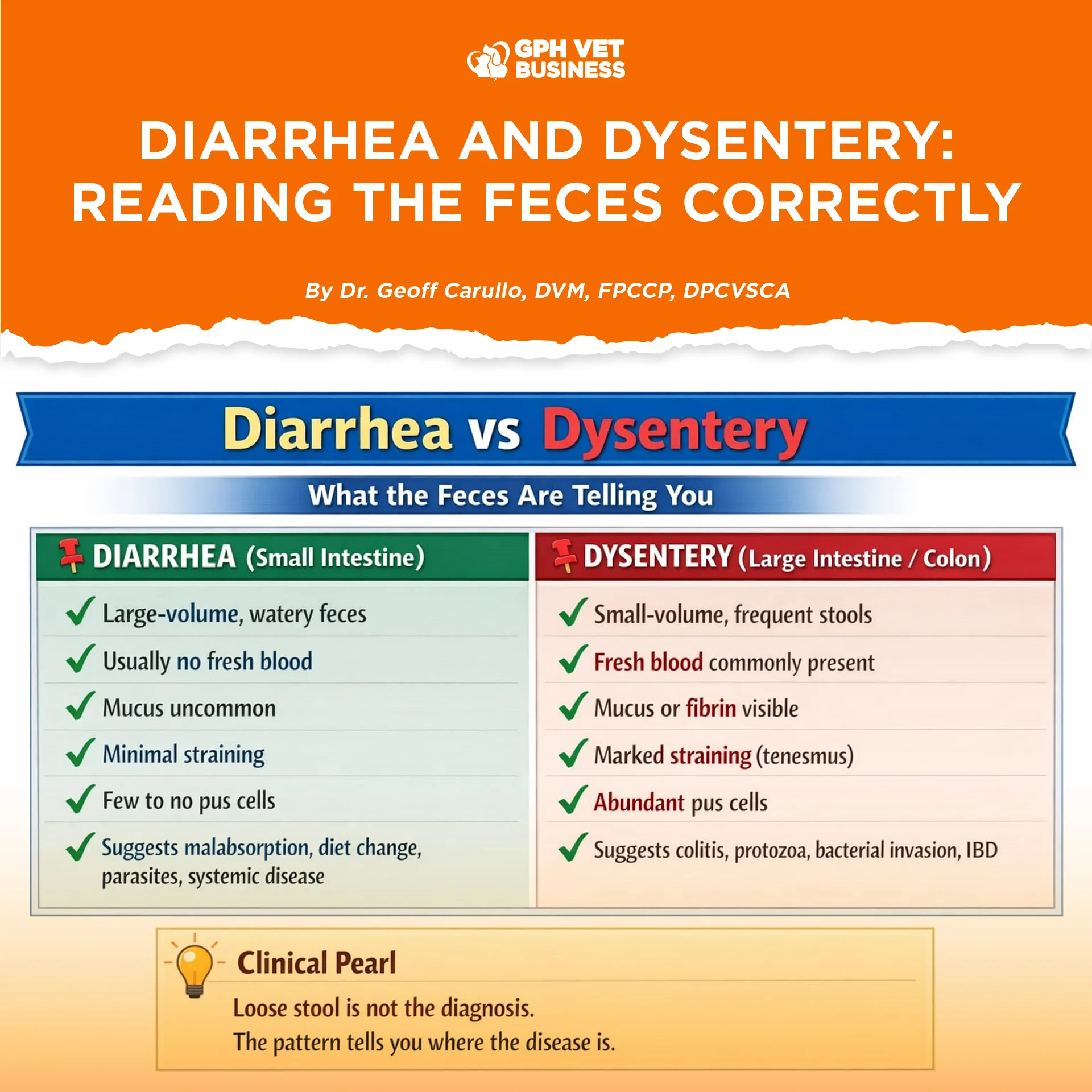
Diarrhea typically originates from the small intestine, where digestion and absorption take place. When this part of the gut is affected, water is not absorbed properly, resulting in large-volume, watery feces. The stool may be passed more frequently, but volume is the key feature. Blood is usually absent, mucus is uncommon, and straining is minimal. If blood is present, it is often digested and darker in appearance. Microscopically, pus cells are few or absent, supporting a non-colonic process.
Dysentery, in contrast, is a disorder of the large intestine, particularly the colon. The feces are scanty, sticky, and passed frequently, often with significant straining. Blood is commonly present and usually fresh. Mucus or fibrin is frequently visible, and pus cells are often abundant on microscopic examination. Because of the repeated straining, owners may think the pet is constipated, when in reality the colon is inflamed and irritated.
These fecal differences provide immediate clinical direction. Diarrhea points toward conditions such as dietary indiscretion, sudden food change, malabsorption, parasites, or systemic illness. Dysentery raises suspicion for colitis, protozoal infection, bacterial invasion, inflammatory bowel disease, or local irritation of the colon.
Understanding whether fecal findings fit diarrhea or dysentery helps avoid common errors — unnecessary antibiotics, delayed diagnostics, and inappropriate treatment plans. It also improves communication with clients, who often describe only what they see without understanding what it means.
Feces are not just waste. They are a diagnostic clue in plain sight. When stool is read correctly, it tells you where the disease is, how aggressive it may be, and what the next step should be.
The stool is already telling the story.
Our job is to listen.
Dr. Geoff Carullo is a Fellow and the current President of the Philippine College of Canine Practitioners.
Sharing this helps others understand what it really means to be a vet. Like and follow if you’re with us.