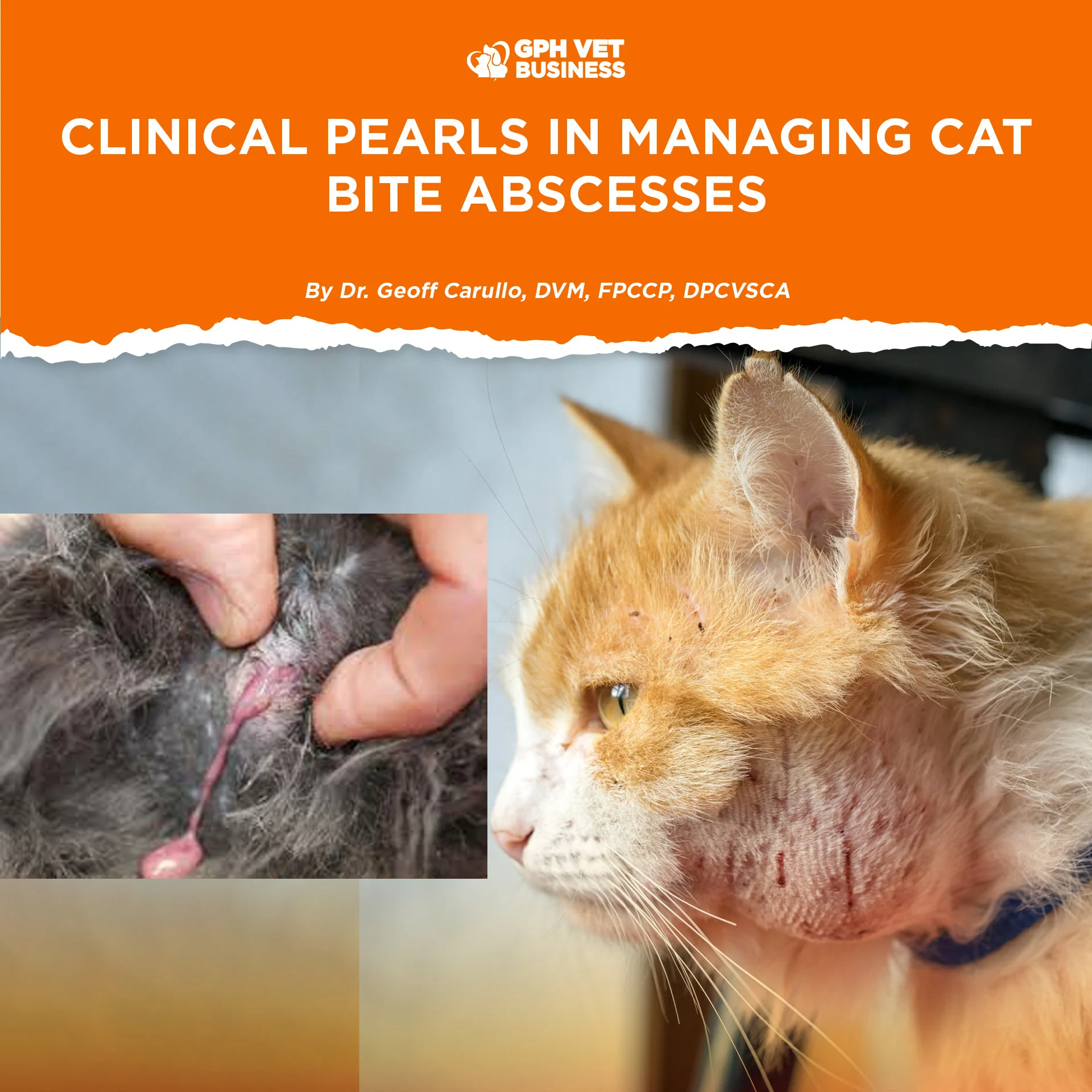
Clinical Pearls in Managing Cat Bite Abscesses
By Dr. Geoff Carullo, DVM, FPCCP, DPCVSCA
Cat bite abscesses are among the most common—and most underestimated—conditions in feline practice. They rarely announce themselves clearly at the start, yet they progress quickly and punish incomplete treatment. Over time, these cases teach us patterns. Those patterns become clinical pearls that save time, tissue, and trust.
This article distills those lessons into practical takeaways every veterinarian should keep in mind.
Pearl #1: The Bite Is Often Invisible
In many cases, the puncture wound is already sealed by the time the cat presents. What you see is fever, pain, lethargy, or swelling—not the bite itself.
If the cat is outdoor, intact, or recently aggressive, assume a bite wound until proven otherwise.
Pearl #2: Antibiotics Alone Are Not Treatment
A cat bite abscess is a closed infection. Antibiotics cannot penetrate pressure and pus effectively.
If there is fluctuant swelling, heat, or pain on palpation, drainage is mandatory. Delaying drainage is the most common reason for treatment failure.
Pearl #3: Never Close These Wounds
Primary closure traps bacteria and recreates the abscess.
Cat bite wounds should be:
- Widely clipped
- Properly drained
- Thoroughly flushed
- Left open to heal by second intention
Recurrence is often the result of closing too early—or at all.
Pearl #4: Clip Wider Than You Think
Wide clipping is not cosmetic—it is diagnostic. Many abscess tracts only become visible once the fur is removed.
If you are conservative with clipping, you will miss pockets, tracts, and necrotic tissue.
Pearl #5: Pain Is an Early Clue
Cats hide swelling well, but they do not hide pain forever.
Subtle signs such as:
- Reduced movement
- Aggression when touched
- Inappetence
may precede obvious abscess formation by 24–48 hours.
Pearl #6: Limb Bites Are Deeper Than They Look
Lameness following a fight should raise concern for:
- Tenosynovitis
- Septic arthritis
- Deep tissue involvement
These cases deserve closer monitoring and, in some situations, imaging.
Pearl #7: FIV Testing Is Not Optional
Bite wounds are the primary route of FIV transmission.
Every cat presenting with a bite abscess should be offered FIV testing—not as an afterthought, but as part of standard care.
Pearl #8: Improvement Should Be Rapid
After proper drainage and appropriate antibiotics, you should see:
- Reduced pain
- Improved appetite
- Lower fever
within 48–72 hours.
If not, reassess drainage, antibiotic choice, and client compliance.
Pearl #9: Culture Is for Failures, Not First Passes
Routine cases respond well to empiric therapy.
Reserve culture and sensitivity for:
- Non-healing wounds
- Recurrent abscesses
- Systemically ill patients
Know when to escalate—but don’t overcomplicate early.
Pearl #10: Prevention Is Client Education
Outdoor access, intact males, and multi-cat tension predict recurrence.
Educating owners on these risks reduces repeat cases—and repeat frustration.
Final Thought
Cat bite abscesses teach an important rule in feline medicine:
Small wounds can cause big damage when underestimated.
Recognizing patterns, acting early, and respecting the biology of these injuries separate routine outcomes from complicated ones.
Sharing this helps others understand what it really means to be a vet. Like and follow if you’re with us.