A Legal and Ethical Perspective for Philippine Veterinary Practice
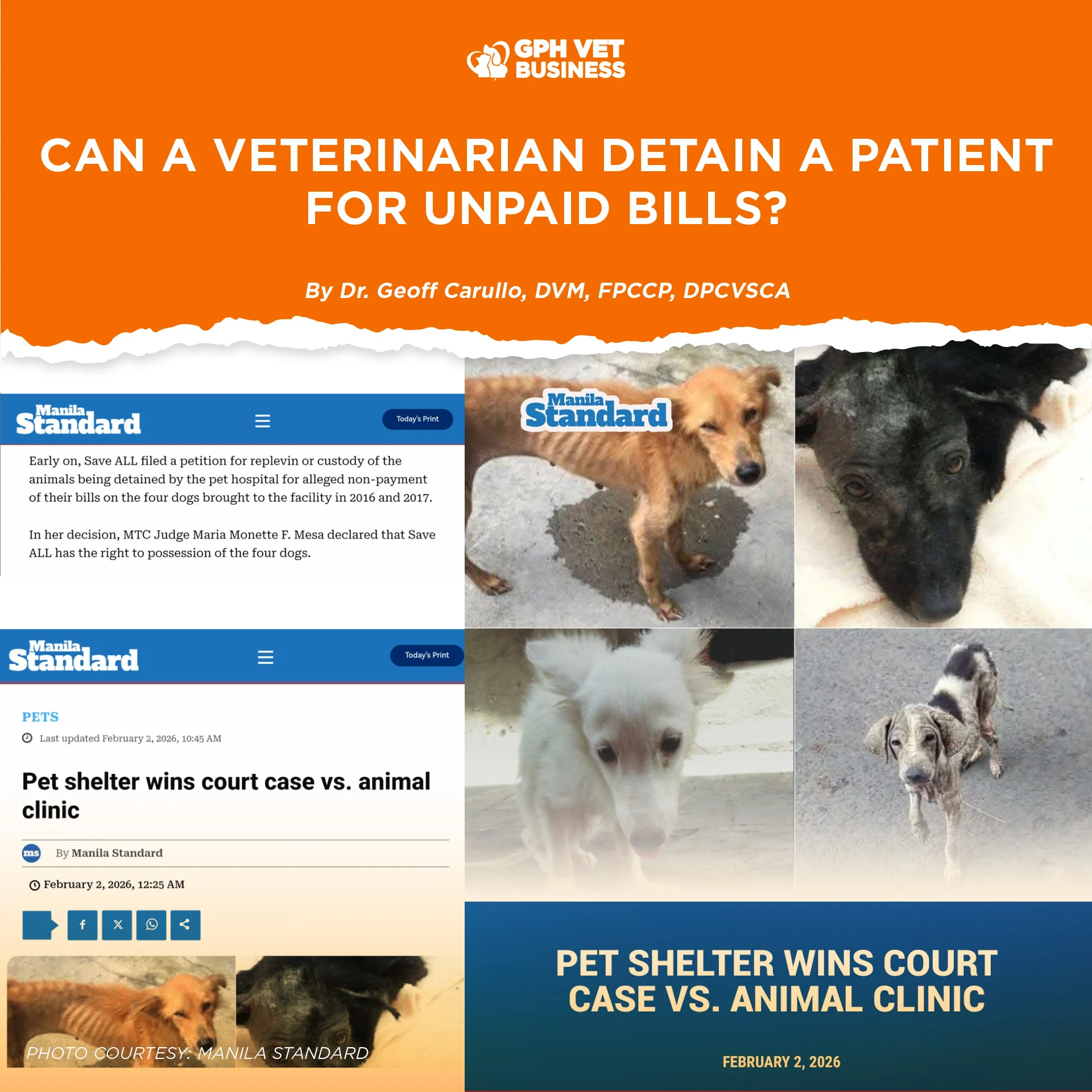
Stories occasionally surface where animals are allegedly “detained” by veterinary clinics because the owner or organization failed to pay medical bills.
Please Read Manila Standard: Pet shelter wins court case vs. animal clinic
These situations quickly become emotional, public, and sometimes legal. But beyond public opinion, an important question remains:
Is a veterinarian legally allowed to detain a patient due to unpaid bills?
The short answer is no, not in the way many people think.
Let’s unpack this carefully.
Animals Are Not Property That Can Be “Held Hostage”
Under Philippine law, animals are generally treated as property, but they are not collateral in the same way as objects like vehicles or equipment.
A veterinarian does not have the legal right to:
Detain an animal indefinitely as leverage for payment
Refuse release of a patient solely to force settlement of unpaid bills
Treat confinement as a form of lien or security
There is no recognized veterinary “right of retention” in Philippine law that allows a clinic to hold an animal against the will of its lawful owner purely for non-payment.
Once medical treatment has been rendered, the proper remedy for non-payment is legal action, not detention.
Why Detention Is Legally Risky
Detaining an animal because of unpaid bills exposes a veterinarian or clinic to serious legal and ethical risks.
1. Civil Liability
If the animal deteriorates or dies while being detained, the clinic may face allegations of:
- Negligence
- Abuse of right
- Unjust enrichment
- Liability for damages due to wrongful possession
Courts consistently recognize that ownership and the right to possession remain with the owner or organization, not the veterinary clinic.
2. Animal Welfare Implications
Prolonged confinement without medical necessity may be interpreted as a violation of animal welfare principles, especially when:
- The animal is already stable
- Continued confinement is financially motivated rather than medically justified
- There is lack of transparency or documentation
3. Professional and Ethical Exposure
Veterinarians are held to higher ethical standards. Detention over payment disputes may be viewed as:
- Unprofessional conduct
- Abuse of professional authority
- Failure to prioritize animal welfare
This can lead to complaints not only in court, but also before regulatory and professional bodies.
What a Veterinarian Can Do Legally
Veterinarians are not without remedies when bills remain unpaid. Lawful options include:
- Issuing clear billing statements and medical records
- Sending written demand letters
- Filing a civil case for collection of sum of money
- Negotiating structured payment plans
- Refusing future non-emergency services until accounts are settled
These actions respect due process while protecting the veterinarian’s legal rights.
The Importance of Clear Agreements
Many disputes arise not from bad faith, but from poor documentation.
Best practices include:
- Signed treatment and confinement consent forms
- Written cost estimates and billing policies
- Clear discharge and payment terms
- Transparent communication with owners and rescue groups
- Clear agreements protect both the clinic and the client.
A Difficult Truth for the Profession
Veterinarians often treat first and bill later, especially in emergencies and rescue cases. This places clinics in vulnerable positions.
However, compassion does not override the law.
Using an animal’s confinement as leverage for payment may feel justified, but it carries serious legal, ethical, and reputational consequences.
Final Thought
Financial disputes should be resolved between adults, through legal and professional channels, never by placing an animal in the middle.
Understanding where compassion ends and legal boundaries begin protects veterinarians, clients, and most importantly, the patients we serve.
Sharing this helps others understand what it really means to be a vet. Like and follow if you’re with us.