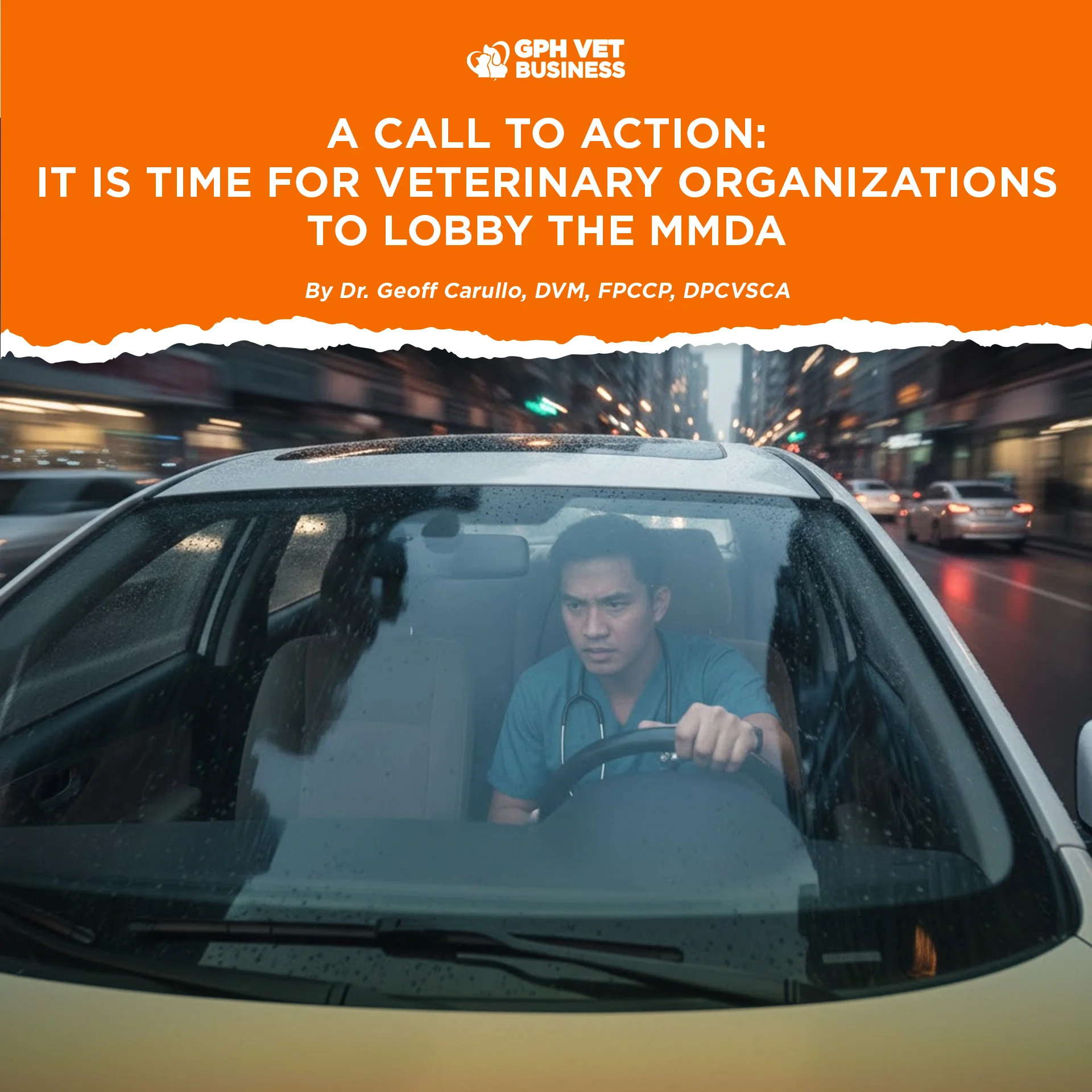
Veterinary emergencies do not respect traffic rules, coding hours, or rush hour gridlock.
Every day in Metro Manila, veterinarians respond to urgent calls involving trauma, seizures, dystocia, rabies exposure, heat stroke, poisoning, and disaster-related rescues. These are not elective cases. These are time-critical situations where minutes matter.
Yet under current MMDA traffic coding policies, veterinarians are not formally recognized as exempt emergency responders, unlike medical doctors. This gap in policy places animal lives at risk and puts veterinarians in an impossible position: obey traffic rules and arrive too late, or respond immediately and risk apprehension.
This is no longer an individual concern. This is a profession-wide issue.
A unified voice is needed
We respectfully call on the Philippine Veterinary Medical Association (PVMA) and all veterinary organizations involved in animal emergency response to take collective action, including but not limited to:
- Specialty veterinary societies
- Emergency and critical care groups
- Animal welfare and rescue organizations
- Large veterinary hospitals and 24/7 clinics
- Academic and public health veterinary bodies
Only a unified, organized, and professional approach will be taken seriously at the policy level.
What we are asking for
We are not asking for blanket exemptions or abuse of traffic rules.
We are asking for formal recognition of veterinary emergency response under MMDA policy, through a clear, regulated, and enforceable framework, such as:
- Recognition of Veterinary Emergency Response Vehicles
- Clear definition of what constitutes an animal emergency
- Proper identification and accreditation
- Safeguards to prevent misuse
- Coordination with MMDA and LGUs for consistent enforcement
This is about access to urgent care, not convenience.
Why this matters beyond animals
Veterinary medicine is deeply connected to:
- Public health and zoonotic disease control
- Rabies prevention and bite management
- Disaster response and evacuation
- Community safety and animal welfare
Delaying veterinary response does not only harm animals. It can endanger people, families, and communities.
The role of leadership
Policy change does not happen through social media posts alone. It happens when professional organizations step forward, speak clearly, and engage government agencies with evidence, structure, and solutions.
This is where PVMA and allied veterinary organizations matter most.
A respectful appeal
We urge our leaders to:
- Initiate dialogue with the MMDA
- Form a working group focused on animal emergency mobility
- Draft and submit a formal position paper
- Advocate not just for veterinarians, but for the patients we serve
Veterinarians have long accepted long hours, emotional strain, and personal sacrifice as part of the calling. But delayed access to emergency care should not be one of them.
It is time for animal emergency response to be recognized as what it truly is: essential service.
𝐒𝐡𝐚𝐫𝐢𝐧𝐠 𝐭𝐡𝐢𝐬 𝐡𝐞𝐥𝐩𝐬 𝐨𝐭𝐡𝐞𝐫𝐬 𝐮𝐧𝐝𝐞𝐫𝐬𝐭𝐚𝐧𝐝 𝐰𝐡𝐚𝐭 𝐢𝐭 𝐫𝐞𝐚𝐥𝐥𝐲 𝐦𝐞𝐚𝐧𝐬 𝐭𝐨 𝐛𝐞 𝐚 𝐯𝐞𝐭. 𝐋𝐢𝐤𝐞 𝐚𝐧𝐝 𝐟𝐨𝐥𝐥𝐨𝐰 𝐢𝐟 𝐲𝐨𝐮’𝐫𝐞 𝐰𝐢𝐭𝐡 𝐮𝐬.