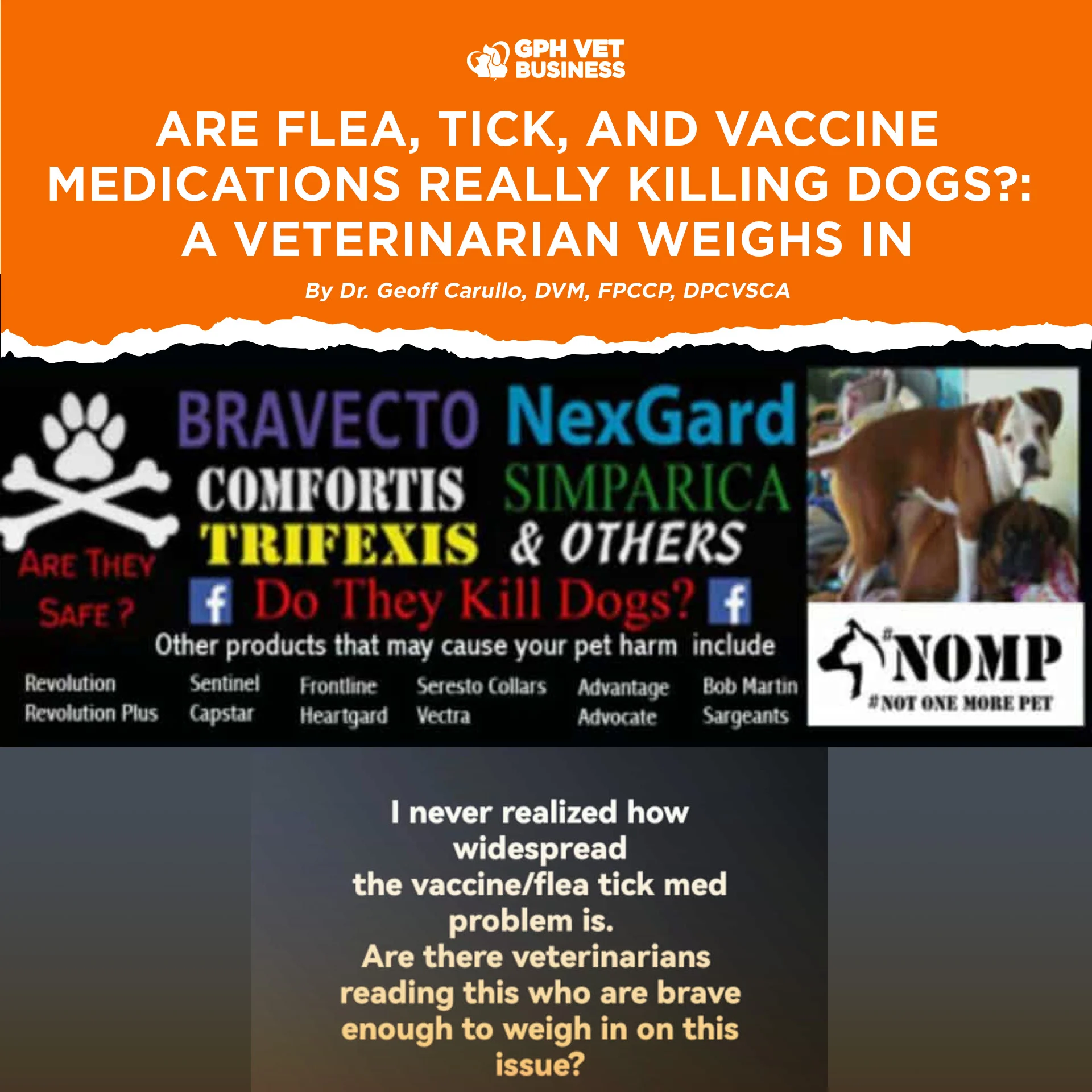
In recent years, social media groups questioning flea, tick, and vaccine medications have grown rapidly. Some now have hundreds of thousands of members, united by fear, anger, and grief. Headlines and posts ask bluntly: Do Bravecto, NexGard, Simparica, and other preventives kill dogs?
As a veterinarian, I understand why these questions exist. I have sat with grieving owners. I have seen adverse reactions. I have also seen what happens when pets are left unprotected against parasites and preventable diseases. This issue deserves clarity, not noise.
Let us talk about facts, context, and responsibility.
First, the uncomfortable truth
Any medication can cause side effects.
This includes flea and tick preventives, antibiotics, anesthetics, and yes, vaccines.
Adverse reactions are real. They are documented. They are reported to manufacturers and regulatory agencies. Some dogs experience vomiting, lethargy, itching, neurologic signs, or allergic reactions after medication. In very rare cases, severe reactions can occur.
But rare does not mean common.
And correlation does not automatically mean causation.
About isoxazoline flea and tick products
Drugs like Bravecto, NexGard, and Simparica belong to a class called isoxazolines. These products have undergone:
- Pre-market laboratory testing
- Controlled clinical trials
- Post-marketing surveillance involving millions of doses worldwide
Yes, there are FDA and regulatory advisories acknowledging possible neurologic side effects in susceptible dogs. This is not hidden. It is written in product inserts and professional guidelines.
What is often missing in social media discussions is proportion.
Millions of dogs receive these medications safely every month. Reported serious adverse events represent a very small fraction of total doses given.
Vaccines deserve special mention
Vaccines do not exist to enrich companies. They exist because diseases like parvovirus, distemper, leptospirosis, and rabies kill dogs brutally and efficiently.
A vaccine reaction is usually mild and temporary.
A parvo infection can mean days of suffering, isolation, massive medical bills, or death.
Choosing not to vaccinate is also a medical decision, but it is not a risk-free one.
What social media often gets wrong
Anecdotes replace data
One tragic story is emotionally powerful, but it does not replace controlled studies or population-level evidence.
Timing bias
If a dog collapses days after medication, the medication is blamed even if an underlying disease, toxin exposure, or congenital condition was already present.
Fear amplifies faster than nuance
Algorithms reward outrage, not balanced explanations.
Veterinarians are framed as “brave or silent”
Most veterinarians are not silent because they are afraid. They are careful because medicine requires evidence, not absolutes.
The role of the veterinarian
A good veterinarian does not blindly prescribe. We consider:
- Breed predispositions
- Age and weight
- Neurologic history
- Liver and kidney health
- Previous drug reactions
- Lifestyle and parasite risk
This is why the same product is not ideal for every dog.
Medicine is not one-size-fits-all.
The bigger danger no one talks about
When fear drives owners away from proven preventives, we see:
- Resurgence of tick-borne diseases
- Preventable parvo outbreaks
- Heartworm-positive dogs suffering unnecessarily
- Pets dying from diseases that had solutions
Fear itself becomes a risk factor.
So, do these products “kill dogs”?
The honest answer is this:
They save far more lives than they harm.
They are not perfect.
They require proper veterinary guidance.
Medicine is about weighing risk versus benefit. Zero risk does not exist. But informed decisions do.
A final thought
Grief deserves compassion.
Questions deserve answers.
But medicine deserves truth, not trials by Facebook.
If you are worried about a medication, talk to a veterinarian who knows your pet, not a comment section that knows only your fear.
Sharing this helps others understand what it really means to be a vet. Like and follow if you’re with us.