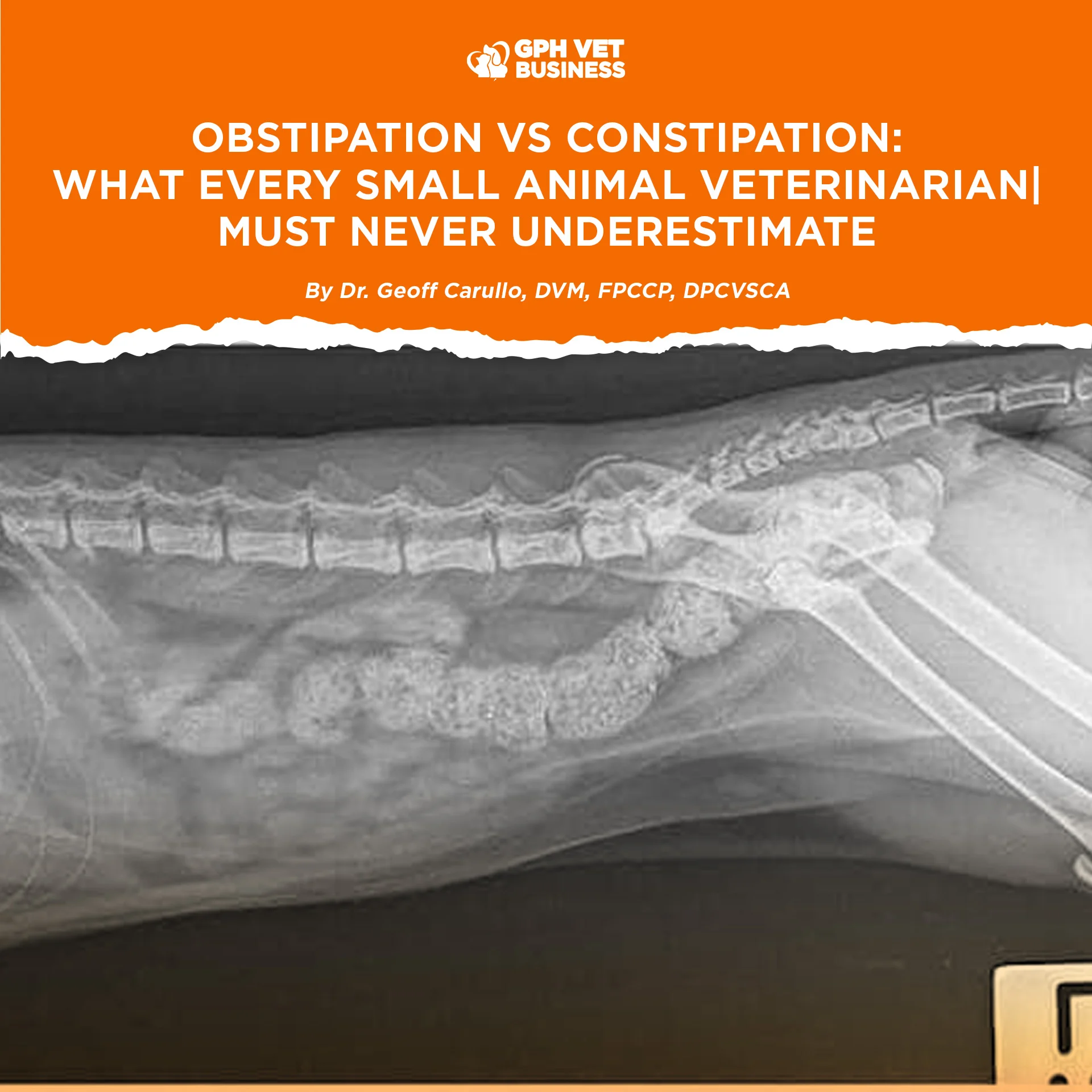
Constipation and obstipation are often treated as “routine” gastrointestinal complaints in small animal practice. In reality, they sit on a spectrum of disease that can escalate quietly, progressively, and catastrophically, especially in feline patients. Understanding the distinction, causes, work-up, and long-term consequences is essential for every veterinarian in daily clinical practice.
Constipation vs Obstipation: Know the Difference
Constipation is defined as difficult, infrequent, or incomplete passage of feces.
Obstipation represents a more severe form, characterized by fecal impaction, where the patient is unable to defecate without medical or manual intervention.
This distinction matters. Obstipated patients will not resolve spontaneously. Delayed intervention increases morbidity, pain, and the risk of irreversible colonic damage.
Although constipation can occur in dogs, cats are disproportionately affected, and recurrent episodes are common.
Why These Conditions Are Commonly Missed
Many cases present subtly. Owners may report:
- Reduced stool output
- Vocalization in the litter box
- Straining without production
- Anorexia or intermittent vomiting
Because signs can mimic urinary obstruction or vague gastrointestinal upset, constipation is often under-prioritized until the colon is severely compromised.
Common Causes of Constipation and Obstipation
Constipation is not a disease. It is a clinical endpoint caused by multiple underlying factors.
Dietary Causes
- Low-fiber diets
- Bone ingestion
- Foreign material ingestion such as grass, rocks, or hair
Drug-Related
- Anticholinergics
- Antihistamines
- Anticonvulsants
- Barium sulfate
Endocrine and Metabolic Disease
- Hypothyroidism
- Hyperparathyroidism
- Chronic renal failure
Environmental and Behavioral
- Decreased exercise
- Dirty or inaccessible litter boxes
Neurologic
- Idiopathic megacolon
- L4–S3 spinal disease
Mechanical Obstruction
- Foreign bodies
- Neoplasia or strictures
- Pelvic fractures
- Perianal hernias
- Anal gland disease
- Perirectal disease
- Anal strictures or fistulas
Failure to identify and address the underlying cause often leads to recurrence.
How Serious Is Obstipation?
Extremely serious.
Severe or prolonged obstipation can result in:
- Colonic dilation
- Ischemia
- Bowel or colonic perforation
- Septic peritonitis
At this stage, emergency exploratory surgery may be the only life-saving option.
Clinical Signs You Should Never Ignore
The most common signs include:
- Tenesmus
- Dyschezia
In chronic cases, especially in cats:
- Anorexia
- Vomiting
- Lethargy
Clinical signs may overlap with urinary obstruction, making careful palpation and diagnostics essential.
Diagnostic Work-Up: Do Not Skip the Basics
Most cases can be diagnosed with:
- Thorough history
- Complete physical examination
- Abdominal palpation
A minimum database is strongly recommended:
- CBC
- Serum biochemistry
- Urinalysis
- Abdominal radiographs
Advanced diagnostics such as ultrasound, pneumocolonography, or contrast studies may be indicated in recurrent or refractory cases.
Acute Management: Treat Aggressively but Safely
Constipation
- Mild soapy water enemas
- Mineral oil enemas
- Avoid phosphate enemas, especially in cats.
- Hexachlorophene-containing products should also be avoided.
Obstipation
- Sedation is often required
- Manual digital removal of feces
- Enemas as adjuncts
- Small sponge forceps may assist removal while minimizing colonic trauma
Surgical intervention is rarely required in acute obstipation, but delay increases the risk.
Chronic Management: Prevent the Next Crisis
Medical management focuses on softening feces, improving motility, and reducing colonic water absorption.
Commonly Used Medications
Lactulose
Dogs: 5–30 ml orally, three times daily
Cats: 1–10 ml orally, three times daily
Side effects: diarrhea, vomiting, abdominal cramping
Cisapride (Propulsid)
Dogs: 0.5 mg/kg orally, three times daily
Cats: 2.5–5 mg orally, two to three times daily
Side effects: diarrhea, abdominal cramping
Cisapride increases acetylcholine release and enhances gastrointestinal motility throughout the esophagus, stomach, and intestines.
Role of Fiber: Not Just for Diarrhea
Fiber is frequently misunderstood.
In cases of constipation:
- Insoluble fiber increases fecal bulk
- Improves fecal consistency
- Reduces transit time
- Increases frequency of defecation
Common options:
- Canned pumpkin
- Psyllium
- Bran or fiber supplements
Flatulence is a common but manageable side effect.
When Medical Management Fails
Even with optimal care, 10–20 percent of cases remain refractory, particularly in cats with idiopathic megacolon.
In these cases:
- Subtotal colectomy may be recommended as a last resort
- Procedure must be performed by an experienced surgeon
- Risks include dehiscence and septic peritonitis
- Some patients still require lifelong medical management post-surgery
Client education and expectation-setting are critical.
Final Clinical Reminder
Constipation is not benign.
Obstipation is not “just constipation.”
Early intervention prevents irreversible colonic disease, prolonged suffering, and life-threatening complications. What appears routine today may be surgical tomorrow.
Sharing this helps others understand what it really means to be a vet. Like and follow if you’re with us.