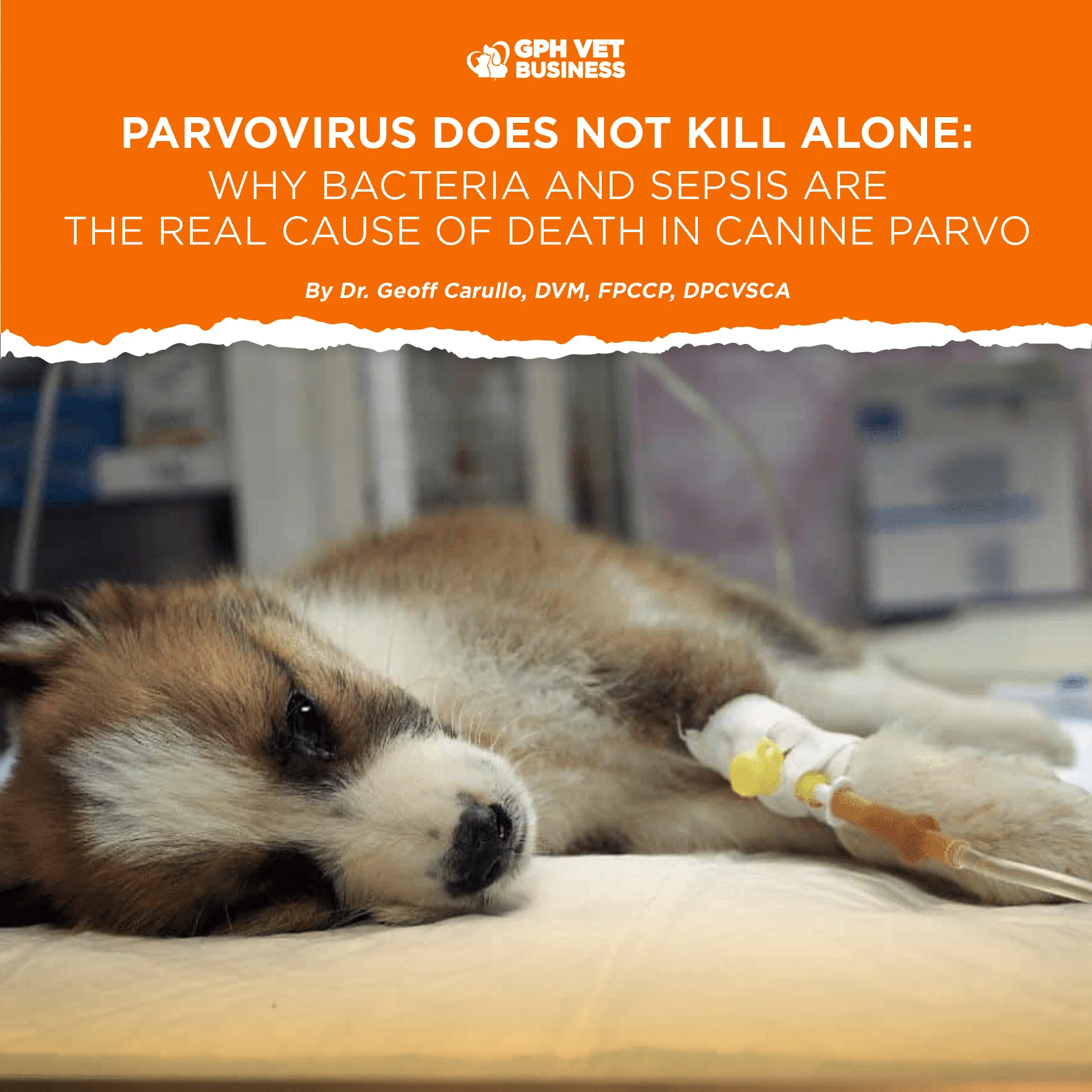
Canine parvovirus is often described as a deadly virus. But in real clinical practice, seasoned veterinarians know this truth:
Most puppies with parvo do not die from the virus itself. They die from bacteria.
Understanding this distinction is not academic trivia. It is the difference between survival and death.
The Role of the Virus: Breaking the Defenses
Parvovirus is the initiator, not the executioner.
The virus targets rapidly dividing cells, specifically:
Intestinal crypt epithelial cells
Bone marrow hematopoietic precursors
This results in:
Severe destruction of the intestinal lining
Loss of the normal gastrointestinal barrier
Profound leukopenia and immunosuppression
At this stage, the virus has done its job. It has opened the gate.
When the Wall Comes Down
The intestinal barrier normally separates trillions of gut bacteria from a sterile bloodstream. In parvoviral enteritis, that wall collapses.
Once the crypts are destroyed:
Intestinal villi collapse
Tight junctions fail
Bacteria freely translocate from the gut into circulation
This is no longer a viral disease.
This is systemic bacterial invasion.
The Real Killer: Sepsis
Multiple studies and postmortem findings confirm this reality:
Escherichia coli and other enteric bacteria are frequently isolated from the liver, lungs, and bloodstream of puppies that die from CPV
Death is most commonly caused by:
Bacteremia
Endotoxemia
Septic shock
Multiple organ failure
The virus weakens.
The bacteria deliver the fatal blow.
Why Antibiotics Are Not Optional in Parvo
This is where misconceptions can become deadly.
Antibiotics are not used to treat the virus.
They are used to prevent death from sepsis.
In puppies with parvoviral enteritis:
The GI barrier is compromised
The immune system is crippled
The bacterial load is overwhelming
Withholding antibiotics in a clinically ill parvo patient is not antimicrobial stewardship.
It is negligence.
What the Pathophysiology Dictates
When pathophysiology is understood, treatment becomes clear.
Parvo patients require:
Aggressive IV fluid therapy
Electrolyte and glucose correction
Antiemetics and GI protectants
Broad-spectrum, bactericidal antibiotics
Commonly recommended approaches include:
A beta-lactam such as ampicillin
Combined with an aminoglycoside or fluoroquinolone
Coverage aimed at gram-negative enteric bacteria and anaerobes
You are not treating a viral diarrhea.
You are treating impending septic shock.
The Takeaway Every Vet Must Remember
Parvovirus sets the stage.
Bacteria take over the scene.
Sepsis ends the story.
Antibiotics do not weaken your medicine.
They strengthen your understanding of what truly kills parvo patients.
Saving parvo puppies means respecting microbiology, not fearing it.
Treat the virus supportively.
Fight the bacteria aggressively.
Prevent sepsis early.
Lives depend on it.
Sharing this helps others understand what it really means to be a vet. Like and follow if you’re with us.